


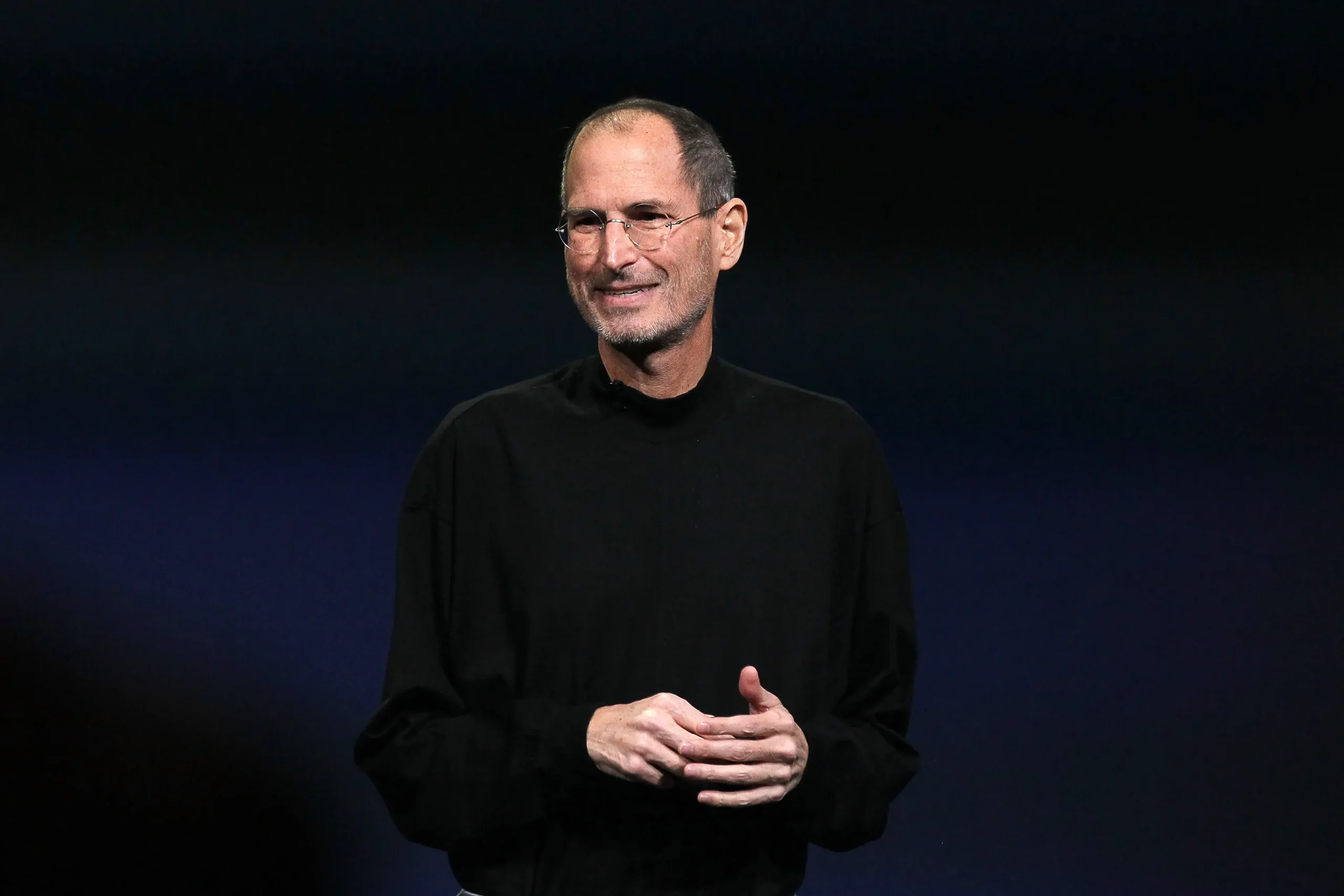
There are entrepreneurs who succeed by creating good products, and then there are entrepreneurs who change the way people think about products altogether.
Steve Jobs belonged to the second group.
When we talk today about smartphones, personal computers, digital music, applications, and consumer technology, it is difficult to ignore the influence Jobs had on the industries behind them.
But his story was anything but straightforward.
The man who would eventually become one of the most recognizable figures in technology did not begin his life as the stereotypical successful entrepreneur. He was not the heir to a major corporation, and he did not start his career inside a giant technology company.
He co-founded Apple while still in his twenties, watched the company grow into one of the most important technology businesses in the world, and then experienced the extraordinary humiliation of being pushed out of the company he had helped create.
For a time, that could have been the end of his story.
It wasn’t.
Jobs eventually returned to Apple more than a decade later, found the company struggling, and began a series of decisions that would lead to products that transformed technology, media, communications, and consumer culture.
That is what makes his story so compelling.
Steve Jobs was not simply a successful entrepreneur or an innovative executive.
He believed technology should not only be powerful.
It should also be understandable, beautiful, intuitive, and enjoyable to use.
That belief became the foundation of many of the decisions that made Apple different from its competitors.
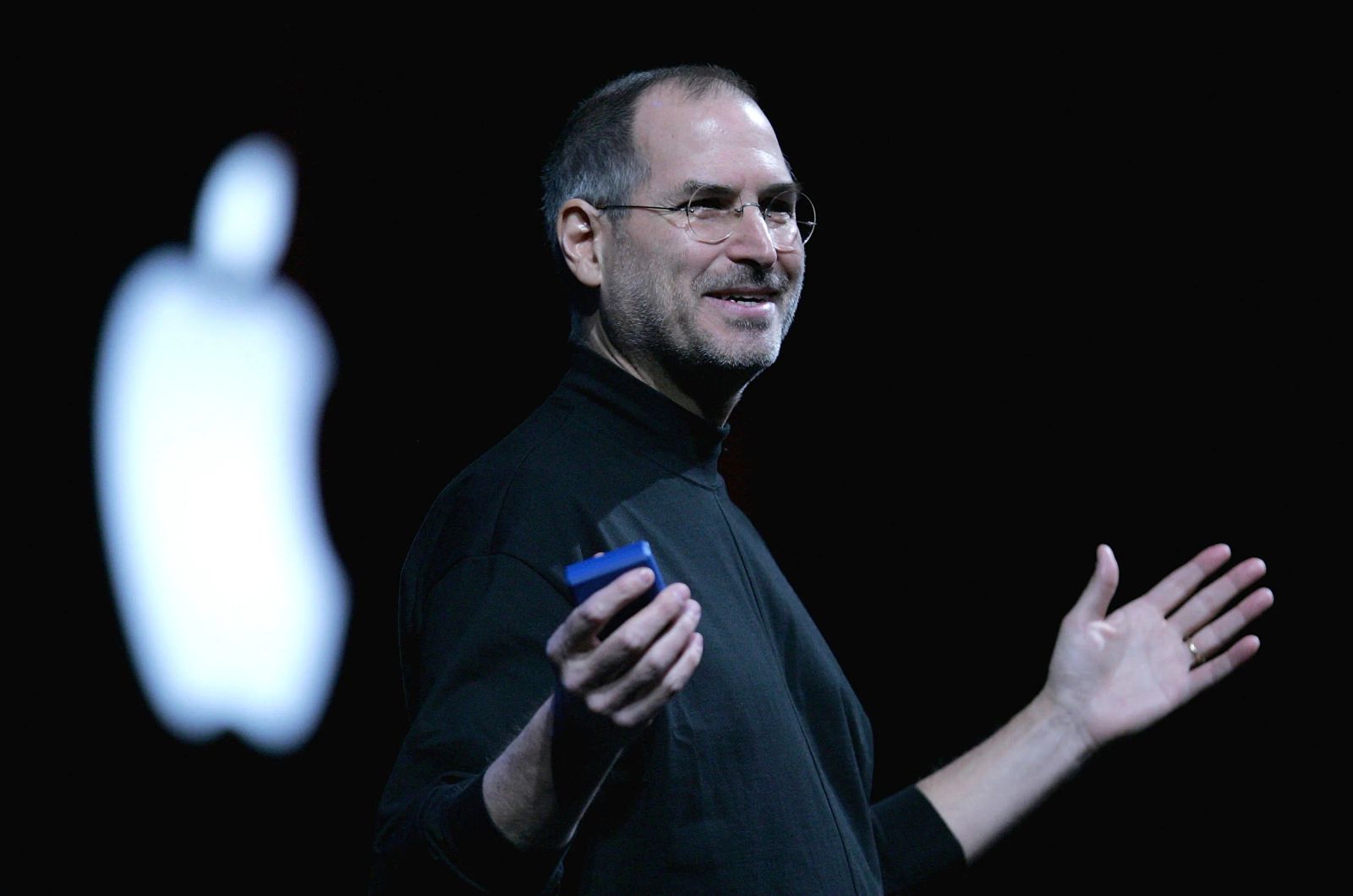
Growing Up Different
Steven Paul Jobs was born on February 24, 1955, in San Francisco, California.
He was not raised by his biological parents.
After his birth, he was adopted by Paul and Clara Jobs, who became the family that raised him.
Jobs grew up first in the Mountain View area and later in Los Altos, California, at a time when what would eventually become Silicon Valley was beginning to develop into a major center for technology and electronics.
That environment mattered.
He was exposed to electronics and engineering from an early age, while his adoptive father, Paul Jobs, had a strong interest in mechanics, craftsmanship, and working with his hands.
Steve spent time taking things apart and trying to understand how they were built.
But his personality was never purely technical.
From an early age, he was also interested in art, design, music, and aesthetics.
Those interests would eventually become deeply connected to the way he approached Apple products.
School and the Search for Himself
Jobs was not a conventional student.
He was intelligent and curious, but he did not particularly enjoy following rules simply because they were rules.
He was constantly looking for different ways to understand things.
During his teenage years, his interest in electronics grew, and he met people who shared his fascination with technology.
One of the most important people he met was Steve Wozniak.
That friendship would eventually become one of the most important partnerships in the history of technology.
Steve Wozniak
Steve Wozniak was a gifted engineer and programmer with technical abilities far beyond Jobs’ experience at the time.
But Jobs looked at technology from a different perspective.
Wozniak was primarily interested in figuring out how to build something.
Jobs was interested in another question:
What could this technology become, and could it be turned into a product people would actually want to use?
That difference between the two men was crucial.
Wozniak was an extraordinary engineer.
Jobs had a powerful instinct for business, marketing, product positioning, and the broader user experience.
College
After high school, Jobs enrolled at Reed College in Oregon.
His formal college experience did not last long.
He eventually dropped out, but he did not stop learning.
He continued attending classes that interested him and became fascinated by subjects that seemed completely unrelated to technology.
One of the most famous examples was his interest in calligraphy and typography.
At the time, he had no idea how important that interest would become.
Years later, the lessons he absorbed about typefaces, spacing, and visual presentation would influence the design of the Macintosh.
Travel and the Search for Meaning
During his younger years, Jobs went through a period of personal and intellectual exploration.
He became interested in philosophy and spirituality and traveled to India.
At first glance, this period may seem completely disconnected from his later career in technology.
But it helped shape the way he thought.
Jobs was searching for simplicity, meaning, and different ways of seeing the world.
Those ideas would eventually appear in his philosophy of product design.
He wanted to remove what was unnecessary and concentrate on what truly mattered.
Returning to Technology
After returning to the United States, Jobs moved back toward the technology industry.
He worked for Atari, one of the best-known video game companies of the era.
The experience brought him closer to engineers and hobbyists who were experimenting with computers and electronics.
At the same time, Wozniak was working on personal computer designs.
The two began thinking about whether they could build something that could reach a much larger audience.
The Beginning of Apple
In 1976, Steve Jobs, Steve Wozniak, and Ronald Wayne founded Apple Computer.
The beginning was extremely modest.
There were no impressive corporate offices or large engineering teams.
There was an idea, a collection of electronic components, and a desire to build something different.
Wozniak worked on the technical design of the computer, while Jobs focused heavily on the business side and pushed the idea toward becoming a product that could actually be sold.
Apple I
The Apple I was the company’s first major product.
It looked very different from the computers we know today.
It was essentially a circuit board that users could install into their own case.
Its importance, however, was not its appearance.
It demonstrated that there could be a market for personal computers.
Jobs believed that market could become much larger.
Apple II
The real breakthrough came with the Apple II.
It was a much more complete and accessible product than the Apple I and helped establish Apple as an important player in the emerging personal computer industry.
This was when Jobs began to understand something fundamental:
If Apple wanted to become a major company, it wasn’t enough to build good technology.
It had to build a product people actually wanted to buy.
That idea would eventually become central to Apple’s philosophy.
Money and Early Success
As Apple II became successful, the company grew rapidly.
In 1980, Apple went public.
Jobs became a wealthy young entrepreneur and one of the most recognizable business figures of his generation.
But rapid success created new problems.
Apple was becoming a large organization, and it now had to deal with competition, management, employees, investors, and the pressures that come with being a major corporation.
This was when one of the most complicated periods of Jobs’ career began.
The Macintosh
In the early 1980s, Jobs became closely associated with the Macintosh project.
His ambition was clear: create a computer ordinary people could use without needing deep technical knowledge.
He wanted to make computing more human.
That meant focusing on the graphical user interface, the mouse, typography, and industrial design.
Jobs’ attention to detail was intense, sometimes to the point of frustrating members of his own team.
But the result was a product that looked and behaved very differently from many of the computers available at the time.
Launching the Macintosh
In 1984, Apple launched the Macintosh with an advertising campaign that became one of the most famous in technology history.
The advertisement did not focus primarily on technical specifications.
Instead, it presented the Macintosh as a symbol of rebellion against conventional thinking in the computer industry.
That reflected Jobs’ approach to marketing.
He did not simply want to sell consumers a computer.
He wanted to sell them an idea.
The idea that technology could be different, personal, and even enjoyable.
Success Comes at a Price
Behind that success, however, Apple was facing internal problems.
Jobs had a powerful personality, enormous ambition, and a management style that many people found difficult.
Disagreements over the company’s direction and the future of its products became increasingly intense.
Eventually, the conflict between Jobs and Apple’s leadership reached a breaking point.
In 1985, Steve Jobs left Apple.
The man who had helped create the company was suddenly outside it.
It was one of the most painful moments of his professional life.
But paradoxically, it would also become the beginning of a period that would fundamentally change him as an entrepreneur.
From Falling Out to Building Something New
Leaving Apple in 1985 was one of the most difficult chapters of Steve Jobs’ life.
The company he had helped create had become one of the most important technology businesses of its time, and now he was outside it.
It would have been easy to see what happened as a personal failure.
Jobs eventually came to view the experience differently.
Years later, he described that period as painful, but also as something that forced him to start over.
And that is exactly what he did.
Founding NeXT
After leaving Apple, Jobs founded a new company called NeXT.
This time, his goal was somewhat different.
He wanted to build powerful computers for universities, researchers, and professionals.
He had more freedom to shape the company and its products according to his own vision.
But freedom alone did not guarantee commercial success.
NeXT faced significant business challenges, and its computers were expensive compared with competing products.
Still, the company was not a technological failure.
It developed sophisticated hardware and software technologies that would later have a major impact on Apple’s future.
A Critical Lesson from NeXT
One of the most important lessons Jobs learned during this period was that technically impressive products do not automatically create successful businesses.
There must also be a suitable market, an appropriate price, and a business model capable of supporting the company.
That lesson would become extremely important when he eventually returned to Apple.
Pixar
Around the same time, an unexpected new chapter began in Jobs’ career.
In 1986, he purchased the computer graphics division that had been part of Lucasfilm.
He turned it into an independent company called Pixar.
At first, it was not obvious that Pixar would become one of the most important animation companies in the world.
Jobs initially viewed the business primarily through the lens of technology.
But the creative potential of its team gradually became impossible to ignore.
Toy Story
The turning point came with Toy Story.
Produced by Pixar in partnership with Disney, the film became a major success after its release in 1995.
Toy Story was the first feature-length film created entirely using computer-generated animation.
Its success changed Pixar’s future.
It also demonstrated something important to Jobs: technology could be a tool for creating major emotional and creative experiences, not just a technical product.
The Pixar Deal
After Toy Story’s success, Pixar became an extremely valuable company.
In 1997, Disney acquired Pixar in a stock transaction valued at approximately $7.4 billion.
Jobs became one of Disney’s largest individual shareholders.
But the most important outcome of Pixar may not have been the money.
Jobs learned that technology and design were not enough on their own.
A successful product also needs a story, emotion, and an experience people can connect with.
The Return to Apple
Meanwhile, Apple was struggling.
The company had accumulated a large number of products and product lines, making it increasingly difficult to maintain a clear strategic direction.
Competition in the personal computer market was intense, while profit margins were under pressure.
In 1996, Apple acquired NeXT.
On the surface, it looked like a technology acquisition.
Its impact, however, was much greater.
Apple was not only acquiring technology.
It was bringing Steve Jobs back.
Jobs Returns
In 1997, Jobs returned to Apple, initially as an advisor before becoming interim CEO.
He faced an enormous challenge.
The company needed to be rescued, and there was little time to waste.
But Jobs did not respond by launching dozens of new products.
He did the opposite.
Focus Before Expansion
Jobs looked at Apple’s product portfolio and saw a company spread across too many products and projects.
He believed that this complexity was consuming resources and distracting the organization.
So he made a simple but bold decision:
Apple needed fewer products, but better products.
He began eliminating projects that did not have a clear future.
The goal was to concentrate the company’s resources on a limited number of products that could be developed exceptionally well.
The Product Matrix
Apple became known for a simple framework that helped determine which products deserved attention.
Four categories:
- A desktop computer for consumers.
- A desktop computer for professionals.
- A portable computer for consumers.
- A portable computer for professionals.
The important part was not the diagram itself.
It was forcing the company to answer a difficult question:
Which products do we actually want to be the best at building?
The iMac
The first major success of Jobs’ return came with the iMac.
Launched in 1998, the computer looked very different from conventional PCs.
It was simple, colorful, approachable, and visually distinctive.
Jobs did not want technology hidden inside another boring gray box.
He wanted the computer to look like something people could actually enjoy owning.
Design as Part of the Product
This was where Jobs’ philosophy became even clearer.
For him, design was not simply about appearance.
Design included how the product worked, how the user felt while using it, and even how the product was packaged.
He believed small details could create a dramatically better experience.
The Store, the Product, and the Ecosystem
Apple was not simply selling computers.
It was building an integrated experience around them.
The computer, operating system, software, retail environment, customer support, and purchasing experience all became connected parts of the same ecosystem.
This gave Apple greater control over the overall customer experience.
The iPod
But the biggest transformation was still ahead.
In 2001, Apple launched the iPod.
Technically, the iPod was not the first digital music player.
Other companies had already released similar products.
Apple approached the problem differently.
It did not focus only on the device.
It focused on the entire experience.
More Than a Music Player
The goal was to make it easy for users to find, organize, purchase, and transfer music.
This is where the integration between the iPod and iTunes became so important.
Users could manage their music libraries on a computer and then synchronize them with the device.
That integration made the product much more valuable than a simple music player.
Redefining Digital Music
The combination of iPod and iTunes helped Apple become a major force in the music industry.
The way people purchased and consumed music began to change.
Consumers no longer had to buy an entire album simply to get a single song.
Digital music became an increasingly natural part of everyday life.
But Jobs was not finished.
A Bigger Idea Than the iPod
By the middle of the 2000s, Apple had a successful computer business, a strong operating system, the iPod, and the iTunes ecosystem.
But Jobs saw an even bigger opportunity.
Mobile phones already existed.
Yet many smartphones of the time were complicated devices built around physical keyboards, buttons, and difficult software interfaces.
Jobs believed there was a way to build a fundamentally different phone.
And that idea would lead to one of the most important moments in modern technology.
The iPhone and Beyond: When Technology Became Part of Everyday Life
If Steve Jobs’ return to Apple saved the company, the iPhone was the product that took it to an entirely different level.
But the importance of the iPhone was not simply that it was the first smartphone.
It wasn’t.
Its significance came from bringing together technologies that already existed and presenting them in a way that made the phone feel like an entirely new kind of product.
The Idea Behind the iPhone
Before the iPhone, smartphones already existed.
Companies such as BlackBerry and Nokia had produced devices with impressive capabilities for their time.
But the experience was often complicated.
Small physical keyboards.
Multiple menus.
Limited screens.
Different ways of accessing email, applications, and the internet.
Jobs believed the phone could be much simpler.
He wanted to remove as much unnecessary complexity as possible.
Launching the iPhone
In January 2007, Jobs introduced the first iPhone.
The presentation itself became part of Apple’s strategy.
He did not present the device simply as another new phone.
Instead, he described it as a combination of a phone, a music player, and an internet device.
The multi-touch screen was one of its defining features.
Rather than relying on a fixed physical keyboard, users interacted directly with the screen.
Design Before Specifications
Apple was not trying to win every technical comparison.
Jobs looked at the product as a complete experience.
What does the user see?
How does the phone feel in the hand?
How does the user move between functions?
How does browsing the internet feel?
How does the device respond?
That focus on experience made the iPhone different from many of its competitors.
The App Store
In 2008, Apple launched the App Store.
This was more significant than it initially appeared.
The phone was no longer a fixed product.
It became a platform that developers could continuously expand with new applications.
That created an entire economy around the iPhone.
Developers built applications.
Users downloaded them.
Apple participated in the resulting revenue.
And as the number of applications grew, the platform became more attractive.
As the number of users increased, developing for the platform became even more attractive.
Building an Ecosystem
This was where Apple’s competitive advantage became even stronger.
Customers were no longer simply buying individual devices.
They were entering an integrated ecosystem.
iPhone.
Mac.
iPad.
Apple Watch.
AirPods.
iCloud.
App Store.
These products and services work together in ways that make moving from one Apple product to another relatively seamless.
That helped Apple build long-term relationships with its customers.
The iPad
In 2010, Apple introduced the iPad.
The idea was to create a device positioned between a smartphone and a traditional computer.
At first, some people questioned whether consumers actually needed such a product.
Apple nevertheless succeeded in creating a major tablet market.
The iPad became widely used for education, business, entertainment, creative work, and personal computing.
Jobs and Design
For Jobs, design was about much more than appearance.
He believed design included how the entire product worked.
That is why he paid attention to an extraordinary number of details.
The shape of the device.
The materials.
The user interface.
The packaging.
Even the way products were displayed in stores.
This attention to detail became part of Apple’s culture.
Why Was Apple Different?
Some companies focus primarily on specifications.
Others compete mainly on price.
Some focus on launching products as quickly as possible.
Apple under Jobs tried to answer a different question:
How can we make the product feel natural to the person using it?
That made simplicity a central element of the company’s philosophy.
Jobs as a Leader
But Jobs’ success was not without controversy.
He was known for exceptionally high standards.
He could reject an entire product because of details that other people considered minor.
He was also extremely direct and, at times, harsh with employees.
Some people who worked with him described him as an exceptionally inspiring leader.
Others found his management style exhausting and difficult.
These contradictions are an important part of understanding Jobs.
He was not a perfect leader.
But he possessed a rare ability to push teams toward levels of ambition they might not have believed possible.
The Power of Saying No
Jobs believed a strong company did not need dozens of products.
It needed a limited number of products worth building exceptionally well.
He was willing to cancel entire projects if he did not believe they supported Apple’s direction.
He understood that saying no to good ideas could be necessary to give great ideas the attention they deserved.
Marketing as Part of the Product
Jobs understood the power of presentation.
Apple product launches were not simply press conferences.
They were events.
He would explain the problem, introduce the solution, and build anticipation before revealing the product.
That is why the phrase “One more thing” became so closely associated with him.
Marketing, in Jobs’ view, was not something that came after the product.
It was part of the product experience itself.
Apple’s Rise
During Jobs’ final years leading the company, Apple became one of the world’s most valuable and influential businesses.
iPhone sales grew dramatically, the App Store expanded, and Apple products became part of everyday life for hundreds of millions of people.
But beneath those numbers was a deeper transformation.
Apple was no longer simply selling devices.
It was building an ongoing relationship between consumers and technology.
Illness and His Final Years
In the middle of the 2000s, Jobs faced serious health problems.
He was diagnosed with a rare form of pancreatic cancer and underwent treatment and surgery.
Despite his declining health, he continued working for years.
He appeared at major product launches and remained involved in Apple’s leadership while the company became increasingly strong.
Resigning from Apple
In August 2011, Steve Jobs resigned as CEO of Apple.
Tim Cook succeeded him as chief executive.
Jobs became chairman of the company’s board for a short period.
But his health was continuing to deteriorate.
Steve Jobs’ Death
On October 5, 2011, Steve Jobs died at the age of 56.
His death was a deeply significant moment in the technology and business world.
He did not build Apple alone, and he did not personally invent every technology used in its products.
His influence came from his ability to bring technology, design, marketing, and user experience together into a coherent product.
Steve Jobs’ Net Worth
Jobs’ personal fortune may appear relatively modest compared with the wealth accumulated by some other technology founders.
One reason is that he sold a significant portion of his Apple ownership relatively early in the company’s history, while his remaining holdings were affected by later changes in the company’s ownership structure.
A significant part of his wealth was also connected to his investment in Pixar and his subsequent Disney shares following the acquisition.
But Jobs’ true legacy cannot be measured by his personal fortune alone.
What Entrepreneurs Can Learn from Jobs
1. Start With the Problem, Not the Technology
Jobs was not interested in technology simply for its own sake.
He wanted to understand how technology could be used to create a better experience.
2. Simplicity Requires Hard Work
A product that looks simple on the outside can be extremely complicated to create.
Jobs understood that removing unnecessary features and choices often requires difficult decisions.
3. Great Products Need a Story
Apple did not sell specifications alone.
It sold an idea.
The iPod made music easier.
The iPhone made the phone more personal.
The Macintosh made computing more approachable.
4. Focus Matters More Than Product Quantity
Companies can become distracted when they try to satisfy everyone.
Jobs was willing to eliminate many projects so Apple could focus on a small number of exceptional products.
5. Failure Does Not Have to Be the End
Jobs left Apple during one of the most difficult periods of his career.
He then spent years building NeXT and Pixar and gained experiences that he eventually brought back to Apple.
Had he never left the company, he might not have returned as the same person he was when he originally founded it.
Legacy
It is difficult to separate the history of modern technology from Steve Jobs.
He played a major role in making personal computers more appealing to mainstream consumers.
He helped reshape the music industry through the iPod and iTunes.
He then helped redefine mobile phones through the iPhone.
He also helped make design and user experience central competitive factors in the technology industry.
But perhaps his most important legacy was changing people’s expectations.
Consumers began to expect technology to be powerful, simple, and beautiful at the same time.
That expectation became a standard against which technology companies continue to compete.
Final Thoughts
Steve Jobs’ story is not the story of a man who succeeded on his first attempt.
It is the story of someone who founded a company, was forced out of it, failed in some ventures, succeeded in others, and eventually returned to the company at the moment it needed him most.
He was not an engineer who invented everything himself.
And he was certainly not a perfect manager.
But he possessed something rare:
the ability to see a product from the perspective of the person who would use it.
He understood that technology alone was not enough.
The best product was not necessarily the most complicated one or the one with the longest list of specifications.
Sometimes, the best product is the one that makes something complicated feel simple.
That may be the real reason Steve Jobs continues to influence the technology industry today.
He did not simply change technology.
He changed the way we expect technology to interact with us.