

As regional fighters pursue international careers, a wider industry of sporting leadership, talent development and creative storytelling is taking shape around them.
By Abeer Abdalla | Managing Editor | The Saudi Times
A place in the final is the immediate prize. For the fighters competing in Riyadh on October 2, the larger ambition is a career that travels.
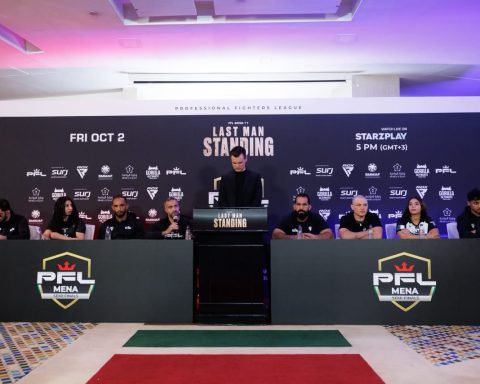
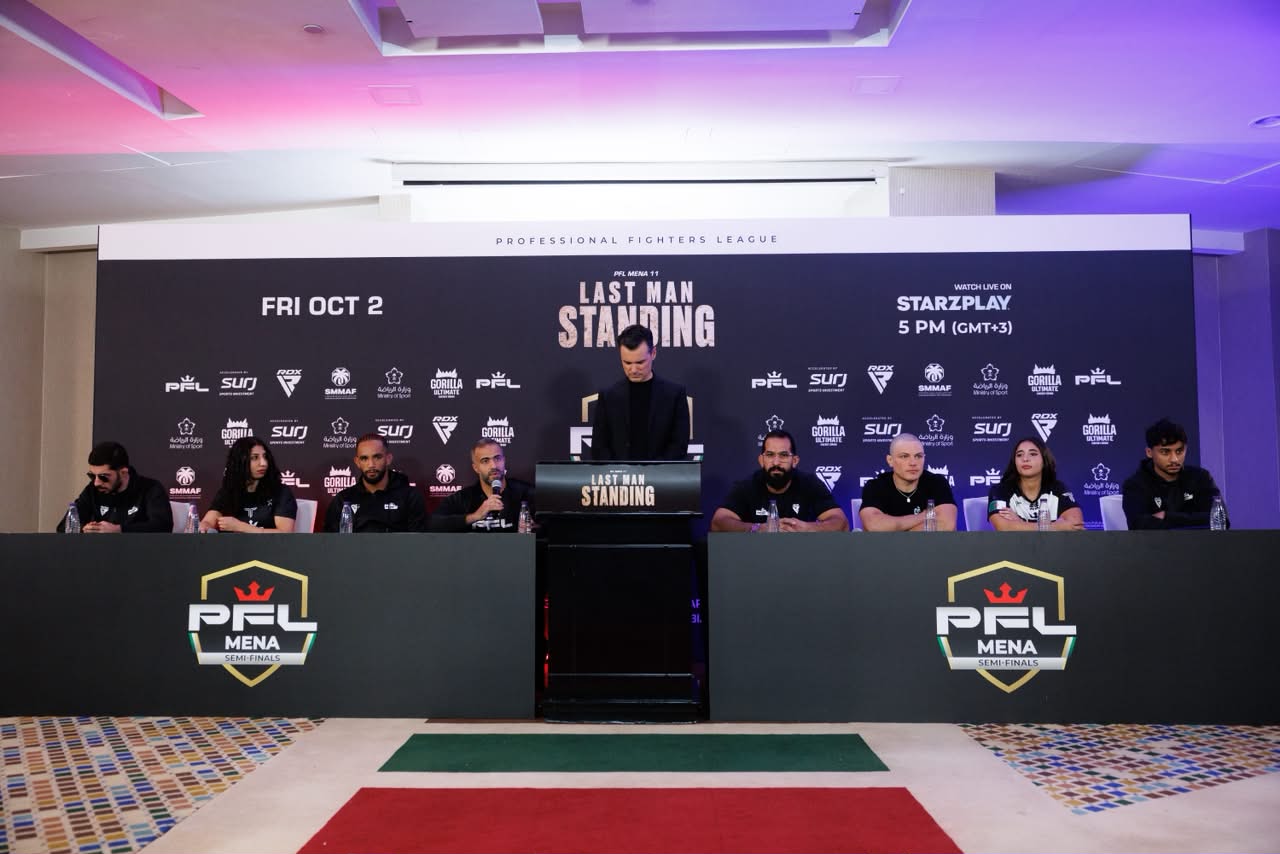
PFL MENA returns with Last Man Standing, a night of featherweight, lightweight and welterweight semifinals. The event also shows what the league is building: a route for fighters from the Middle East and North Africa to establish their credentials, develop a following and pursue opportunities within an international organization.

Hosting international sport brings established names into Saudi Arabia. Regional competition gives athletes from the Kingdom and its neighbors a chance to become those names themselves.
The October 2 card has three semifinals. Jordan’s Hazem Kayyali faces Badreddine Diani at welterweight. Elias Boudegzdame meets Islam Youssef at featherweight, and Ylies Djiroun takes on Basel Shalaan at lightweight. The winners advance toward a regional title.
A tournament gives an emerging fighter opponents, deadlines and a visible measure of progress, which makes an international career easier to plan. Competing within a global promotion also means regional results can lead to opportunities beyond the fighter’s home market.
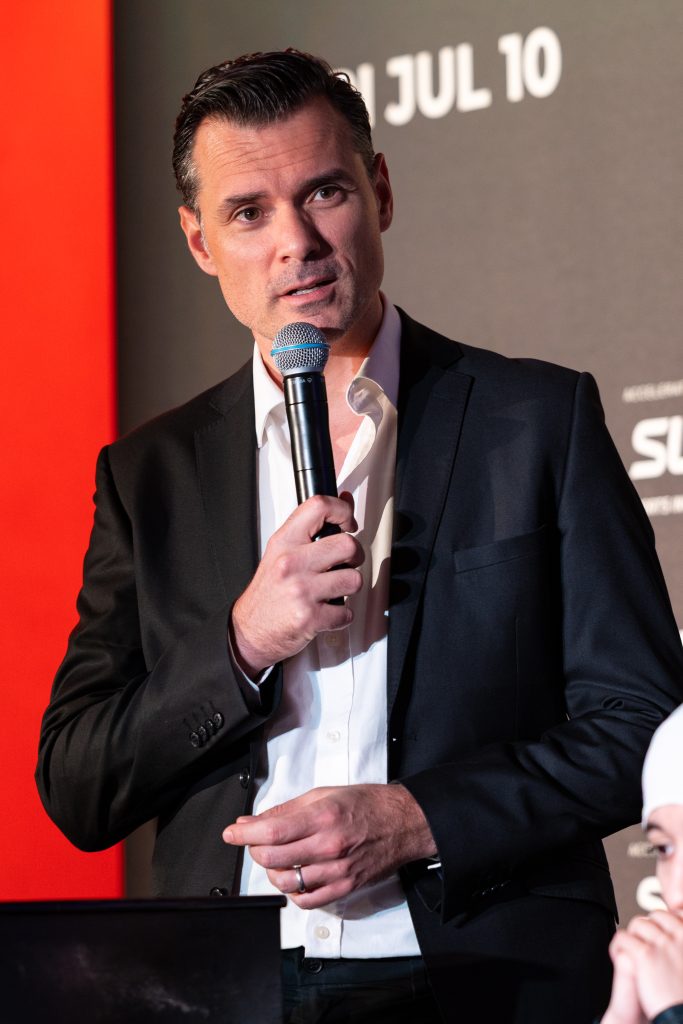
PFL has positioned its MENA competition as a pathway to its global roster. PFL MENA general manager Jerome Mazet describes the mission this way: “Our mission is to find and develop the best Arab talents. These can be very promising amateur fighters who want to turn professional or the best professional fighters from the region. We believe that within one to three years at the professional level they are then ready to go fight on the global stage.”
Omar El Dafrawy is the example Jerome Mazet points to. “The best example is probably Omar El Dafrawy, who won the MENA welterweight tournament in 2024 and is now ranked No. 5 in the PFL/MVP and is set to fight No. 4, Patrick Habirora, for potentially a shot at the world belt.”
The league has had eight champions so far, and three more will be crowned in December, bringing the total to 11. “Some champions want to stay in MENA and continue to grow before going on the global stages. Others have decided to move to PFL/MVP global,” Jerome Mazet says. “There is no automatic transfer. Our priority is to make sure that once a fighter leaves PFL MENA they are ready for the global competition. We take the time to sit down with the fighter and understand their goals and priorities.”
Results, readiness and selection still matter, and a pathway is more credible when athletes can point to someone who has already taken the next step.
Hattan Al-Saif shows what access can change for Saudi women. In January 2024, PFL announced her as the first Saudi woman to sign with a major global MMA promotion. She won her professional debut against Dania Ouhachi in Riyadh in July 2026.
“I hope to pave the way for aspiring female fighters,” Al-Saif said in PFL’s announcement of her signing.
A young woman considering combat sport can now see a Saudi athlete with an international contract and a professional result. Jerome Mazet says the platform was the missing piece. “There is a lot of female talent in this region for MMA and combat sport in general, but they never had the right platform to be able to live from their activity. We bridge that gap and then the rest is done by the fighters themselves, who can show their potential and personality.”
“I think Hattan has done a lot for women in combat sports in KSA and the GCC, and we can see that in just two to three years she has already inspired a lot of other women,” Jerome Mazet says. “One of them is Fatima A.M., who will be making her grand debut with us on Friday in Riyadh.”
Rasha Alkhamis has also spoken about what participation builds before any championship is won. Discussing boxing at Fortune’s 2025 Most Powerful Women conference in Riyadh, she said: “you gain those skills, the discipline, the determination”.
Sustaining those qualities takes coaching, suitable competition, medical support and the money to keep training. A regional league fits into that system when it gives developing fighters regular chances to test their preparation.
An industry taking shape
The October 2 event belongs to a longer regional story. Over more than a decade, the Middle East has developed several foundations of an MMA industry: international events, regional promotions, amateur competition and athletes whose careers give local audiences a reason to keep watching.
Abu Dhabi hosted its first UFC event in 2010 and became central to the promotion’s pandemic-era operations through Fight Island in 2020. Bahrain established BRAVE Combat Federation in 2016, building a promotion with international ambitions while also hosting IMMAF amateur world championships. Together these made the region both a destination for professional competition and a base for developing talent.
Saudi Arabia has been adding its own foundations. MMA was a demonstration sport at the 2023 Saudi Games, where Malik Basahel won gold after taking silver at the IMMAF World Championships. In 2024, PFL launched its MENA league, and UFC staged its first Saudi event in Riyadh that June. National competition, international exposure and professional opportunity were beginning to connect.
Jerome Mazet makes the case for the league in terms of return on investment. “When you compare the level of investment we receive, which is a fraction of what is spent in other sports (football, golf…), and the number of Saudi fighters we have and are developing, I would imagine we probably have the highest ROI by far,” Jerome Mazet says. “To date, we’ve had 21 bouts featuring Saudi athletes, have helped two fighters turn professional and got one of the most famous Saudi athletes across all sports, Hattan Al-Saif.”
The organizations involved are separate. The Saudi Mixed Martial Arts Federation is part of the sport’s national development and governance structure, and it is connected internationally to the International Mixed Martial Arts Federation (IMMAF). In May 2025, IMMAF welcomed Rasha Mohammed Alkhamis as the Saudi federation’s chairwoman and its official representative in the Kingdom, naming participation, structured development and international competition as shared priorities.
Professional promotions are a different part of the industry. PFL MENA is PFL’s regional league; UFC and Bahrain’s BRAVE CF are separate organizations, and each offers its own competitive opportunities instead of acting as a level in a single ladder. Amateur experience can build an athlete’s credentials for professional recruitment, while PFL MENA offers a route toward international opportunities within PFL.
Much of the opportunity for Saudi Arabia lies in the work around those careers. Fighters need coaches, training partners and medical expertise. Events need production teams, broadcasters and commercial support. Athletes also need people who can communicate what makes them worth following between appearances.
PFL MENA’s own development program is one part of that support. “The fighters who are with us under a development program, like Zamzam Al Hammadi (UAE) or Abdulaziz Bin Moammar, are on a two-year program that involves financial support, a certain number of fights to test them and help them grow, and some training and camps,” Jerome Mazet says.
A result may introduce a fighter’s name; the setbacks, personality and return to competition give supporters reasons to remember it. For some followers, that attachment becomes a creative commitment of its own. They invest their time and professional ambitions in telling the stories that first made them fans.
PanaMMA and the detail of place
PFL MENA’s significance reaches beyond the athletes in its cage. For Jugurtha Aissiou, founder of PanaMMA, it is a subject for a filmmaker working at the intersection of combat sport, cultural identity and AI.
Aissiou is originally from Tizi Ouzou, Algeria, and has been based in Paris since 2015. Over the past year, he has developed his AI filmmaking practice through work on European MMA events and athletes, made for international audiences following the sport and its PFL and UFC communities. That experience informs his interest in PFL MENA, a league that is bringing the region’s fighters into international focus.
His connection to the subject is professional and personal. His Algerian heritage gives the regional story particular meaning for him, while his work with global audiences shapes how he tells it. PFL MENA’s athletes carry individual ambitions and national identities, and they have the chance to reach audiences who have yet to discover them.
That led Aissiou to make a short film about PFL MENA’s regional mission. He believes this part of the sport is worth watching closely. As the league gives fighters opportunities to establish themselves internationally, PanaMMA aims to amplify the MENA story developing around them.
Aissiou’s subject is MMA, but his attention extends beyond the fight. He works with the personas, symbols and personal brands around athletes and builds cinematic narratives that give those identities a visual world. His respect for the discipline required to reach the top underpins the work. The task is to make each fighter’s journey compelling while keeping the story the fighter’s own.
PanaMMA’s approach rests on cultural detail. Architecture, clothing, landscape, color and historical references each contribute to the story. A Saudi detail must be recognizably Saudi, and a Kuwaiti reference must belong specifically to Kuwait. Their proximity on a map does not make their identities interchangeable.
That matters for work aimed at audiences who know these cultures well. A setting can be visually spectacular and still feel unfamiliar to the people it claims to represent. Credibility rests on smaller decisions: the silhouette of a building, the treatment of a garment, the relationship between a place and its history.
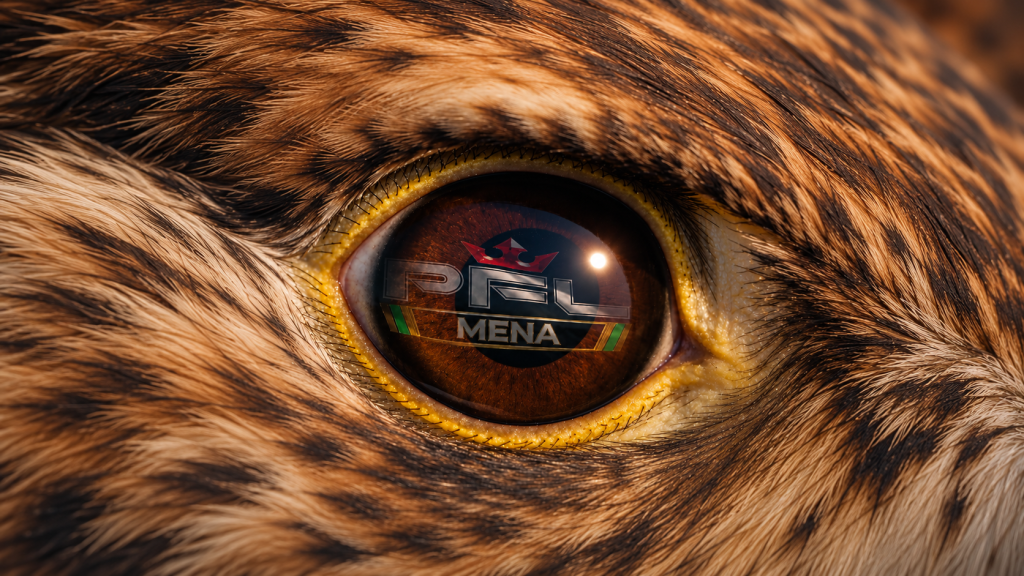
For a filmmaker addressing international audiences, the same precision is also an opportunity. Details that establish authenticity at home can become points of discovery abroad. A fighter’s cultural identity gives viewers something to connect with beyond a record or a result, and can turn an unfamiliar name into someone whose journey they want to follow.
PanaMMA reports that this attention to cultural specificity is beginning to attract interest from other industries in the region, including heritage, tourism, sport and brand storytelling, where a convincing sense of place can matter as much as the production’s visual impact.
That discipline is relevant as Saudi Arabia advances toward its Vision 2030 ambitions. Communicating the Kingdom’s transformation requires understanding the identities behind it. Saudi Arabia’s regions have different architectural traditions, landscapes and cultural histories, and bringing them to an international audience means recognizing those differences and making them meaningful within a story. PanaMMA’s pitch is to use new filmmaking tools with close attention to the culture being portrayed. AI expands what a creator can visualize; the filmmaker’s judgment determines whether those images belong to the story.
The film will be released ahead of the October 2 event in an exclusive collaboration with PFL MENA and The Saudi Times.
For the fighters preparing to compete in Riyadh, the immediate task is to earn a place in the final. Then the league moves to Khobar. “Our next event will be on December 11 and we are bringing the best card of the year to Khobar,” Jerome Mazet says. “Expect a full house with 2,500 people, an electric atmosphere and very loud fans.”