

From a state regulator with teeth to a 100-hectare coral restoration site, from a G20 science secretariat to a globally-recognised data commons, Saudi Arabia has built one of the most systematic ocean-conservation stacks in the world. Wave’s Ocean Central is one of its most visible exports.
By Abeer Abdalla, Frontline | 2030
Located three hours south-west of Jazan, the Farasan Islands represent one of the world’s least-disturbed coral systems. As Saudi Arabia’s largest marine protected area and a UNESCO Man and Biosphere Reserve since 2021, the Farasan Islands serve as a cornerstone for a policy initiative that extends beyond traditional conservation. Under Vision 2030, Saudi Arabia is developing a comprehensive ocean governance framework. This framework includes regulation, scientific research, protected areas, data infrastructure, and a convening authority. Countries such as Australia and the United States have established integrated marine policy models. These typically delegate implementation to a range of federal, state, and local bodies, which can result in overlapping jurisdictions and multi-layered governance. However, Saudi Arabia’s model is distinguished by its direct, state-led operational approach. In practice, this means a single national authority coordinates and enforces marine policy, ensuring more streamlined decision-making and execution across its coastline. It integrates enforcement, data management, and multilateral engagement within a unified system. The international community increasingly references this approach.
Headline statistics often overlook the significance of Saudi Arabia’s marine ecosystems. As of 2023, the Kingdom’s Red Sea and Arabian Gulf coastlines contain about 6,660 square kilometers of coral reef. This makes up the eighth-largest coral community globally, according to the International Coral Reef Initiative. Recent studies indicate that this area has remained largely stable over the past five years, with localized degradation offset by restoration and natural resilience, particularly in the Red Sea. Notably, a substantial portion of the Red Sea’s reefs exhibits exceptional heat resilience. This gives it biological assets that are increasing in value as global bleaching events become more frequent. Vision 2030 recognizes these reefs not just as natural features. It sees them as integral components of national capacity.
A nation’s coastline constitutes a strategic asset, providing ecological, economic, and social value.
Historically, the Red Sea’s western shelf and the Arabian Gulf’s eastern shelf have been associated with oil, shipping, and pilgrimage. Vision 2030’s National Red Sea Sustainability Strategy redefines both regions as productive conservation zones. In these zones, protected waters, heat-resilient reefs, and a regulated tourism economy reinforce one another. This strategic reframing supports subsequent policy developments.
A robust regulatory authority
Effective conservation requires robust enforcement mechanisms. The General Organization for Conservation of Coral Reefs and Turtles in the Red Sea (SHAMS) is the designated state agency. It is responsible for monitoring reef health, enhancing climate resilience, restoring reefs, and regulating marine tourism along the Saudi coastline. Unlike many comparable jurisdictions, SHAMS has an operational mandate to enforce. Its capabilities include real-time reef monitoring via satellite and drone surveillance, as well as periodic compliance audits for tourism operators. SHAMS also has a structured penalty system to address violations, including unregulated fishing and reef damage. Penalties range from significant fines to permit suspensions. In 2023, SHAMS conducted over 400 compliance inspections, resulting in 62 enforcement actions against non-compliant operators, with an overall compliance rate of 85 percent across regulated activities. The establishment of SHAMS reflects Saudi Arabia’s commitment to treating reefs as regulated infrastructure, not just as cultural symbols.
Scientific foundations and research capacity
Saudi Arabia’s marine science capacity is centered at King Abdullah University of Science and Technology (KAUST), which serves as the platform for two major initiatives. The first is a 100-hectare coral restoration site at Shushah Island, developed in partnership with NEOM and involving local fishing communities. These communities contribute traditional knowledge and participate in monitoring activities. Local fishers are trained in coral survey techniques and engaged in periodic reef health assessments. Restoration funding also supports local capacity-building and livelihood programs. These efforts ensure conservation outcomes are linked to community benefits. This project is among the largest coral restoration efforts globally and is supported by KAUST’s technology transfer.
Early outcomes from these initiatives are already showing measurable results. As of mid-2024, monitoring reports indicate a 14% increase in live coral cover within restored areas at Shushah Island compared to baseline figures from 2021. Seagrass meadows in several pilot locations have expanded by 11%, supporting the recovery of essential fish nursery habitats. Local fish biomass indices have shown a positive trend for the second consecutive year, reflecting ecosystem recovery. Across Red Sea Global’s managed areas, third-party audits confirm progress toward the 30% net conservation target, with a cumulative net conservation benefit estimated at 7% for 2024. While these results represent early benchmarks, they provide actionable insights for adaptive management and highlight tangible progress toward long-term conservation goals.
The second initiative is the Coral R&D Accelerator Platform (CORDAP), launched by the G20 in 2020, with KAUST serving as the Central Node. CORDAP collaborates with international partners, including leading marine institutes from Europe and Asia. This allows cross-border research and technology exchange. Through KAUST, Saudi Arabia integrates both a physical testbed and a multilateral science secretariat. Red Sea Global, wholly owned by the Public Investment Fund, manages operations across more than 90 islands and about 28,000 square kilometers of coastline under a “regenerative tourism” mandate. This mandate commits to leaving the environment in a measurably improved state, with a target of achieving a 30% net conservation benefit by 2040. Progress is monitored using satellite imagery, in-water ecological surveys, and independent third-party audits. Key indicators include live coral cover, seagrass regeneration, fish biomass, and the health of critical habitats. All are benchmarked against baseline assessments performed before project initiation. Data from these monitoring activities and third-party audit results are made publicly available through annual reports and an open-data portal managed by Red Sea Global. Verification measures involve accredited international audit firms to independently validate reported outcomes, securing transparency and credibility.
The adoption of tourism as a net-positive ecological force is now an established policy position, not just a marketing strategy. Saudi Arabia’s marine protected-area planning, informed by KAUST spatial science and SHAMS’ regulatory mandate, is designed to track ecological geography rather than administrative convenience. This approach follows best-practice global frameworks, such as the IUCN Green List standards, which emphasize outcomes and ecological representation. In some jurisdictions, large MPAs lack strong enforcement or effective management. Saudi planning, however, aims for active, data-informed management with clear biodiversity targets and routine monitoring. To ensure adaptive management and continuity beyond Vision 2030, mechanisms such as rolling review cycles, stakeholder councils, and integration with national long-term environmental policy are being developed. These allow policies to evolve with new data and changing ecological conditions. That is the essential difference between real MPAs and paper ones.
Data infrastructure and the role of Wave
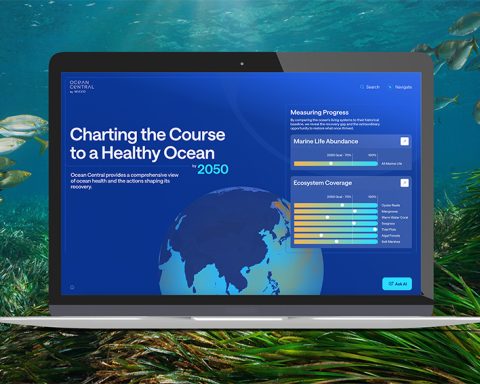
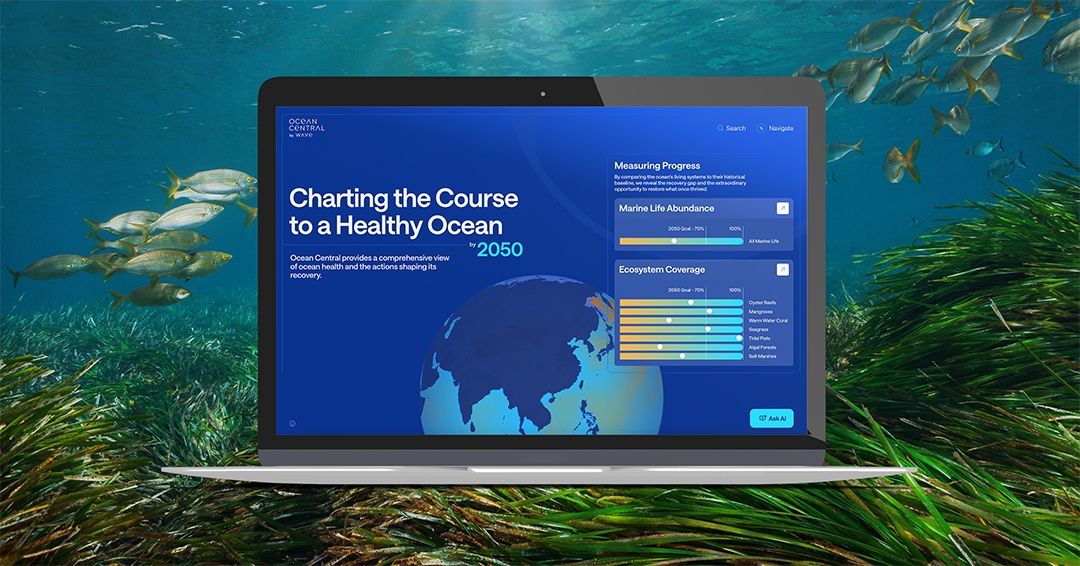
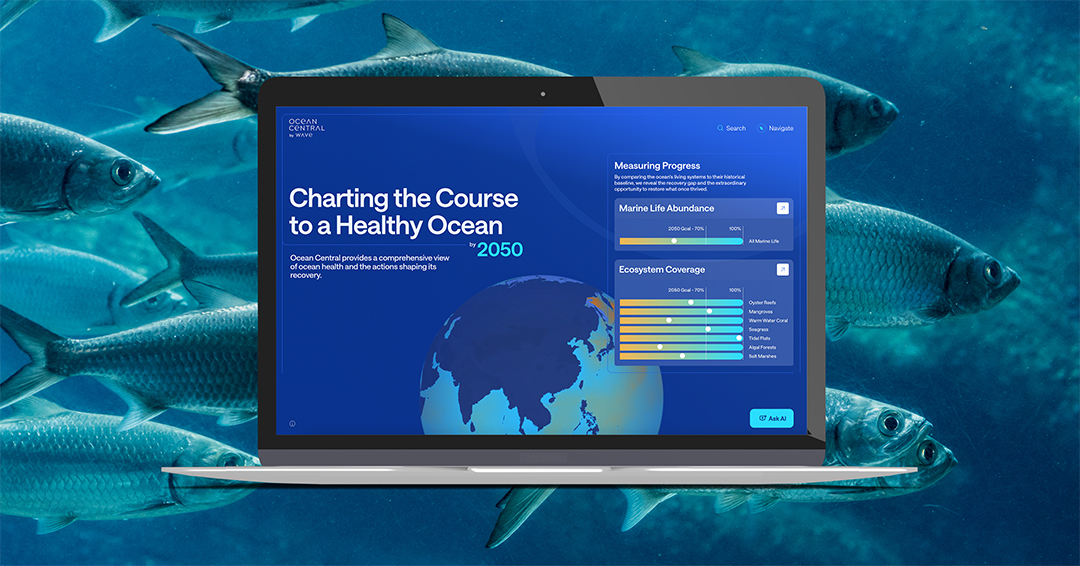
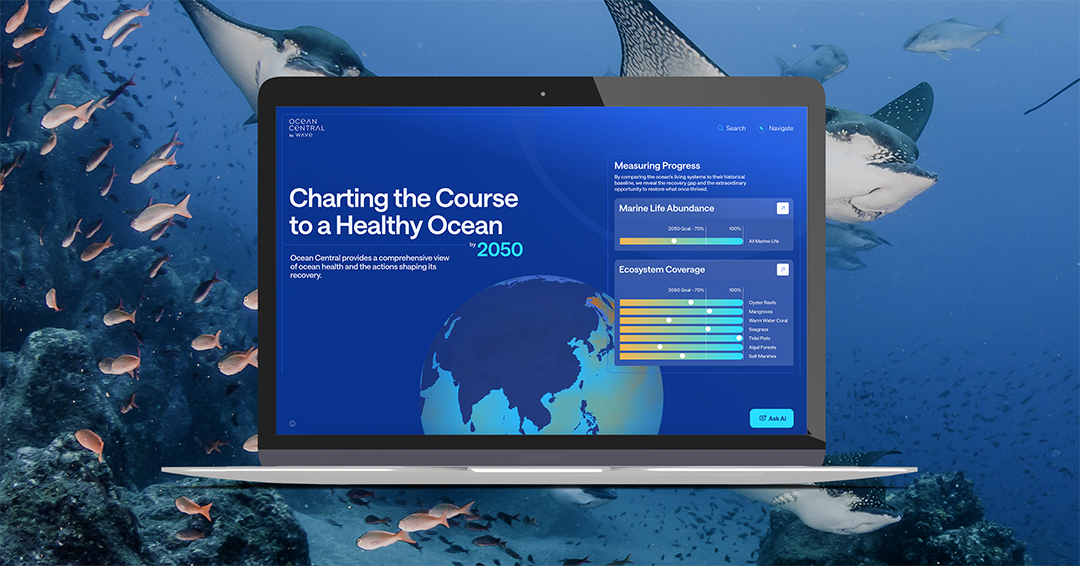
The visibility of a doctrine enhances its durability. Wave is a collective-action platform founded by HRH Princess Reema Bandar Al-Saud and powered by the Future Investment Initiative Institute. It fulfills a unique role that extends beyond the capacities of regulators, academic institutions, or developers. Wave operates through four focus areas: Engagement, Insights, Activation, and Innovation. Its flagship initiative, Ocean Central (oceancentral.org), tracks ocean health, while providing actionable insights for positive interventions for a global audience. This includes providing key metrics for policy development, such as the designation of marine protected areas. Internationally, Ocean Central offers a high-level overview and insights to support effective collaboration, with the framework attracting the attention of several strategic institutions focused on playing a role in analysis, decision making and awareness raising. This direct influence underlines Wave’s growing practical relevance among both domestic decision-makers and global policy professionals.
Ocean Central is modeled on “Rebuilding Marine Life,” a paper co-authored by Wave Chief Scientist Prof. Carlos Duarte. The paper argues that the ocean can be regenerated within a human generation. The platform operationalizes that argument into six recovery wedges: protect spaces, protect marine life, reduce pollution, mitigate climate change, harvest wisely, and restore ecosystems. It tracks progress against three accountability frameworks: the UN Sustainable Development Goals, the Kunming-Montreal Global Biodiversity Framework, and the Paris Agreement.
The 2.0 version of Ocean Central was introduced at Economist Impact’s 13th World Ocean Summit in Montreal in March 2026. As well as a wealth of new data, it incorporated an AI-powered query interface and an English-language ocean news wire from media around the world. In April 2026, Ocean Central received the Webby People’s Voice Award in the Websites & Mobile Sites, Sustainability & Environment category. Over 4.6 million votes were cast. Significantly, the Saudi-founded data platform is increasingly used as a reference tool by stakeholders, and journalists.
HRH Princess Reema Bandar Al-Saud, Founder of Wave, said: “Our oceans are not just a natural resource – they are the lifeblood of our planet. They regulate the global climate, buffer the impacts of climate change, and sustain billions of people who rely on them for livelihoods and as a primary source of protein. Yet today, marine ecosystems face unprecedented pressure from shipping, coastal development, and a wide range of human activities. The need for collective action has never been more urgent. We must come together to drive ocean regeneration within a single human generation.
“Saudi Arabia recognizes this critical moment. Wave’s data platform, Ocean Central, supports this vision by providing a clear, actionable roadmap to protect and restore marine ecosystems.”
The export
Countries with ocean ambitions often issue pledges. Those with established ocean doctrines develop standards. This distinction is evident in the sources external stakeholders consult for guidance. Through CORDAP, Saudi Arabia now hosts the scientific secretariat for coral restoration research. Through Ocean Central, it provides an open data platform widely used to monitor regeneration progress. By leveraging the Future Investment Initiative Institute’s event calendar and summits such as the World Ocean Summit, Saudi Arabia supports key discussions on ocean policy. These actions show substantive leadership, not mere participation, and reflect a nation intent on shaping the agenda.
Professor Carlos Duarte, Wave’s Chief Scientist, said: “Without reliable data, policymakers, industries, and conservationists cannot track change, measure impact, or focus efforts where they matter most. Ocean Central brings together the best available and credible data sources together so we can make real progress on ecosystem recovery.”
Forecast
To understand Saudi Arabia’s evolving leadership, consider three key developments that warrant attention between now and 2030.
First, the quality of intervention data is critical. SHAMS, KAUST, and Red Sea Global are shifting from baseline surveys to reporting measurable restoration outcomes. By 2030, international datasets may classify Saudi reefs as either “case study” or “benchmark.” This will depend on the transparency and detail of data released in the next three to four years.
Second, the potential for regional export is significant. Gulf and Red Sea countries share interconnected reefs, currents, and climate vulnerabilities. A Saudi-originated regulatory toolkit could have a major influence in the region. This toolkit could use SHAMS-style mandates, CORDAP-aligned standards, and Ocean Central-based reporting. Such an initiative would be a consequential and plausible form of soft power.
Third, developing a civic engagement layer is essential. The wide reach of Ocean Central shows demand for resources, making marine policy accessible to the general public. If Wave and its partners continue to expand these translation efforts into schools, creative sectors, and blue-economy SMEs, ocean regeneration could move from a specialized initiative to a civic movement. This shift marks the evolution from doctrine to culture.
With these developments in mind, Saudi Arabia has established the foundational infrastructure; the next phase requires operationalizing and advancing these initiatives.