

Saudi Arabia’s railway network recorded more than 83 million passenger journeys during the first half of 2026, representing an increase of at least 16% compared with the same period last year, according to Transport General Authority figures reported by the Saudi Press Agency.
Rail services carried more than 45 million passengers in the first quarter and approximately 38 million in the second quarter, compared with more than 35 million and 36.5 million respectively during the corresponding quarters of 2025.
Overall, the network handled at least 11.5 million additional passenger journeys during the first six months of 2026 compared with the previous year.
Riyadh Metro Leads Urban Rail Growth
Urban rail services accounted for the overwhelming majority of passenger journeys, recording 78 million trips during the first half of the year.
The Riyadh Metro was the largest contributor, carrying approximately 60.7 million passengers, including 31 million journeys in the first quarter and 29.7 million in the second.
The metro’s second-quarter figure alone represented an increase of nearly 26% compared with the 23.6 million passengers recorded during the same period in 2025.
The automated people mover at King Abdulaziz International Airport in Jeddah carried around 13.9 million passengers during the first half, while the automated people mover at Princess Nourah bint Abdulrahman University recorded approximately 1.26 million journeys.
Intercity Rail Services Continue to Expand
Intercity rail services also continued to serve millions of passengers during the first half of the year.
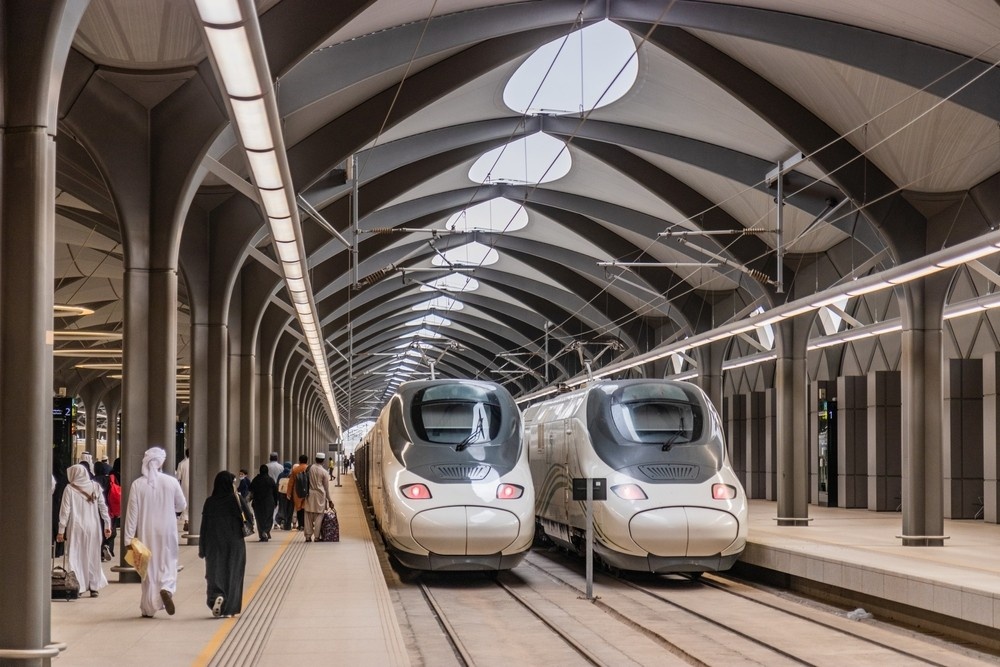
The Haramain High-Speed Railway, which connects Makkah and Madinah through Jeddah, King Abdulaziz International Airport and King Abdullah Economic City, carried approximately 3.6 million passengers during the first two quarters.
The Eastern Train, connecting Riyadh with cities in the Eastern Region, recorded around 389,000 journeys in the second quarter, while the Northern Train, serving destinations including Majmaah, Qassim, Hail, Al-Jouf and Qurayyat, carried approximately 246,000 passengers.
The continued increase in passenger traffic comes as the Kingdom expands its railway and public transportation infrastructure to improve mobility, reduce road congestion and enhance quality of life.
Railways Also Support Freight Transport
The growth extended beyond passenger services. Saudi Arabia’s railway network transported approximately 7.7 million tons of minerals and goods during the first half of 2026.
The Transport General Authority also reported approximately 47,000 twenty-foot equivalent units (TEUs) transported during the second quarter.
The figures highlight the growing role of railways in connecting cities and economic centers, reducing road congestion, strengthening freight links and supporting the Kingdom’s broader economic development and environmental sustainability objectives.