


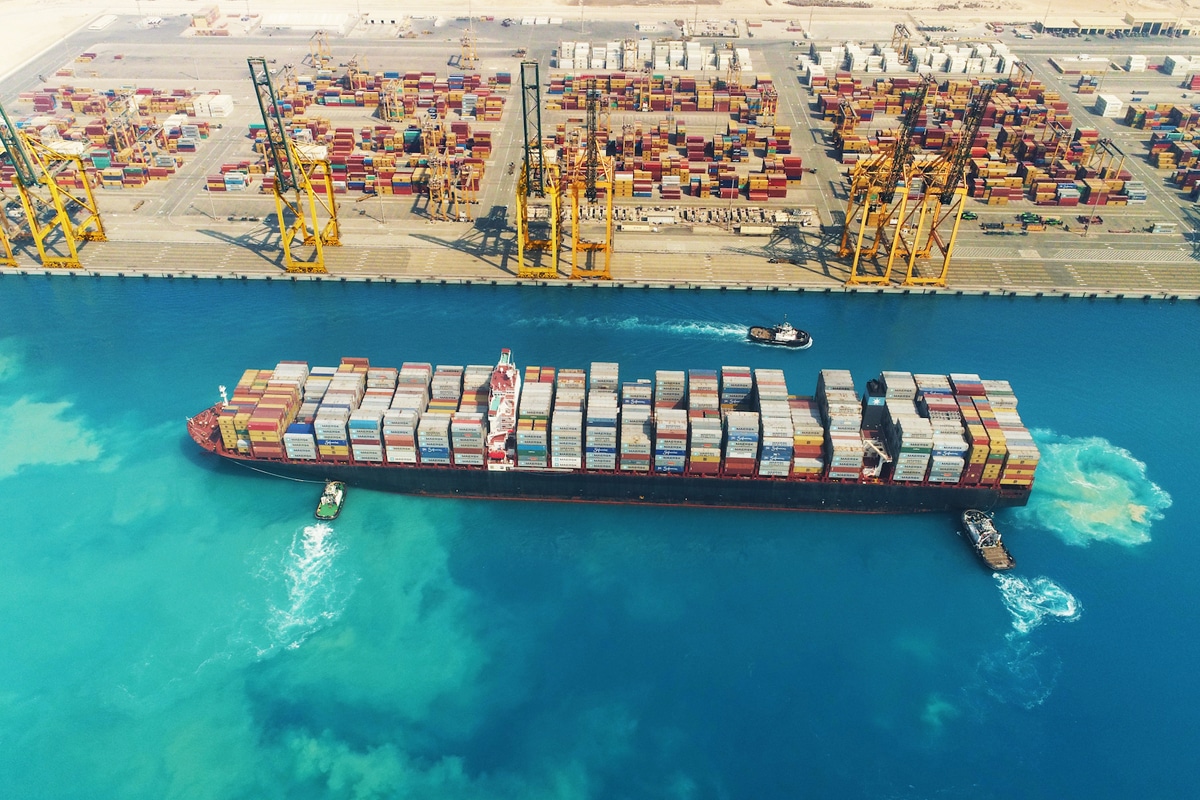
The Saudi Ports Authority (Mawani) has issued a circular suspending the completion of advance arrangements for transit containers requiring onward transportation through Saudi ports, as the authority continues to monitor container flows, operational performance indicators and the impact of regulatory measures on port efficiency and capacity utilization.
Mawani directed shipping agents and terminal operators at Saudi ports to continue operating in accordance with Circular No. 12 of 2026, effective from June 10, 2026, until further notice.
Suspension of Advance Transit Arrangements
The measure applies to transit containers arriving at Saudi ports that require onward transportation to their final destinations either within the Kingdom or abroad.
The suspension comes as part of Mawani’s ongoing assessment of transit container movements and operational performance, allowing the authority to evaluate whether existing regulatory measures remain appropriate under current operating conditions and port capacity requirements.
Mawani said the decision does not necessarily represent a permanent cancellation of the previous arrangements. The authority retains the ability to reinstate the suspended procedures or introduce other regulatory measures whenever operational requirements warrant such action.
What Did the Previous Arrangements Require?
Circular No. 25 of 2026 introduced advance arrangements for transit containers requiring onward transportation, with the objective of preventing containers from remaining at ports for extended periods and ensuring their timely movement to final destinations.
Under the previous requirements, shipping agents were required, before a vessel’s arrival, to identify the final destination and consignee of transit containers and complete the relevant contract or advance arrangements for onward transportation.
The measures also required the identification of the inland carrier or logistics service provider responsible for transporting the containers, as well as providing Mawani or the terminal operator with relevant transportation information and maintaining supporting documents and agreements.
The arrangements were also designed to ensure that transit containers were removed from the port within a specified period, reducing pressure on storage yards and operational facilities and improving the use of available port capacity.
Why Were the Arrangements Introduced?
The earlier measures followed observations that some transit containers requiring onward transportation remained at Saudi ports beyond targeted operational periods because transportation arrangements had not been completed before vessels arrived.
Extended container stays can place additional pressure on storage yards and port facilities, potentially affecting handling speeds and the efficient use of available capacity.
The advance-arrangement model therefore shifted part of the operational planning to the period before a vessel’s arrival, requiring the final destination, transportation plan and responsible service provider to be identified in advance.
According to details published on the earlier circular, transit containers requiring onward transportation were generally expected to leave the port within 15 days of discharge, unless Mawani approved otherwise. Specific arrangements also applied to containers that had arrived before the measures took effect.
Suspension Does Not Eliminate Logistics Risks
Saudi logistics expert Hassan Al-Hlaili told Al Arabiya.net that the suspension reflects a shift in how operational risks are managed rather than an end to those risks.
He said logistics flexibility has become an essential element of business continuity and risk management, particularly as global trade flows and supply chains continue to experience changing operating conditions.
In his view, moving from broad advance measures toward handling shipments according to their actual circumstances and routes could provide supply-chain stakeholders with greater flexibility to make decisions based on updated operational data.
Potential Impact on Importers and Supply Chains
The way transit containers are managed can directly affect several elements of the supply chain, including delivery times, storage and transportation costs, customs processes and companies’ ability to plan delivery schedules.
Al-Hlaili said greater procedural flexibility could help importers and logistics providers make transportation and storage decisions based on more accurate operational conditions, particularly amid changes in international trade routes.
At the same time, disruptions to onward transportation or delays in moving containers to their final destinations can increase delivery times and raise the cost of moving materials and goods to factories or warehouses.
Managing transit containers is therefore an important component of maintaining supply-chain efficiency, particularly when ports serve as gateways for cargo moving onward to other destinations.
Responsibilities Previously Assigned to Shipping Agents
The measures introduced in June 2026 placed several requirements on shipping agents, including identifying the final destination and consignee of transit containers before a vessel arrived.
Shipping agents were also required to complete advance arrangements for onward transportation and identify the inland carrier or logistics provider responsible for the movement.
They were further required to provide transportation data when requested and maintain documents demonstrating that the necessary arrangements had been completed.
The objective was to link a container’s arrival at the port to a clearly defined onward transportation plan, rather than allowing containers to arrive without an established route or identified party responsible for removing them from the port.
Measures for Delayed Containers
The previous arrangements included measures for containers that were not moved within the specified periods. In such cases, shipping agents could become responsible for storage, handling and other costs resulting from containers remaining at ports after the applicable deadline.
The measures also allowed the authority to take regulatory and operational action against non-compliant shipping lines or agents, including suspending the acceptance of transit containers associated with them until the causes of the violation were addressed.
The main objective was to prevent the accumulation of containers in port yards and protect available capacity, particularly given the growing importance of Saudi ports in regional and international trade and supply chains.
Continued Operational Monitoring
Mawani confirmed that it will continue monitoring operational indicators and transit container movements, while retaining the option to reinstate the suspended procedures or introduce new regulatory measures depending on operational requirements.
This means the framework governing transit containers will remain closely linked to ongoing assessments of cargo volumes, yard utilization, handling speeds and the ports’ ability to accommodate changing traffic levels.
Such flexibility requires a balance between facilitating trade flows and preventing transit containers from creating excessive pressure on storage yards and operational facilities.
Saudi Ports and Their Role in Supply Chains
The measures form part of broader efforts to strengthen the efficiency of Saudi ports and their ability to handle international trade as the Kingdom continues to expand its role as a logistics hub connecting markets across Asia, Europe and Africa.
Efficient handling of transit, re-export and onward transportation containers is a key factor in maintaining cargo flow, reducing waiting and storage periods and improving overall supply-chain performance.
From this perspective, reviewing and adjusting regulatory procedures according to actual operational indicators is part of effective logistics management, particularly in a sector influenced by changing trade routes, global demand and maritime and inland transportation capacity.
A Regulatory Move Focused on Operational Efficiency
The decision to suspend the completion of advance arrangements for transit containers reflects an approach focused on adjusting regulatory tools in response to changing operational conditions rather than applying a single framework to every shipment.
As Mawani continues to monitor performance and retains the option to reinstate the previous measures or introduce alternatives, capacity utilization, container dwell times and supply-chain continuity will remain key factors in determining future regulatory decisions.
This flexibility is particularly significant as Saudi ports play an increasingly important role in regional and global trade, where faster cargo handling and shorter container dwell times can contribute directly to supply-chain efficiency and cost management.