

Reshaping the Saudi-European economic corridor
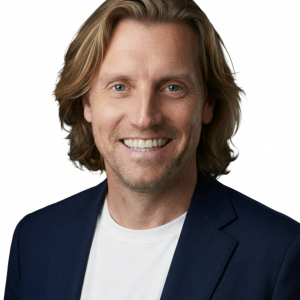
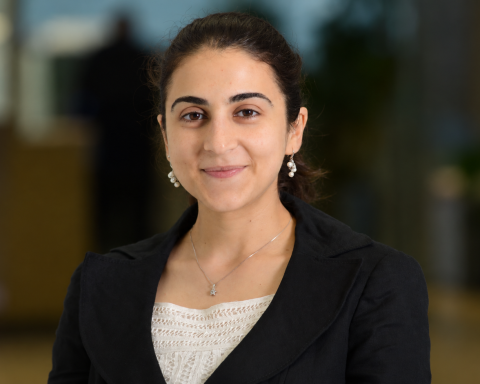
By Johann Jenson, reporting from FII PRIORITY Europe for The Saudi Times, Rome, June 2026
Johann Jenson is Founding Partner of NIAS.io, a Saudi‑focused investment platform and network of private offices and institutional allocators. A technologist and investor, he writes on the emerging architecture of global capital and Saudi Arabia’s role in shaping next‑generation investment platforms, offering field‑level insights from major global gatherings.
Exclusive Interviews for The Saudi Times
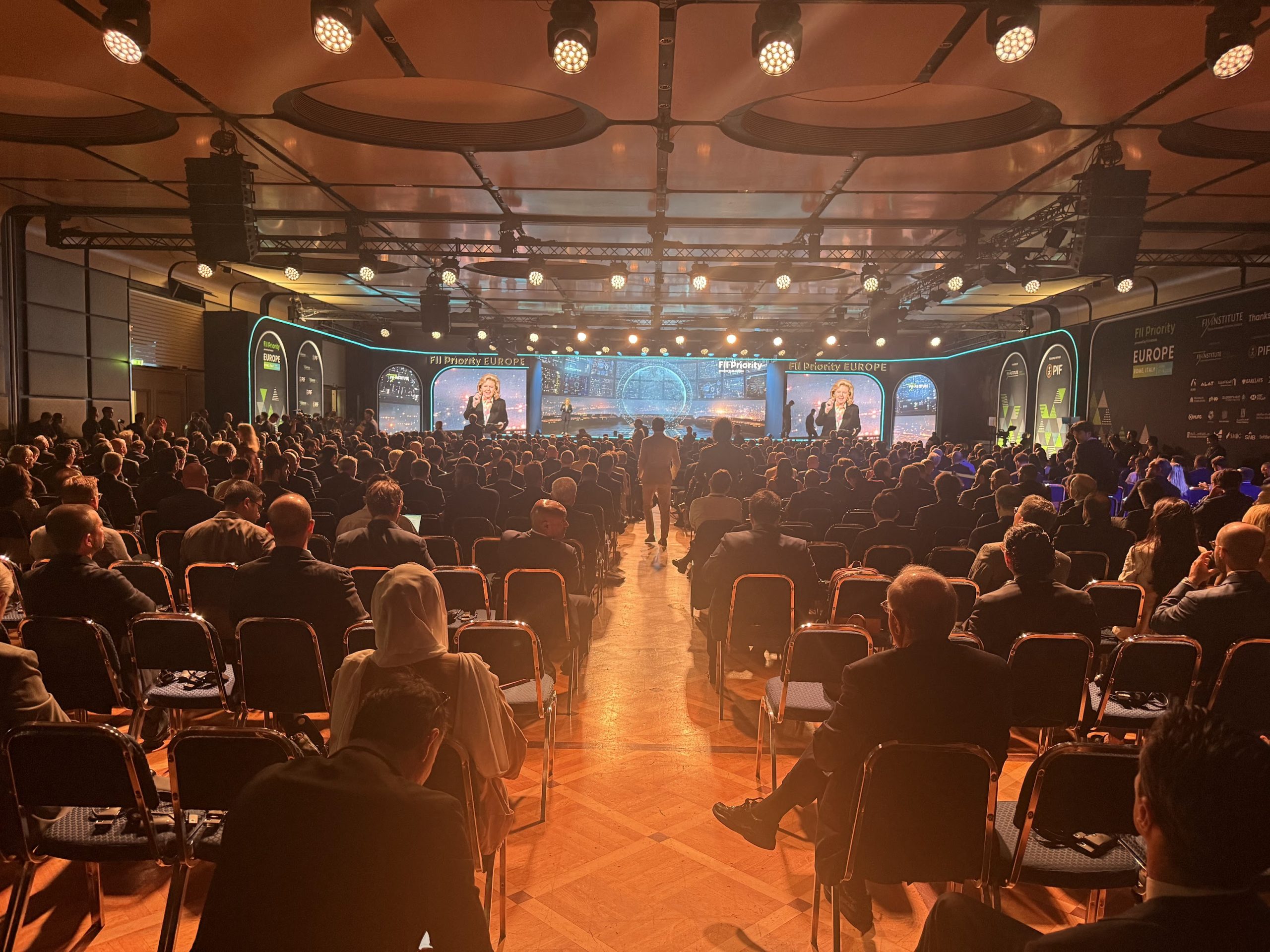
Rome, Italy, June 2026, – A harp played under frescoed walls. Marble floors carried a steady movement of Saudi officials, European industrialists, bankers, founders, family offices, and advisers. Outside, Rome was caught in a June heat wave. Inside, more than 2,000 participants moved through conversations on defence, AI, culture, tourism, and the next phase of Saudi-European economic partnership wearing linen, Loro Piana, dark suits, discreet watches, and the occasional piece of couture.
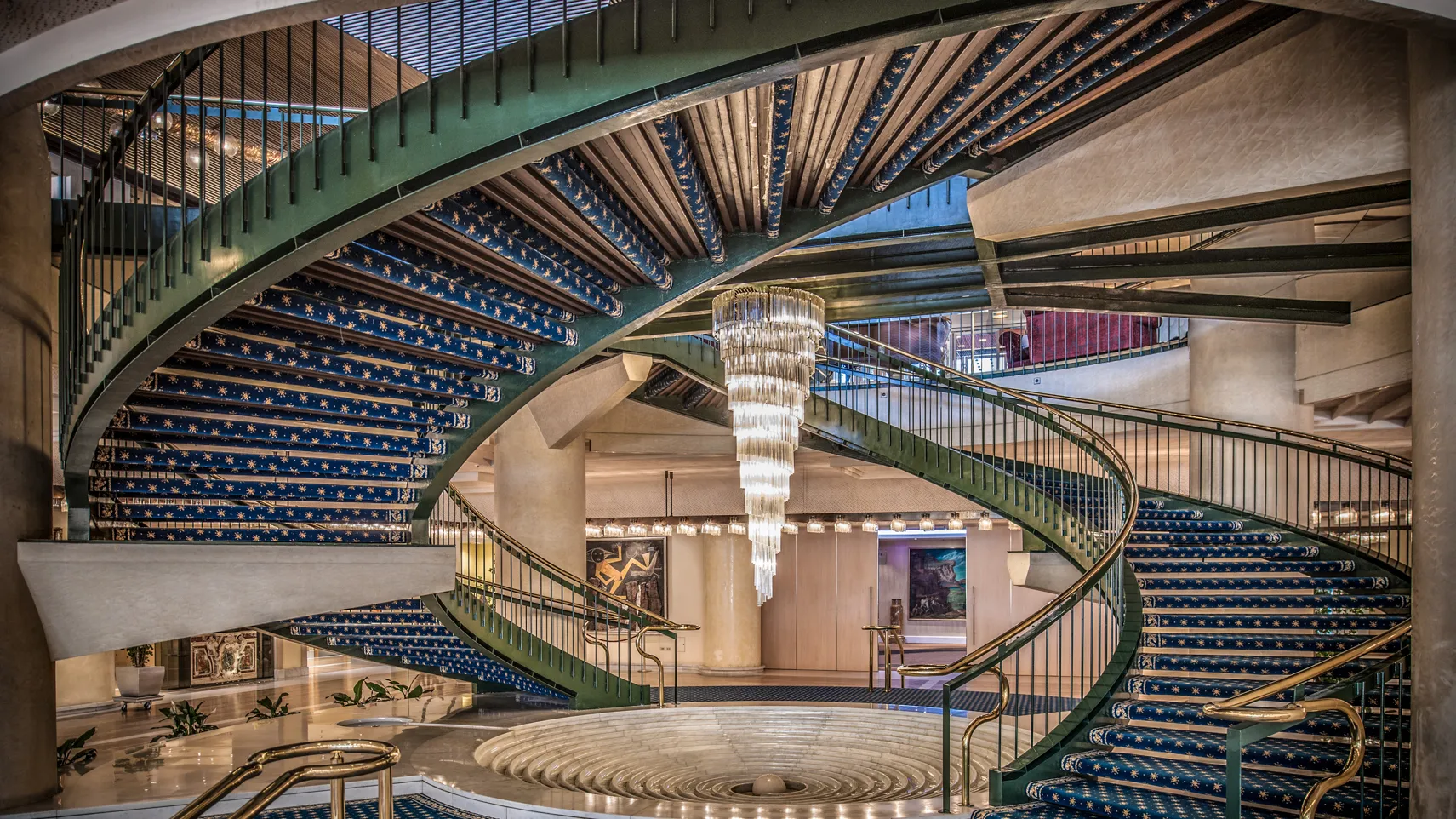
The setting was elegant yet the conversations were practical and sometimes urgent. Behind the panels on defence, AI, tourism, capital markets, cities, and energy, the same question kept emerging: which European capabilities can Saudi Arabia actually use, and which Saudi partnerships are serious enough to make them work?
Throughout the summit, over coffee and canapés, most participants focused on introductions: European operators looking for Saudi partners, Saudi and European capital looking for products and expertise, and advisers judging which conversations were meaningful and which relationships could last.
Europe has experience with and patient capital for many of the sectors Saudi Arabia is trying to scale: defence, education, healthcare, culture, and tourism. For sovereigns, institutional capital, and private offices on both sides of the corridor, the primary question is: which opportunities can be de-risked, localised, operated, and scaled?
H.E. Yasir Al-Rumayyan, Governor of PIF and Chairman of the FII Institute, opened the 2-day conference by sharing that PIF has invested approximately €98 billion across Europe and the UK since 2017, contributing around €70 billion to GDP and supporting roughly 160,000 jobs.
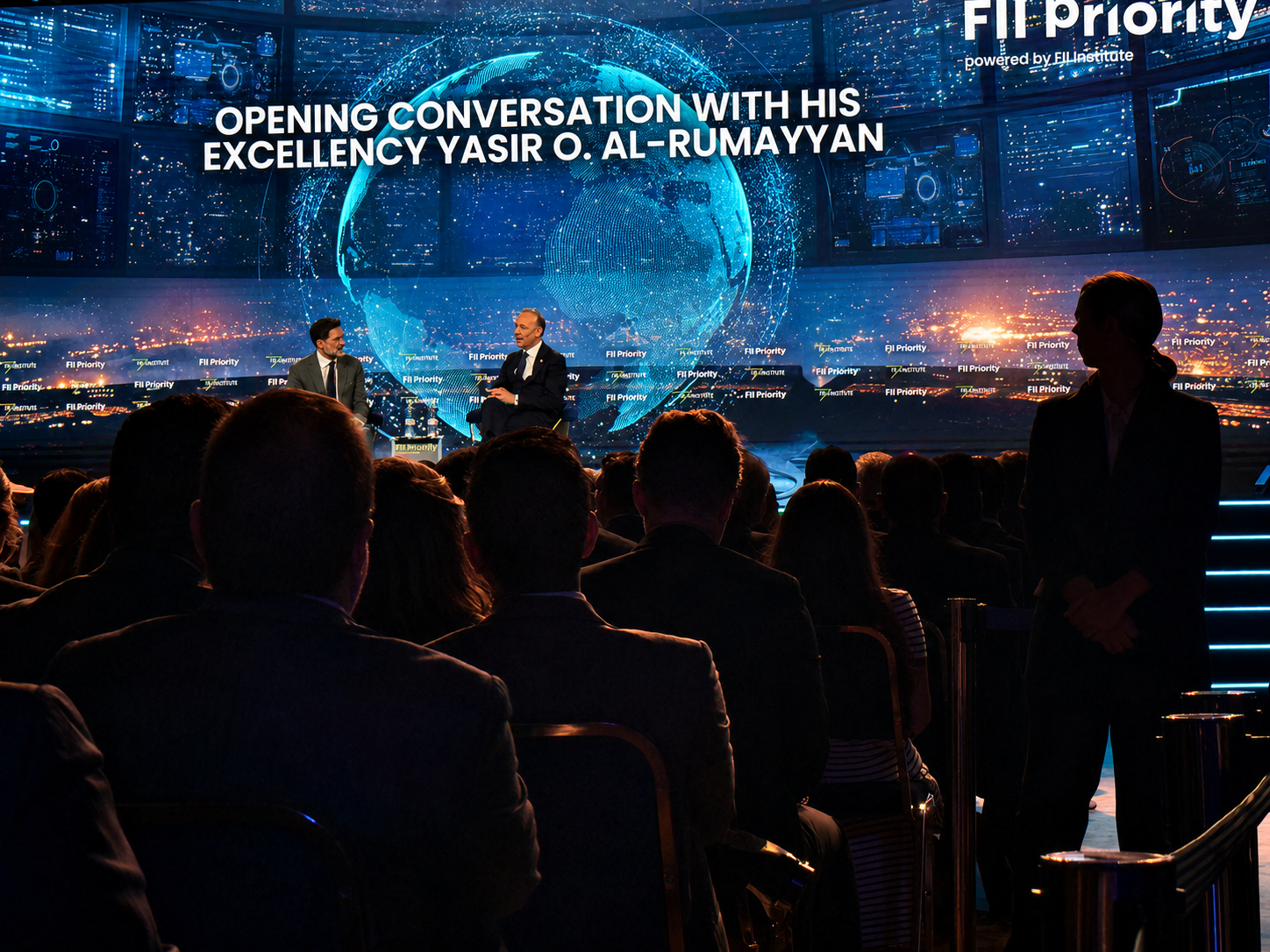
Italian Prime Minister Giorgia Meloni highlighted that Europe needs “strategic autonomy, industrial capacity, technological sovereignty and financial power.” It was a strong line because autonomy is never purely rhetorical. It requires ports, grids, data centres, energy, shipyards, schools, engineers, software, patient capital, and procurement systems much needed on an ambitious timeline: December 31, 2030.
H.R.H Princess Maha bint Mishari, newly appointed CEO of the FII Institute, emphasised that “the world is not short of ideas. It is short of execution”. I heard that line repeated in different ways throughout the event.
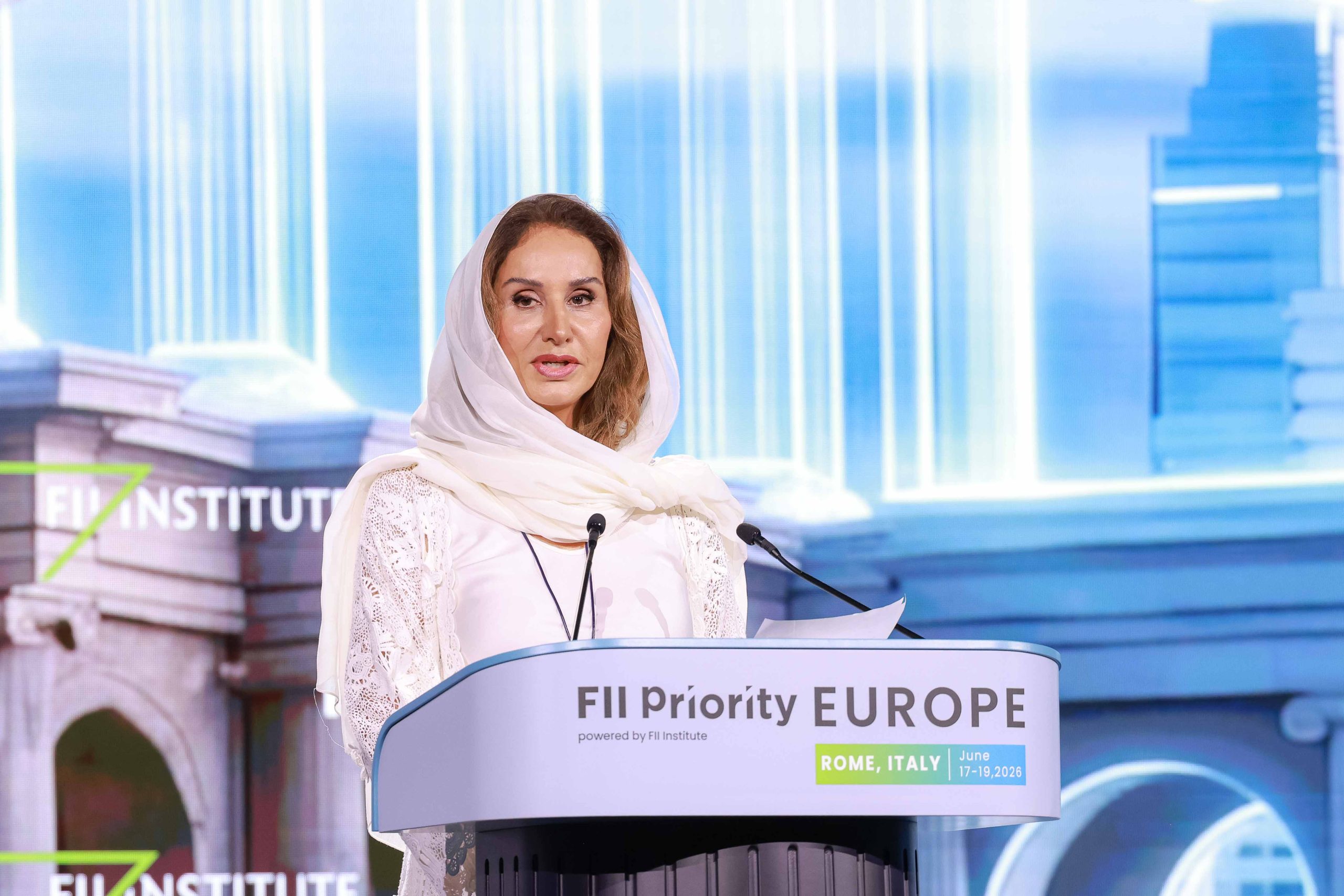
Starting with defence, the ReArm Europe programme (Readiness 2030) aims to mobilize up to €800 billion in defence spending by 2029, including a €150 billion SAFE facility designed to strengthen Europe’s industrial base. Germany alone is expected to increase defence spending to more than €160 billion by the end of the decade.
For Pierroberto Folgiero, CEO of Fincantieri, the issue is not simply spending more money.
“Europe needs to increase defence expenditure, but at the same time enlarge the industrial base,” Folgiero told The Saudi Times.
Fincantieri, which spans defence naval vessels, submarines, cruise ships, specialized offshore vessels, and underwater systems, is expanding its presence in Saudi Arabia through Fincantieri Arabia for Naval Services headquartered in Riyadh. Its focus is on building long-term capability in the Kingdom.
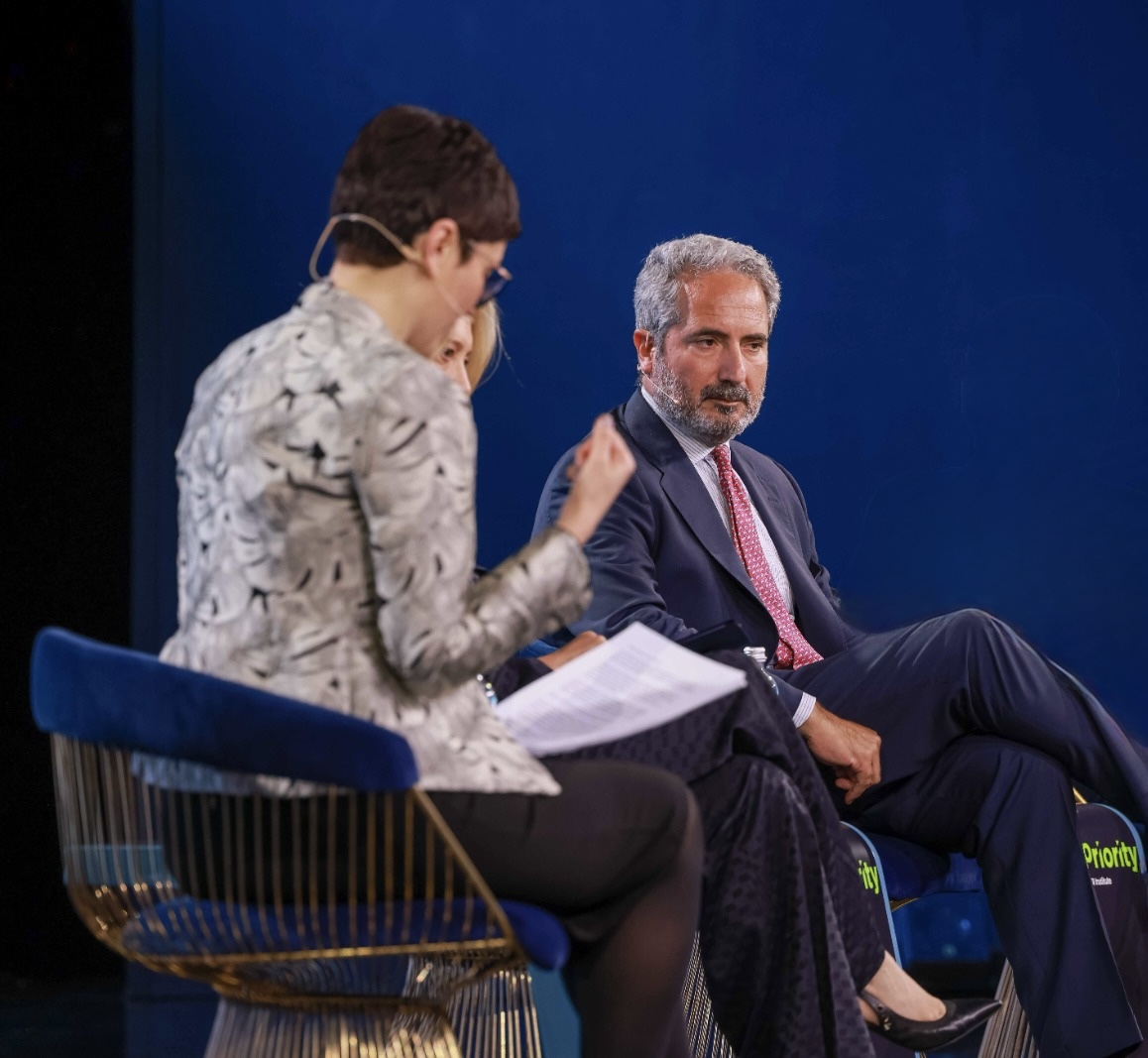
“The most valuable thing today for Saudi success is not necessarily the amount of capital,” Folgiero commented to The Saudi Times. “It is the readiness to transfer knowledge and know-how.”
The same theme appeared in a conversation with ELT Group, the Italian electronic defence company. ELT has operated in the Kingdom since 2018, reported €400 million in annual revenue last year, and established its Saudi entity in 2022.
“Our plan for localising strategic competencies and key industrial capabilities in Saudi Arabia is ambitious and already in the execution phase,” ELT Group’s CEO Domitilla Benigni explained to The Saudi Times. “We are talking about localising something that is extremely important to the strategic partnership between our countries.”
“What we are building in the Kingdom is more than a commercial outpost. It is a long-term industrial partnership,” she added. “The real measure of a partnership is not what you sell, but what you build together. What we are building through Elettronica for Industry in Saudi Arabia is designed to last.”
For capital allocators defence exposure is not only in primes and procurement. It is also in maintenance, testing, training, suppliers, simulation, cybersecurity, and the local companies that sit around a national industrial base.
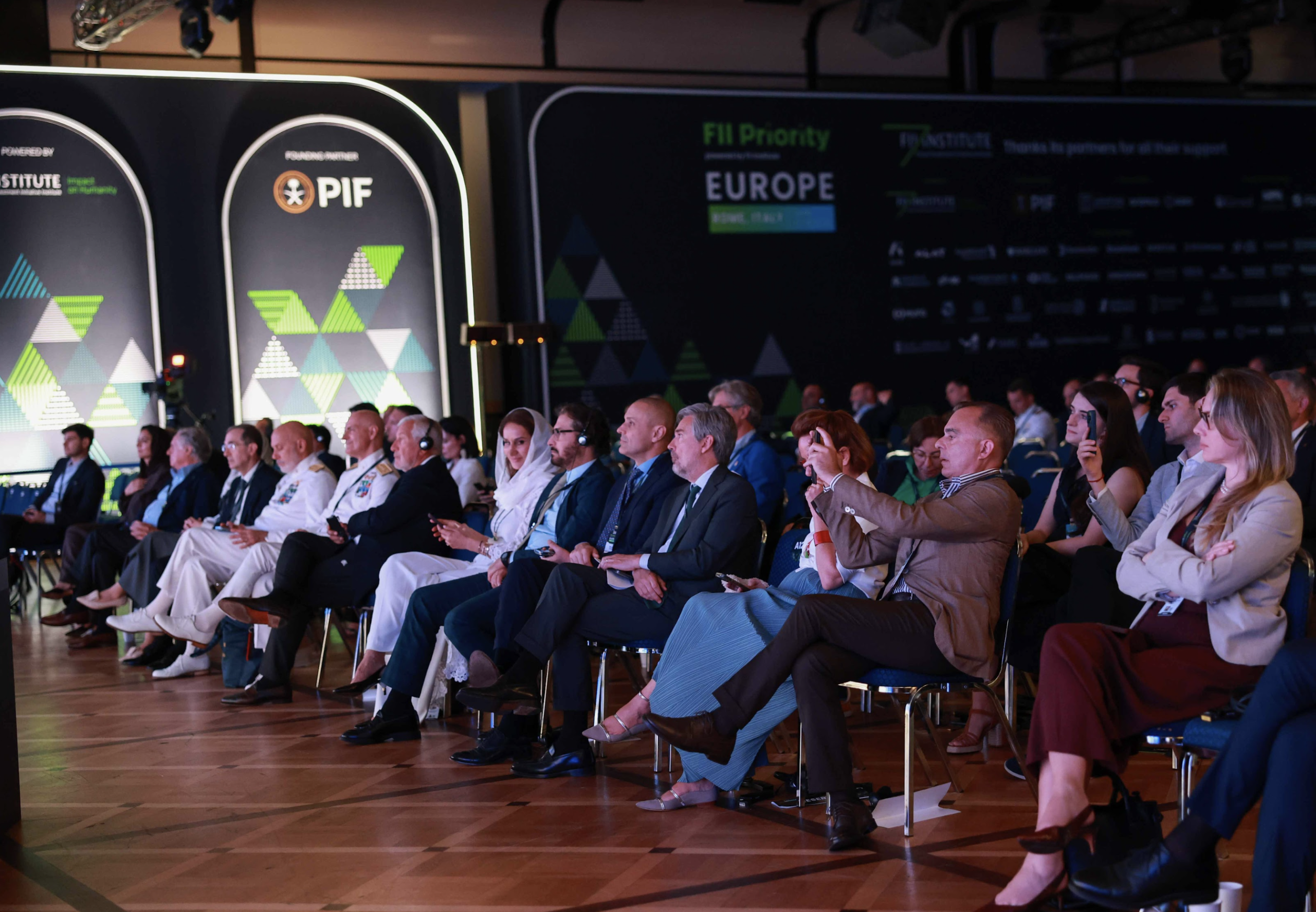
Italy’s Defence Minister, Guido Crosetto, framed the challenge directly during the conference.
“The biggest enemy of every industry is time,” he said.
For investors, the execution challenge is not only with large contractors. It is in the engineering firms, testing facilities, maintenance providers, specialist manufacturers and technology suppliers that shorten the distance between strategy and execution.
As Admiral Giuseppe Cavo Dragone, Chair of NATO’s Military Committee, noted during the conference, “Sovereignty and cooperation are not contradictory concepts.”
Outside defence, the same logic appeared in the businesses forming around Saudi Arabia’s new destinations. Resorts and cities need more than buildings. They need aviation access, hospitality, mobility, security, and service.
Adel Mardini of Jetex, a global private aviation and flight-support company, gave a practical example. Jetex handles private terminals, aircraft services, trip planning, and premium travel support.
“The infrastructure the region is building is thrilling,” Mardini said to The Saudi Times. “Saudi is one of the strongest vision markets for us.”
Mardini said Jetex handled around 100 flights at the Red Sea in a single month during its soft-opening phase. For a destination still in its early stage, that shows real demand, not merely projections.
In Saudi Arabia, private aviation is not only luxury; it is part of the operating layer around new destinations, investors, boards, delegations, and high-trust hospitality.
Gianfranco Di Maio of Atoll Holding raised a related point around helicopter landing pads and short-range executive mobility, a niche that becomes less niche when destinations spread across coastlines, mountains, urban districts, and giga-projects.
“Saudi Arabia is building destinations where access, time, and service quality matter as much as architecture,” Di Maio told The Saudi Times. “Helipads, Fixed Base Operators, and smart urban air mobility are more than a luxury experience. Similar to the PIF’s The Helicopter Company (THC) Atoll is seeking to build tourism, business travel, and emergency response infrastructure for the next phase of the Kingdom’s growth.”
New Murabba, the planned new downtown district in northwest Riyadh anchored by the Mukaab, is vast: about 14 square kilometers, roughly the size of the downtown cores of Manhattan, London, and Paris combined. That scale raises the question: how do you make a Saudi giga-project work day to day, not only look impressive from above?
Michael Dyke, CEO of New Murabba, brought the discussion back to that practical challenge. Adding 280,000 residents to Riyadh cannot simply mean adding more pressure to today’s roads. “The worst thing of all would be that the expressways and interchanges of today become completely clogged up by the future 280,000 residents of tomorrow,” he said.
Dyke said New Murabba is targeting around 23,000 people per square kilometre, roughly four times Riyadh’s current density and closer to central London, Paris, or Manhattan. At that density, success depends on more than an impressive landmark. It depends on mobility, utilities, public space, offices, hotels, retail and services working as a real part of the city.
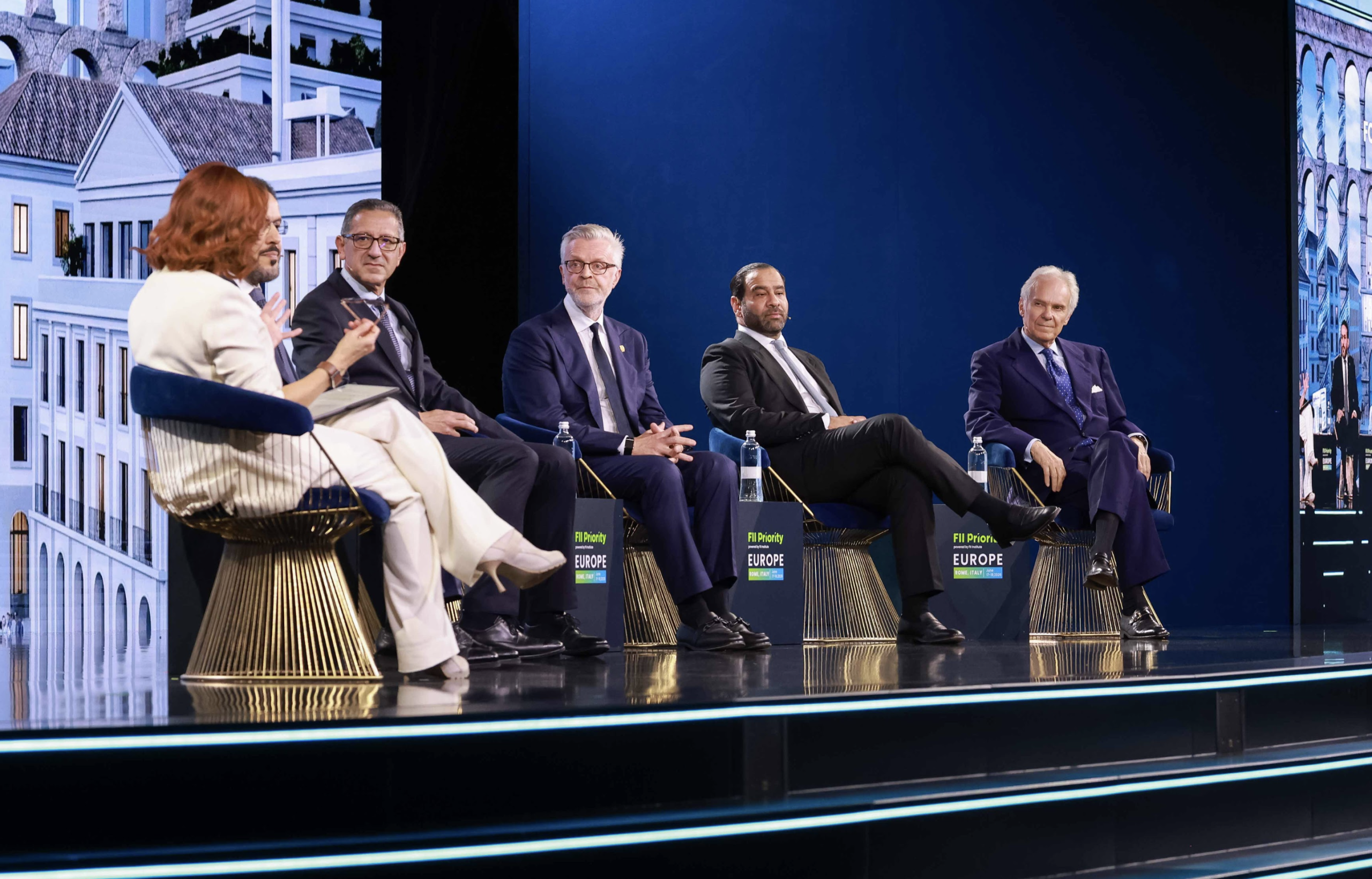
Tourism adds more pressure on key infrastructure. Globally, UN Tourism estimates that international tourist arrivals reached 1.52 billion in 2025. In Saudi Arabia, total visitor numbers reached 123 million, with USD 81 billion in tourism spending. Numbers of that size require more than hotels. They require aviation access, trained staff, events capacity, mobility, city services, and operating systems that can handle visitors at scale.
Everyone seemed to recognise that talent is critical. Saudi Arabia can build hotels, airports, and venues quickly, but running them well requires managers, operators, chefs, and service leaders trained to international standards. The SAR 600 million Tanmeya Hospitality & Tourism Fund, managed by Riyadh-based Tanmeya Capital, is one example: a 25-year initiative to build a nationwide hospitality, tourism, and culinary education ecosystem.
Similarly, Saad Al-Tami of the Gulf Education Investment Company is organizing a UK summer leadership programme this August for exceptional young Gulf leaders, with speakers and mentors including GCC Secretary General H.E. Jasem AlBudaiwi, Sheikh Fawaz Al-Sabah, H.E. Deemah AlYahya, and H.E. Sheikh Dr. Sager Al-Khalifa.
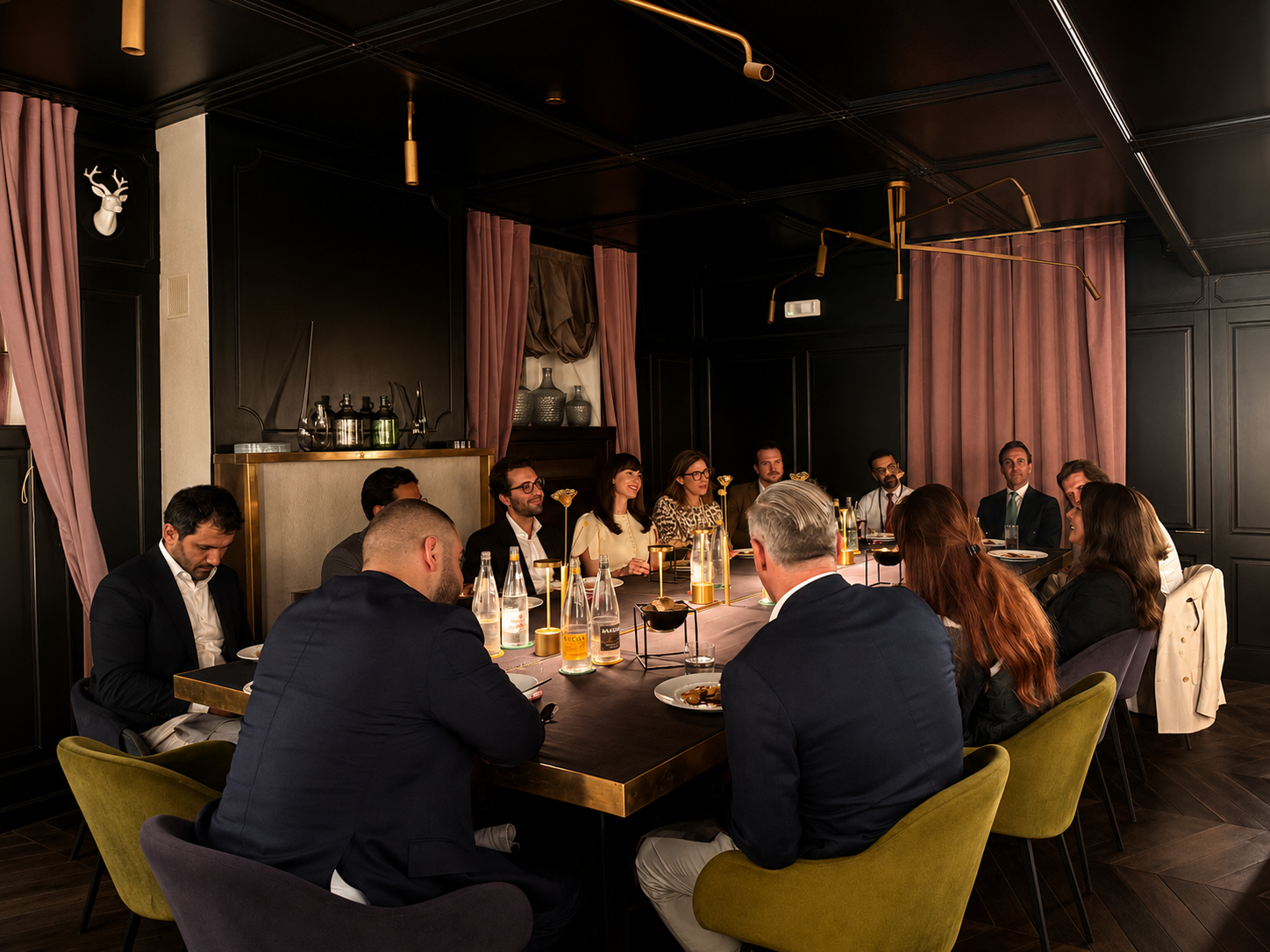
“The transformation happening in Saudi Arabia and across the Gulf has inspired us to work with young leaders who can help turn Vision 2030 from ambition into execution at scale,” Al-Tami told The Saudi Times. “Under the leadership of the Saudi government, youth education has become one of the most important foundations of the Kingdom’s next phase.”
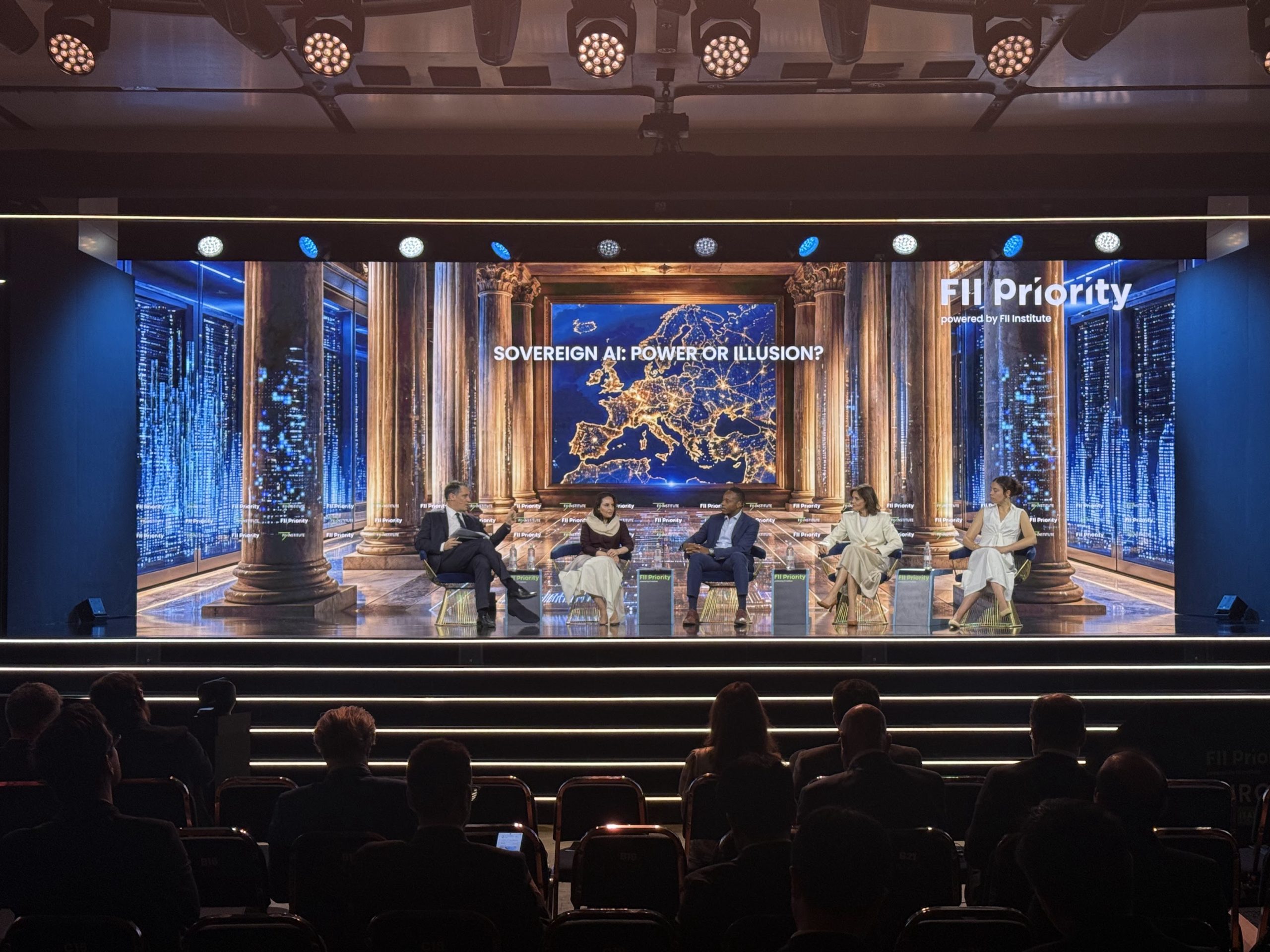
Deemah AlYahya, Secretary-General of the Digital Cooperation Organization, made a similar point during the sovereign AI discussion. “Every country has a competitive advantage,” she said. “By connecting these competitive advantages together, we can leapfrog faster and bridge that AI divide quicker.”
Travis Kalanick, founder of Atoms and former CEO of Uber, gave the founder’s version of the deployment problem. “When the regulatory process becomes the outcome, something that is genuinely good for people can roll out a decade late,” he said during his FII session on autonomous systems.
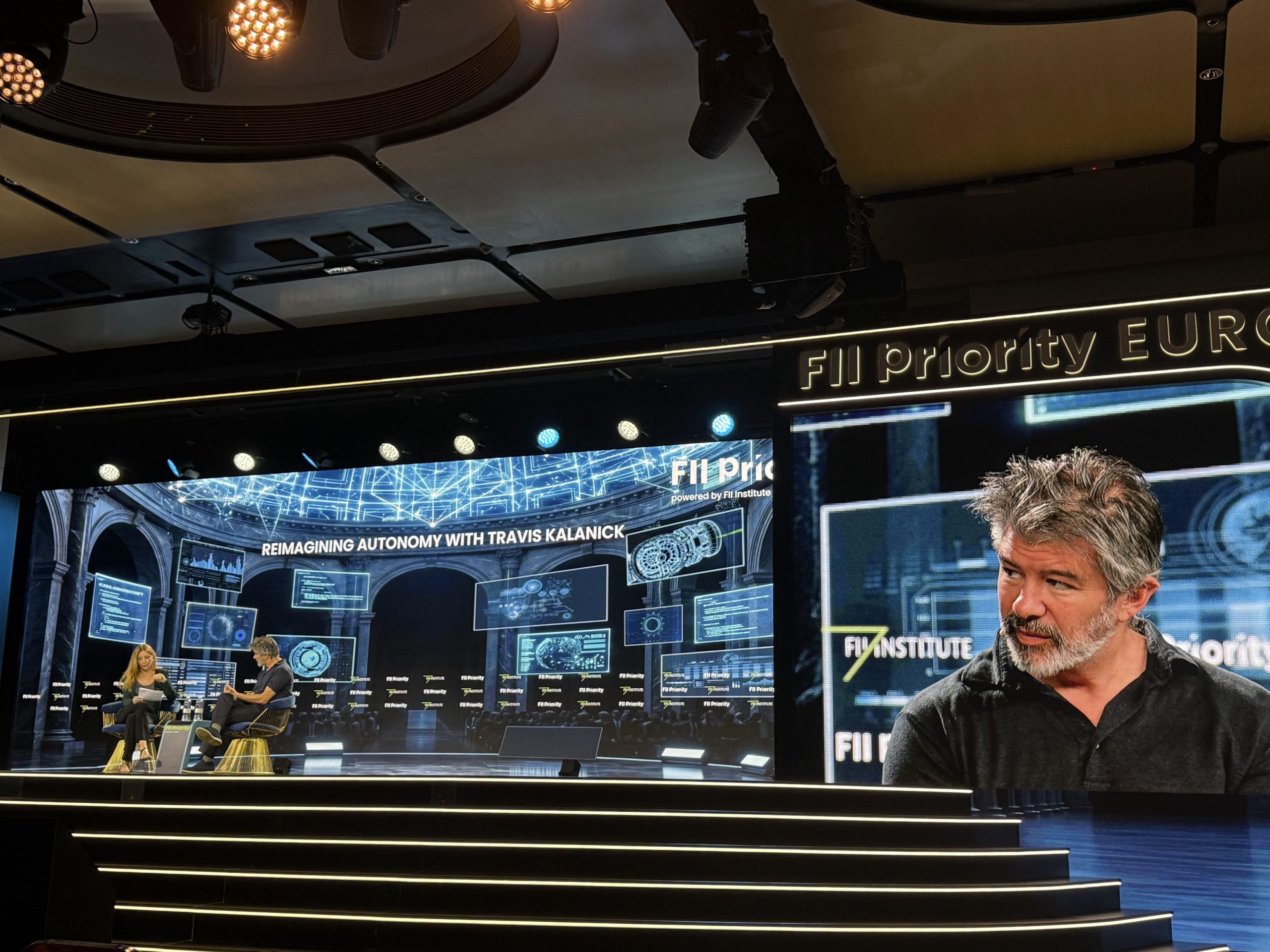
In a short conversation afterward, Kalanick told The Saudi Times the Middle East is a stronger market than Europe for food automation and related physical-economy businesses. He pointed to latent demand in Saudi Arabia, especially in restaurants.
“There are not enough restaurants in Saudi,” Kalanick told The Saudi Times. “If you’re in the restaurant business, things are very good.”
On the sidelines of FII, PIF hosted a private salon led by Jerry Todd, Head of the National Development Division (NDD) at PIF, bringing Italian businesses into a more direct conversation with PIF’s National Development Division and Saudi private offices, family capital, and institutional allocators. It moved the discussion from capital headlines to market entry: which Italian companies have capabilities Saudi Arabia needs, which Saudi partners can help them localise, and which opportunities are serious enough to capitalise and scale.
“We’ve identified 140 distinct opportunities within the Saudi economy,” Todd said. “Those are places for businesses to come set up, whether manufacturing or service businesses, and participate in these growing ecosystems. Many of those opportunities fit sweet spots for European operating businesses. Electrical harnesses, water pumps, venue management; there are a lot of areas where European and Italian companies are already global leaders. What we are looking to do is partner with people who want to make that shift happen.”
That is the part of the Saudi-European economic corridor that matters most to private capital. The opportunity is not just to introduce European companies to Saudi Arabia. It is to match them with the right operating partners, local demand, patient capital, and growth opportunities.
The scale discussed in Rome was impressive, but the Saudi numbers tell a bigger story. PIF has grown from $150 billion in assets under management in 2015 to more than $1.2 trillion today. From 2021 to 2025, it invested more than $199 billion in new projects inside Saudi Arabia. From 2021 to 2024, PIF and its portfolio companies spent more than $157 billion with the local private sector and contributed more than $243 billion to real non-oil GDP. Saudi Arabia recorded 123 million visitors and USD 81 billion in tourism spending in 2025. New Murabba alone is planned for 280,000 residents, while Diriyah will house 100,000, and Qiddiya targets over 500,000.
This is a national transformation intended to deliver meaningful quality of life improvements to the 19.6 million Saudi citizens and 15.7 million non-Saudis living in the Kingdom.
Europe has deep expertise in sectors Saudi Arabia wants to scale. Saudi Arabia has the capital, demand, and urgency to give that expertise a new market. The opportunity now is to turn that alignment into something durable: suppliers that can deliver, Saudi and international teams that can collaborate, schools that produce talent, systems that are localised, and partnerships that grow into lasting institutions.
About Johann Jenson
Johann Jenson is a technologist and investor and a regular contributor to The Saudi Times. As Founding Partner of NIAS.io, a Saudi‑focused investment platform and network of private offices and institutional allocators, he partners with international companies, family offices and institutional investors engaged in the Kingdom’s Vision 2030 transformation.
Reporting from major global investment gatherings, including FII PRIORITY Europe, his field notes give readers an insider, practitioner’s view of how capital, technology and long‑term partnerships are being structured through Saudi Arabia, making him a trusted voice on the emerging architecture of global capital.
Edited & Published by: Boudou Gueffai | Editor-in-Chief