

aramcoSAIL and Qualcomm’s Design in Saudi Arabia with AI program help transform ideas from the lab into patents and businesses. Alongside them, Aramco’s wider venture capital platform has an allocation of $7.5 billion. The Kingdom’s own statistics tell of its progress.
There are lots of nations that attempt to build an innovation economy that end up on the surface of what everyone can see: accelerators, conferences and funding announcements. Saudi Arabia is working on the next step after the concept. Engineers are embedded, ideas are tested against real-life challenges and their IP is protected. If an idea is effective, it receives a path to funding and scale.
The link between research and commercialization is filled by Aramco SAIL, Qualcomm’s Design in Saudi Arabia with AI program, and the venture platform that accompanies Aramco. This is the place in which technology fortunes are made or lost.
Start with the research base. The General Authority for Statistics (GASTAT) has reported that Saudi Arabia invested SAR 29.48 billion ($7.9 billion) in research and development (R&D) in 2024, a growth of 30.4 percent compared with the previous year. The R&D workforce grew 14.7 percent to 56,593.
Patents are keeping up. The number of applications received by the Saudi Authority for Intellectual Property (SAIP) in 2025 totaled 10,300, representing a 28 percent increase over the 8,029 received in 2024. Applications submitted by individuals rose 102 percent, according to SAIP’s statistical report for 2025. The Kingdom’s overall score in the U.S. Chamber of Commerce’s International IP Index increased from 36.6 percent in 2019 to 53.7 percent in 2025.
There’s been some money coming in, too. In 2025, Saudi startups received a record amount of $1.72 billion through 257 investments, according to a report by MAGNiTT. This represented 45 percent of MENA’s VC funding, and the third consecutive year the Kingdom was the top VC player in the region. The digital economy contributes 16 percent to GDP, according to the Ministry of Communications and Information Technology (MCIT).
The problem is that the connection between these numbers is not there. GASTAT counted approximately 41,600 researchers, with 83.4 percent of researchers employed in higher education. That leaves a gap between research and industry. R&D was 0.64 percent of GDP in 2024, against a national target of 2.5 percent by 2040. More of that research is needed to get to a customer. SAIL was designed to do just that.
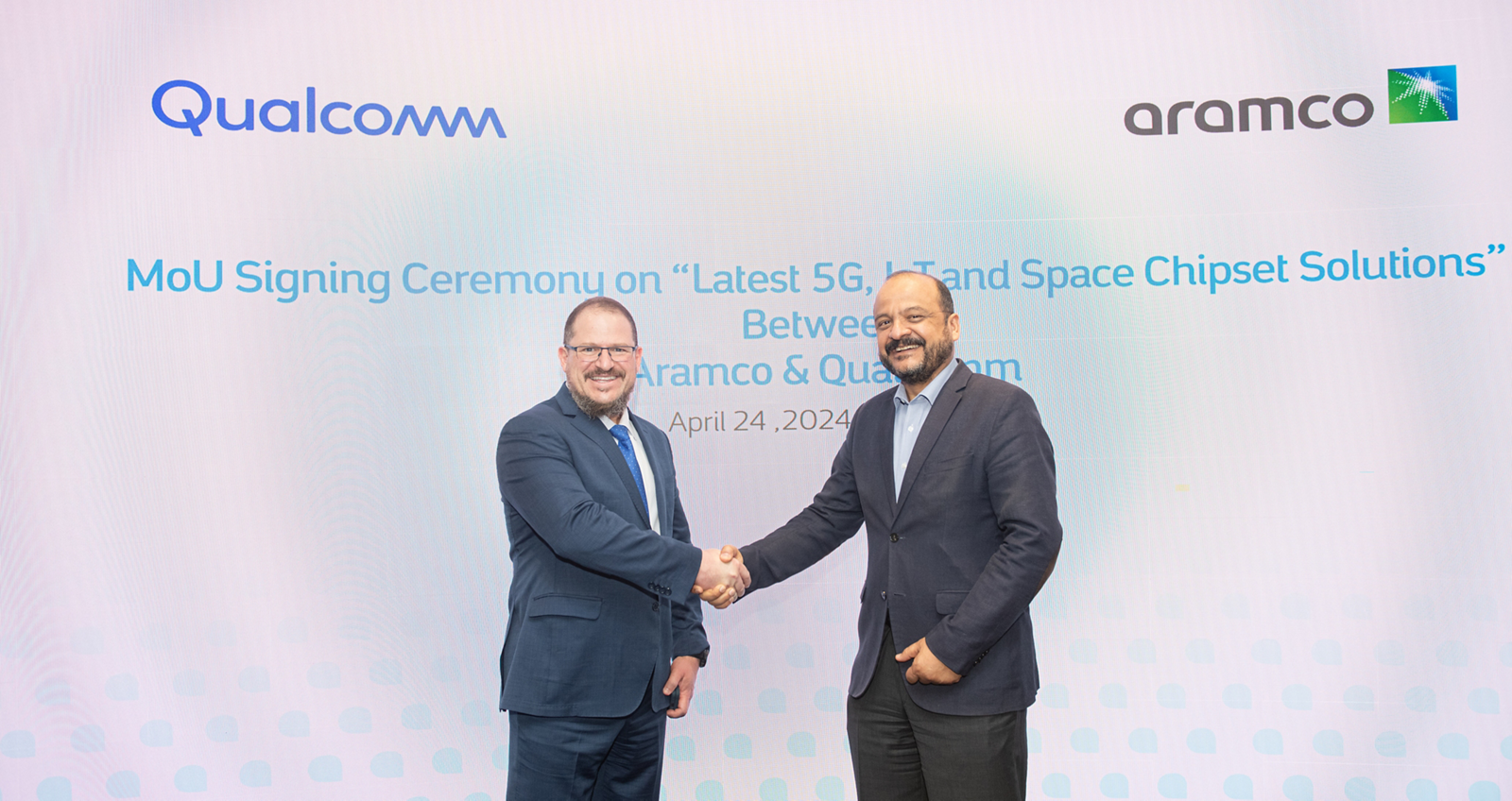
Aramco dates the launch of the Saudi Accelerated Innovation Lab, branded aramcoSAIL, to November 2023. It was announced nationally at LEAP in March 2024, where President and CEO Amin Nasser discussed the initiative and Aramco also showcased aramcoMETABRAIN, its industrial generative AI model. It has been designed from the beginning as a national platform.
The sequence is simple. Business problem definition, R&D, incubation of the output, upskilling of people and commercialization of the result are part of the SAIL definition. The aim is to transform operational needs into enterprise-scale ventures, Aramco says. As a research result is translated into a solution for a paying industrial customer, it becomes a product. This is the missing middle right here.
The reason why Qualcomm selected the Saudi Arabia location
Qualcomm has patented itself to the core of mobile and edge computing for 40 years. That’s not something an accelerator can make! In U.S. fiscal year 2025, it was among the four biggest recipients of U.S. patents, according to Parola Analytics.
Design in Saudi Arabia with AI (DISAI) is the intersection of that experience and Saudi startups. It was launched at LEAP 2025 by Qualcomm, Aramco and the Research, Development and Innovation Authority (RDIA). Six startups made up the first cohort in 2025. The second was announced in June 2026 and took ten startups from more than 124 applications. It also introduced HUMAIN, an AI company owned by the Public Investment Fund (PIF), as a partner. Increasing the intake by 66.7 percent and introducing a national AI company in the second year implies that the program is effective.
Participants receive Qualcomm technical and IP mentorship and patenting training. The program brings together Qualcomm’s technology expertise, Aramco’s industrial experience, RDIA’s support for national innovation priorities and HUMAIN’s AI capabilities.
Circula is one of the 2026 cohort, automating the recovery of industrial waste. Tawkeed is developing an on-premises, Arabic-first document intelligence platform compliant with Saudi data-sovereignty rules, while SDM uses AI diagnostics to analyze medical imaging, according to Qualcomm’s descriptions of the shortlisted startups. All three begin with a problem in the Kingdom and have the potential to export afterward. Separately, Qualcomm’s May 2025 memorandum with HUMAIN provided for AI data centers running on Qualcomm platforms and a Qualcomm Design Center for semiconductor design and engineering education.
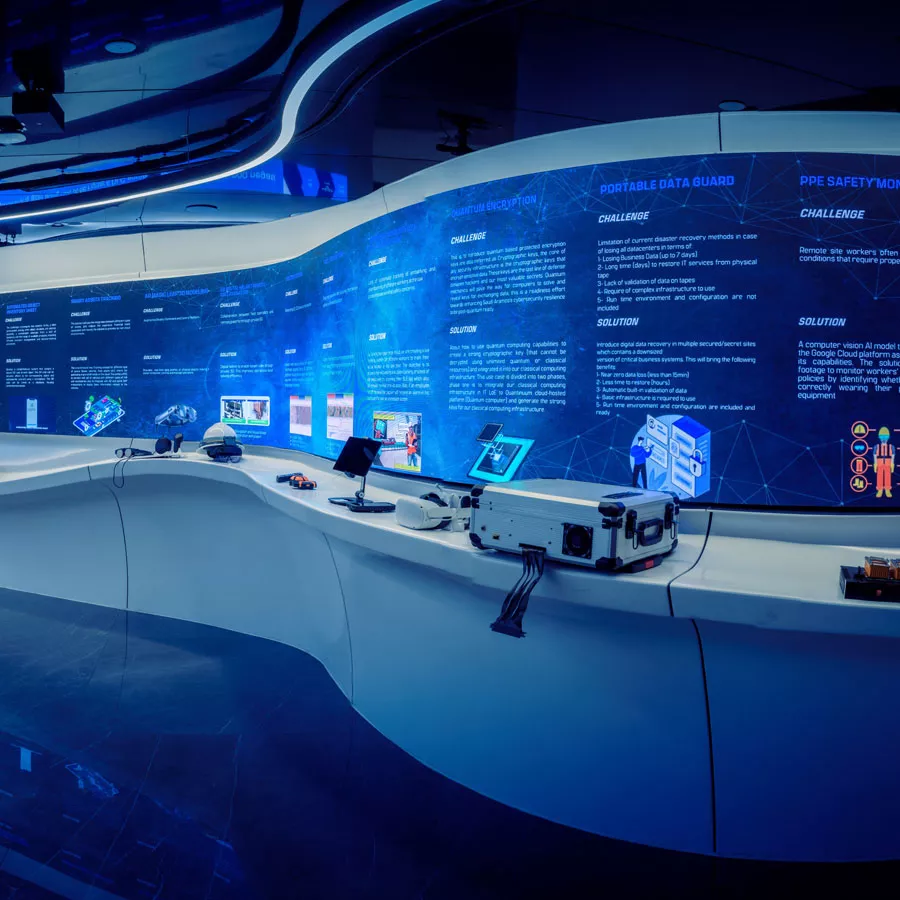
Aramco Ventures is a separate venture capital operation, rather than a formal funding component of DISAI or SAIL. It is located in Dhahran, under the same corporate parent as aramcoSAIL.
In January 2024, Aramco increased its venture capital allocation by $4 billion to a group-wide total of $7.5 billion. That total includes the $500 million Wa’ed Ventures fund for Saudi startups, the $500 million Digital/Industrial Fund, the $3 billion Prosperity7 program, the $1.5 billion Sustainability Fund and the $2 billion Late-Stage Strategic Venturing Fund. In an April 2026 interview with Forbes, Aramco Ventures CEO Mahdi Aladel described the operation’s focus on deep technology startups grounded in science and engineering. For a DISAI graduate with a patent and a paying industrial customer, Wa’ed could be a potential next step, subject to its investment criteria. The complete journey from the industrial problem through engineering, prototype, IP, scale and capital.
In 2022, Aramco received 966 U.S. patents, according to the company. That’s the reason that Dhahran is able to carry this weight. Few corporate hosts have such a problem set for a startup, engineers who are patenting for a living, and a venture arm with a Saudi mandate down the road. What they’re trying to do is make something that can only function in this place.
Over the next five years, the numbers to track are patents filed by DISAI alumni, follow-on rounds raised, sales outside the Kingdom, and the share of Saudi researchers working inside industry. The direction on each is already set.
None of these, whether SAIL, Qualcomm or Aramco Ventures, is the whole picture. The story is the system they are building between them, to create innovation at home and export it. If it succeeds, and the early signs indicate that it will, Saudi Arabia will export part of the next generation of global technology.