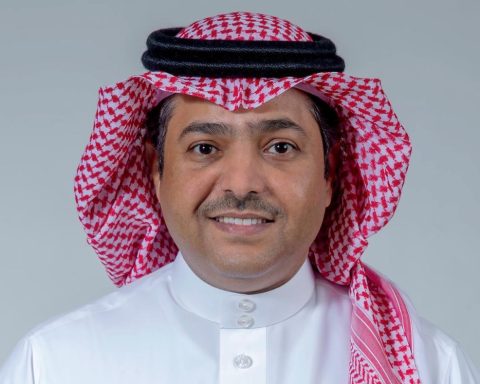


Kanz founder Roy Baladi has turned a record-setting training program into a larger proposition: talent should be judged by what it can build, and Saudi Arabia can create the market that recognizes it.
The global artificial intelligence debate is often conducted at a scale that makes ordinary people disappear. It is measured in sovereign investment, computing capacity, model performance and market value. Those measures matter, but they do not answer the question that will determine whether AI becomes an engine of broad economic mobility: who gets the chance to build with it?
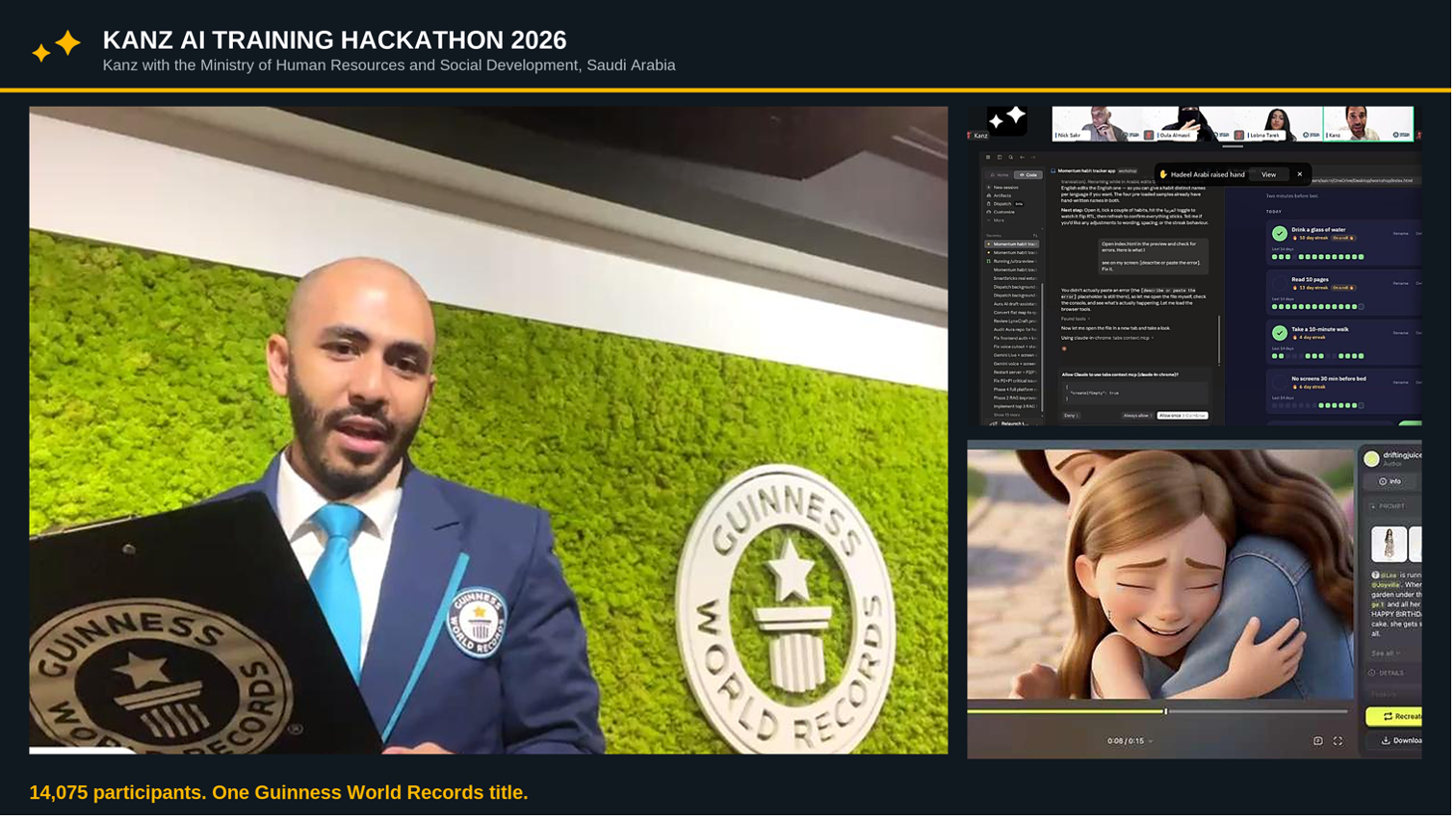
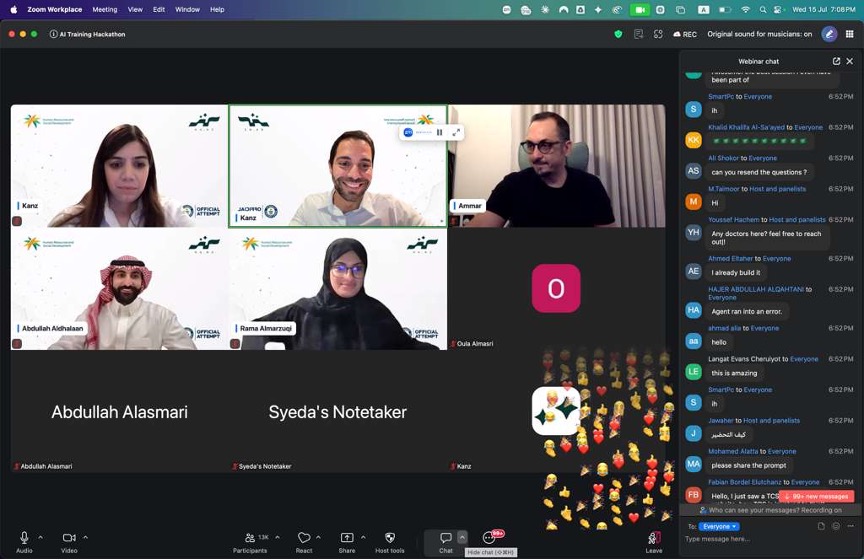
Riyadh has now offered a striking answer. On July 15, 2026, Kanz and Saudi Arabia’s Ministry of Human Resources and Social Development set the Guinness World Records title for the most users in an artificial intelligence video lesson, with 14,075 participants. Guinness World Records adjudicator Raafat Tawfik confirmed the title live at the program’s closing ceremony on July 22. The lesson opened an eight-day, free online training program that drew 51,693 registrants from 170 countries, while 24,816 people attended at least one verified live session.
The record was the opening move
Those figures are formidable. Yet to focus on attendance alone would be to misunderstand both the achievement and the strategy behind it. The program was designed not as a mass webinar, but as a conversion system. People entered with ideas and varying levels of technical experience. They were asked to leave with products that worked.
Participants submitted 4,450 AI projects. Of these, 3,428 were published as functioning digital products, each with its own public web address and available for potential employers to test. The work included applications, AI agents, automated workflows, research tools, and voice and video products, all created through no-code and natural-language tools. Kanz AI judging agents assessed the projects against a public evaluation rubric, and the top 20 were presented during the closing ceremony.
“The record is good. The apps are better.” Roy Baladi’s line is more than a memorable sound bite. It is the governing philosophy of the entire initiative.
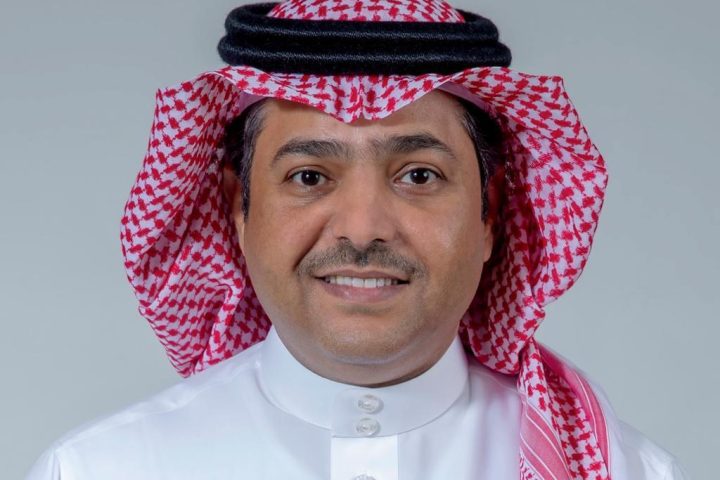
Baladi, the founder and Chief Executive Officer of Kanz, should be understood not simply as the promoter of a record-breaking event, but as the architect of the system beneath it. His proposition is that the AI economy requires a new way to identify talent. Credentials, job titles and resumes will remain useful, but they are proxies. A working product is evidence.
That thesis is rooted in experience. Before Kanz, Baladi served as Global Head of Marketplace at SmartRecruiters and helped scale the company from pre-revenue to unicorn status. He also worked at LearnVest before its acquisition by Northwestern Mutual, and holds degrees in computer science, mathematics and finance from Virginia Tech. His vision therefore sits at the intersection of technology, labor markets and capital. Kanz is the practical expression of that vision: an AI recruitment copilot used by one million job seekers, designed to connect verified capability with opportunity.
An architecture for proof
The hackathon made that architecture visible. Training was free, online, bilingual and open to people without a technical background. Participants did not merely collect attendance badges. They built in public, worked against a visible standard and, where they completed the process, left with both a credential and a product.
A total of 24,496 certificates were issued. Of these, 21,191 participation certificates went to learners who attended at least one live session, while 3,305 completion certificates were awarded to participants who successfully published a project. The credentials were co-signed by the Ministry of Human Resources and Social Development and the Academy of Continuing Education at the Lebanese American University. That distinction matters. Participation records exposure. Completion, when linked to a public product, records demonstrated capacity.
The response suggests the model changed more than the volume of AI activity. In the closing survey, 96 percent of 5,310 respondents said they would recommend the program, while 92 percent reported greater confidence in using AI. In a separate hiring poll, 1,437 of 2,079 respondents said they would recommend Kanz graduates to employers. These numbers do not replace employment outcomes, but they reveal an important bridge taking shape between learning, visible work and market trust.
Why Saudi Arabia matters
Saudi Arabia was not simply the host nation or the backdrop for a global online event. It produced the largest national cohort, with more than 19,000 registrants, over 9,100 live learners and more than 1,900 submitted projects. The Ministry of Human Resources and Social Development jointly holds the Guinness World Records title, co-signs the credentials and places the initiative squarely within the Kingdom’s investment in human capability, digital skills and workforce readiness under Vision 2030.
This is what makes the program distinctly Saudi in ambition. Vision 2030 is often discussed through infrastructure, investment and institutional transformation. Here, those priorities meet at the level of the individual builder. The Kingdom is not content to be a major buyer, host or investor in AI. It is developing the human systems through which people can use the technology, prove what they can do and convert ability into economic participation.
The coalition around the program reinforced that logic. Saudi Arabia’s Ministry of Human Resources and Social Development provided national reach, workforce relevance and accountability. Lebanon’s Ministry of Information Technology and Artificial Intelligence extended access through NUMŪ. The Lebanese American University Academy of Continuing Education strengthened the credentials. Berytech, the Hariri Foundation for Sustainable Human Development, Forward MENA, Classera, C.XSEED Ventures and Voice of Lebanon 93.3 FM carried the opportunity into startup, education, community and media networks. Platforms and tools from Replit, Google, Anthropic, ElevenLabs, Magnific, Suno, n8n and HUMAIN made creation immediate.
Baladi’s achievement lies in orchestrating these elements into one coherent journey. Government legitimacy, academic credibility, community distribution, accessible technology, transparent evaluation and employer visibility were not assembled as a logo wall. Each solved a different problem. Together, they created a pipeline from curiosity to competence, from competence to proof, and from proof to opportunity.
From Guinness World Records to Rocket Fuel
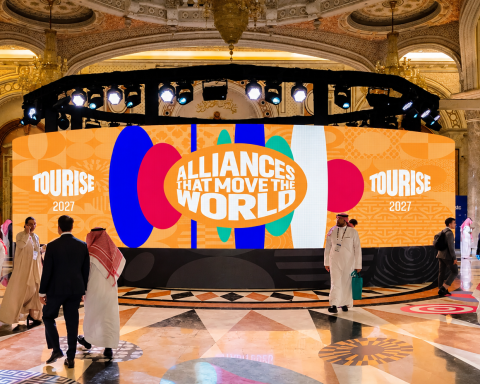
That pipeline now moves toward another Saudi stage. From August 31 to September 3, Riyadh will host LEAP 2026, where Kanz has been shortlisted for Rocket Fuel, LEAP’s flagship startup pitch competition with a $1 million equity-free prize fund. The progression is fitting. Kanz will arrive not with a theoretical claim about the future of talent, but with a world record, thousands of public products and a working model for recognizing capability.
The journey from the Guinness World Records title to Rocket Fuel is not a change of subject. It is the next stage of the same architecture. The hackathon showed that people can be mobilized to build at extraordinary scale. LEAP offers the opportunity to ask what comes next: how employers open those portfolios, how investors discover unexpected founders, how educators make publication part of learning, and how institutions measure economic movement rather than attendance alone.
This is where Baladi’s Saudi-forward vision becomes most consequential. He is arguing for more than a successful platform or training model. He is proposing a labor market in which talent can become visible before it has the perfect title, pedigree, network or geography. In that model, recruitment technology becomes mobility infrastructure, and Saudi Arabia becomes the proving ground.
The Kingdom has already demonstrated that it can convene the AI future at record scale. The larger opportunity is to build the market around the people who answered that call. Open their work. Test it. Back it. Hire from it. The record belongs in the history books, but the 3,428 working products point toward the future. Roy Baladi’s most important contribution may be that he understands the difference.