

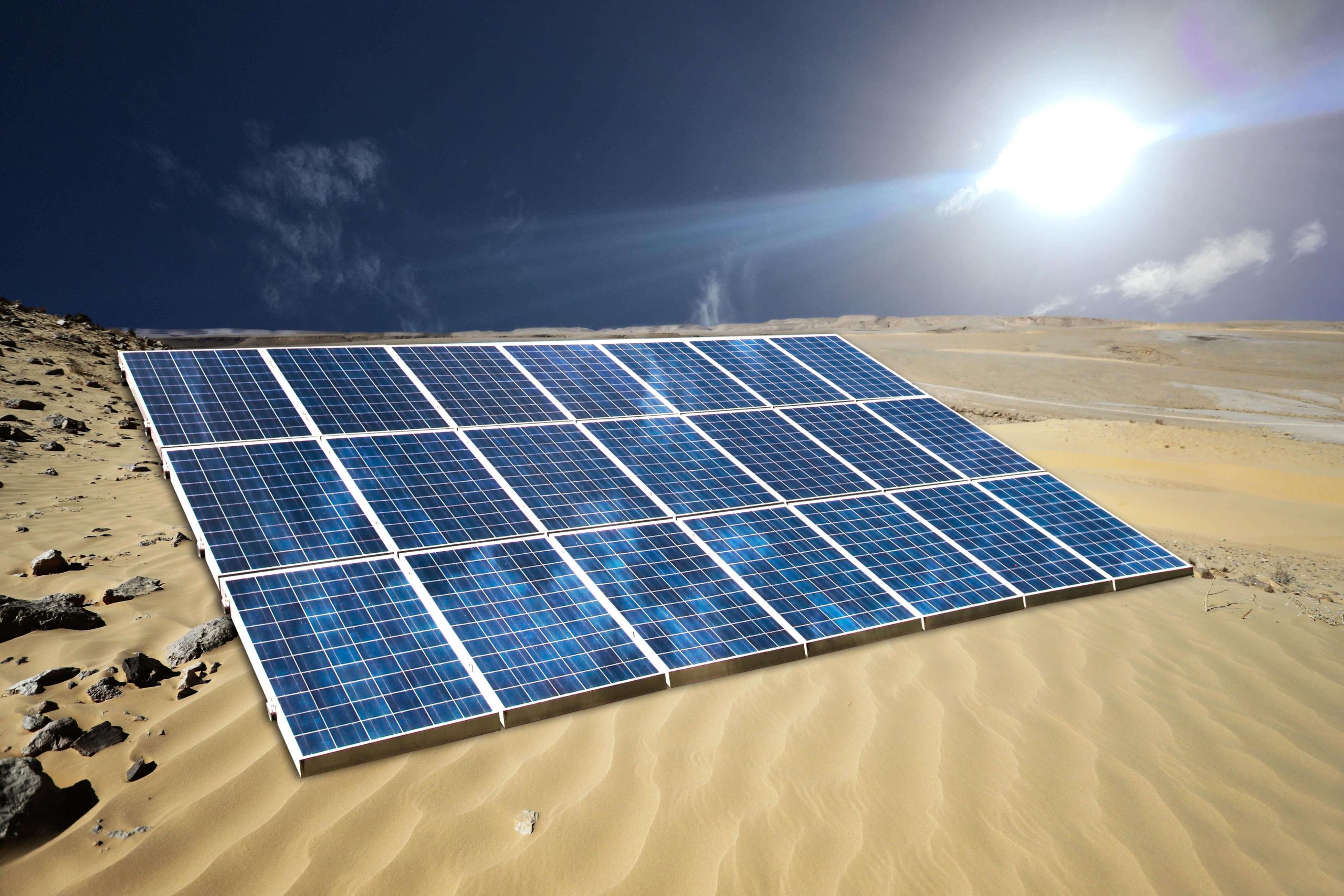
Researchers at King Abdullah University of Science and Technology have developed an innovative coating for solar panels that enables them to clean themselves while simultaneously capturing moisture from the air, offering a promising solution for improving solar energy efficiency in arid environments.
The breakthrough addresses one of the most significant challenges facing solar energy systems, particularly in hot and dry regions where dust accumulation can significantly reduce panel performance.
Tackling Dust Challenges in Desert Environments
Dust buildup remains a major obstacle for solar installations, especially in areas with limited rainfall where panels require frequent cleaning using large amounts of water.
To address this issue, KAUST researchers created a specialized coating designed to help solar panels remove accumulated dust while utilizing atmospheric moisture to support performance and reduce dependence on conventional cleaning methods.
The innovation has the potential to lower maintenance costs and improve the operational efficiency of solar power facilities located in desert climates.
Promising Results from Six Months of Field Testing
The research team conducted outdoor testing of the coating on the university’s campus over a six-month period under real environmental conditions.
Initial findings demonstrated the coating’s ability to help maintain cleaner panel surfaces and support improved performance, encouraging researchers to continue evaluating its long-term durability and effectiveness across different environments.
The study has been published in the scientific journal Energy and Environmental Materials, highlighting the significance of the research within the renewable energy sector.
Supporting Sustainable Energy and Resource Management
The technology could contribute to more efficient use of land, water, and energy resources, particularly in regions where water security and renewable energy development are closely interconnected.
By reducing water consumption and improving solar panel efficiency, the coating may support the expansion of sustainable energy projects while enhancing the resilience of solar infrastructure in harsh climates.
The achievement further highlights Saudi Arabia’s growing role in advancing clean energy technologies and innovative sustainability solutions aligned with Vision 2030 objectives.