


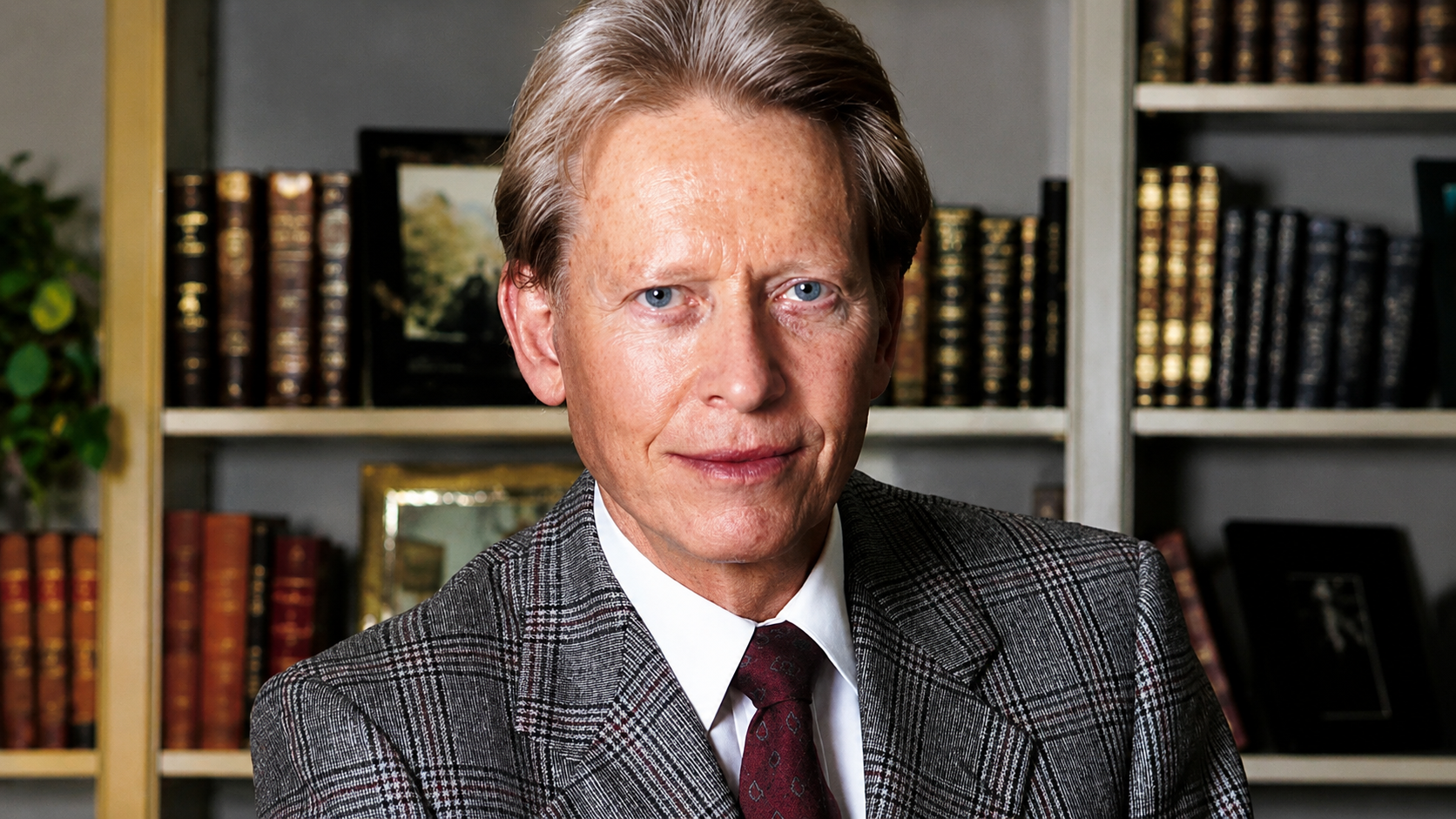
In the world of investing, some investors build successful careers through decades of steady performance, while others become permanently associated with a single trade that changes financial history.
George Soros belongs to the second category.
The Hungarian-born investor became one of the world’s most famous businessmen after betting against the British pound in 1992, a trade that reportedly generated about $1 billion and established his reputation as one of the boldest investors in financial history.
But Soros’s journey to wealth did not begin on Wall Street, and his path to becoming a legendary investor was far from easy.
Born in Hungary in 1930, he experienced the turmoil of World War II as a child, survived the Nazi occupation, left Hungary after the Communist takeover, and eventually moved to London before building his career in the United States.
Through years of education, financial work, and market analysis, he built one of the world’s most influential investment firms and later directed a substantial portion of his fortune toward philanthropy through the Open Society Foundations. The organization says Soros has contributed more than $32 billion of his personal fortune to its work since its founding.
Growing Up in Hungary
George Soros was born on August 12, 1930, in Budapest, Hungary.
He grew up in a middle-class Jewish family. His father was a lawyer and writer with a strong interest in languages and literature.
But Soros’s childhood coincided with one of the most turbulent periods in European history.
He witnessed the rise of Nazism, World War II, and the German occupation of Hungary, a period during which Hungarian Jews faced persecution and mass murder.
These early experiences would later have a profound influence on Soros’s views about politics, society, institutions, and freedom.
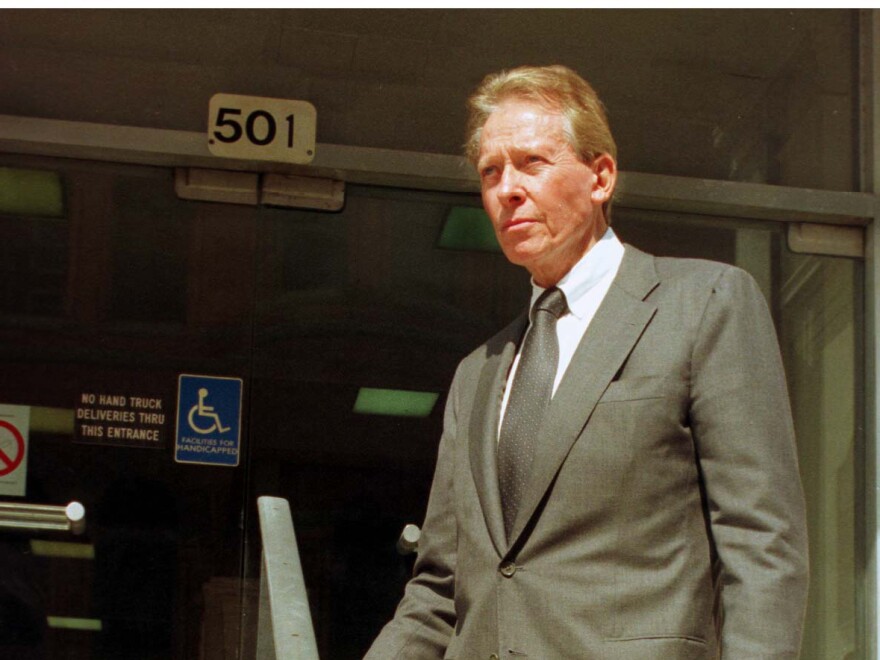
Surviving the Nazi Occupation
During the Nazi occupation of Hungary, the Soros family faced serious danger because of their Jewish identity.
The family survived by using false identities and hiding, experiences that became a defining part of Soros’s childhood.
The Open Society Foundations notes that Soros lived through the Nazi occupation, during which more than 500,000 Hungarian Jews were killed.
These experiences were not simply memories from childhood.
They later influenced his interest in open societies, political freedom, and institutions capable of protecting individuals from authoritarian power.
Leaving Hungary
After World War II, Hungary entered another period of political upheaval.
As the Communist regime consolidated power, Soros decided that his future would be outside his homeland.
In 1947, he left Budapest and moved to London.
The decision marked a major turning point in his life.
The young man leaving a politically unstable European country was about to enter one of the world’s most important financial centers.
Studying in London
In London, Soros attended the London School of Economics.
There, he studied philosophy and became particularly influenced by philosopher Karl Popper.
Popper’s ideas had a major impact on Soros, particularly his concept of the open society and his emphasis on critical thinking and questioning assumptions.
These ideas later became important not only to Soros’s philanthropic work but also to his approach to investing.
Entering the Financial World
After graduating, Soros looked for opportunities to enter the financial industry.
He initially worked in relatively modest positions within British financial institutions before gradually moving deeper into investment and financial markets.
His early career was not the typical path of someone born into a powerful financial dynasty.
He had to build his reputation and expertise step by step, relying heavily on analytical ability and his growing understanding of financial markets.
Moving to the United States
In the late 1950s, Soros moved to the United States, where he saw greater opportunities in the financial markets.
He worked for investment firms in New York and developed experience in stocks, bonds, and international markets.
Over time, he began developing a distinctive investment style.
Rather than relying solely on traditional financial analysis, Soros became increasingly interested in how investors respond to economic and political events, and how those reactions can themselves influence markets.
Founding Soros Fund Management
In 1970, George Soros founded Soros Fund Management, which would eventually become one of the world’s most famous investment firms.
The company began on a relatively small scale, but Soros gradually established its reputation by producing strong investment results and identifying opportunities that he believed markets were mispricing.
His approach was based on an important idea: markets are not always perfectly rational, and investors’ expectations can influence prices while prices simultaneously influence those expectations.
A Different Investment Philosophy
Soros did not view financial markets as machines that always follow fixed mathematical rules.
Instead, he believed that investors themselves influence the markets through their beliefs and expectations.
If large numbers of investors believe an asset will rise, they may begin buying it.
Their purchases can push the price higher.
The rising price then appears to confirm their original expectations, encouraging even more investors to buy.
This can create a feedback loop in which expectations and market outcomes reinforce each other.
This concept later became closely associated with Soros’s theory of reflexivity.
Searching for Major Opportunities
As Soros Fund Management grew, Soros began looking for markets where he believed there were major disconnects between prices and economic reality.
He was willing to take positions against the majority when he believed the evidence supported his view.
Soros believed some of the greatest investment opportunities appear when markets become strongly convinced of one outcome while economic fundamentals point toward another.
That philosophy would eventually lead him to one of the most famous currency trades in financial history.
The Beginning of the British Pound Bet
In the early 1990s, Britain was part of the European Exchange Rate Mechanism, or ERM, which sought to maintain stability between European currencies.
Britain faced increasing economic pressure, making it increasingly difficult to maintain the pound’s position within the system.
Soros and his team studied the situation and concluded that Britain would struggle to continue defending the pound at its existing level.
Instead of betting on continued stability, Soros began building a large position that would benefit from a decline in the British currency.
The Trade That Made Him Famous
In September 1992, pressure on the British pound reached a critical point.
The British government and Bank of England attempted to defend the currency, but financial markets continued pushing against it.
On September 16, 1992, a day that became known as Black Wednesday, Britain was forced to suspend the pound’s participation in the ERM.
Soros’s position against the pound generated profits estimated at around $1 billion.
From that moment, his name became permanently associated with one of the most famous currency trades in financial history.
He was widely described as the investor who had “broken the Bank of England.”
But the trade was not simply a gamble.
It was the result of years of studying financial markets, understanding monetary policy, identifying weaknesses in the currency system, and being willing to take substantial risk when he believed the probability of success justified it.
The Bet That Shook European Markets
George Soros’s bet against the British pound was not simply a large financial trade. It became an event that changed the way many investors viewed the power of financial markets and their ability to challenge governments and central banks.
Soros believed the British government was trying to maintain a value for the pound that was inconsistent with the country’s economic conditions. He also believed that defending that value would eventually become too expensive to sustain.
The European Exchange Rate Mechanism
In the early 1990s, Britain was part of the European Exchange Rate Mechanism, commonly known as the ERM.
The system was designed to limit fluctuations between European currencies and keep them within predetermined ranges.
For Britain, this meant maintaining the pound within a specific range against other European currencies, particularly the German mark.
But the British economy was under increasing pressure.
Interest rates were high, economic growth was weak, and policymakers faced growing difficulties in maintaining the pound’s position within the ERM.
At the same time, Germany was dealing with the economic consequences of reunification, creating additional pressure on European monetary policy.
Soros Identifies the Problem
Soros saw a fundamental contradiction.
If Britain wanted to defend the pound’s value, it needed policies that could place even greater pressure on the domestic economy.
But if it lowered interest rates to support economic growth, defending the pound could become increasingly difficult.
Soros believed this situation could not continue indefinitely.
His trade was therefore not simply a prediction that the pound would fall.
It was based on his belief that British monetary policy and economic reality were moving in opposite directions.
Building the Position
Soros Fund Management began building a major position that would benefit from a decline in the British pound.
The basic strategy involved selling pounds and buying other currencies, particularly the German mark.
If Britain eventually devalued the pound or abandoned the ERM, Soros’s position could generate enormous profits.
But if the British government successfully defended the currency, the losses could also be substantial.
The trade therefore involved genuine financial risk.
Pressure Builds
As September 1992 approached, financial markets began putting increasing pressure on the pound.
The British government attempted to defend the currency through higher interest rates and intervention in the foreign exchange market.
But these measures failed to convince investors that the pound’s position was sustainable.
The more aggressively the government intervened, the clearer it became that maintaining the currency’s value could impose increasingly significant economic costs.
This strengthened Soros’s conviction that the system was approaching a breaking point.
Black Wednesday
On September 16, 1992, the crisis reached its climax.
The British government attempted to continue defending the pound, but pressure from financial markets became overwhelming.
Britain eventually announced that it would suspend the pound’s participation in the ERM.
The day became known as Black Wednesday.
The pound fell sharply against major currencies, generating substantial profits for investors who had positioned themselves for a decline.
George Soros became the most famous individual associated with the trade.
Nearly $1 Billion in Profit
Soros’s funds generated enormous profits from the position, with his personal gains from the trade widely estimated at around $1 billion.
The result transformed him into one of the world’s most famous investors.
But for Soros, the significance of the trade went beyond the size of the profit.
It demonstrated the effectiveness of his approach to identifying weaknesses within financial systems and acting before those weaknesses became obvious to the wider market.
Why Did Soros Succeed?
Several factors contributed to the success of the trade.
The first was his detailed understanding of British economic policy.
The second was his ability to analyze the relationship between interest rates and currency values.
The third was his recognition that a government cannot defend a particular exchange rate indefinitely when the economic cost of doing so becomes too high.
The fourth was his willingness to accept substantial risk.
If his analysis had been wrong, the losses could have been enormous.
The Theory of Reflexivity
One of the concepts most closely associated with George Soros is the theory of reflexivity.
Soros argues that financial markets do not always objectively reflect economic reality.
Investors have beliefs and expectations, and those expectations influence their decisions.
Their decisions then influence prices and economic conditions, which can subsequently affect their expectations.
This creates a feedback loop between perception and reality.
How Reflexivity Works
The concept can be simplified with a basic example.
Investors believe that an asset will increase in value.
They begin buying.
Increased demand pushes the price higher.
The rising price appears to confirm their original expectations.
More investors then enter the market.
The price continues rising and may eventually become disconnected from the underlying fundamentals.
But when expectations change, the same process can work in reverse.
Selling creates further declines, falling prices reinforce pessimism, and the market can experience a rapid collapse.
Life After the Pound Trade
After his success against the pound, Soros continued investing across global markets.
He did not limit himself to currencies.
His investments included stocks, bonds, commodities, emerging markets, and a wide range of other assets.
He continued searching for markets where he believed there was a major disconnect between prices and economic reality.
Building His Fortune
The success of Soros Fund Management helped transform the firm into one of the world’s most influential investment organizations.
As strong investment results accumulated over decades, Soros became a billionaire and one of the wealthiest investors in history.
However, his fortune was not created by the pound trade alone.
That transaction made him famous, while decades of investment management and compounded returns played a major role in building his long-term wealth.
From Investor to Philanthropist
As his fortune grew, Soros began directing an increasing amount of his wealth toward philanthropy.
He became one of the world’s largest individual donors, supporting education, civil society, human rights, and institutions focused on promoting open societies.
His philanthropic activities began in the late 1970s, when he provided scholarships and other support to people facing discrimination and political repression.
His efforts later expanded across Eastern Europe and eventually around the world.
Founding the Open Society Foundations
His philanthropic activities eventually developed into the Open Society Foundations.
The organization supports civil society, justice, education, human rights, and democratic institutions in countries around the world.
According to the organization, Soros has committed more than $32 billion of his personal wealth to its work since its founding.
His legacy therefore became connected not only to financial markets, but also to global philanthropy and his efforts to influence social and institutional development.
Life After the Historic Trade
After his success betting against the British pound, George Soros did not stop searching for major investment opportunities.
Instead, the trade marked the beginning of a broader phase in his career, during which he focused on global markets, currencies, stocks, commodities, and emerging economies.
Soros believed that the greatest opportunities often appeared when economic systems were under significant pressure.
Investing in Global Markets
Soros combined macroeconomic analysis with the study of individual assets.
He paid close attention to interest rates, monetary policy, currency movements, economic growth, and political developments that could influence financial markets.
He was willing to move capital between different markets whenever he believed a compelling opportunity had emerged.
This flexibility became one of the defining characteristics of his investment approach.
Investing in Emerging Markets
Soros was among the investors who showed significant interest in emerging markets at a time when many of them were still less developed than their Western counterparts.
He believed political and economic transformations in Eastern Europe, Asia, and Latin America could create substantial investment opportunities.
At the same time, these markets carried significant risks, requiring careful analysis of economic conditions, government policies, and political developments.
Navigating Market Crises
The British pound crisis was not the only major financial event in which Soros became involved.
Throughout his long career, he took positions connected to several major economic and financial crises around the world.
His ability to identify weaknesses within financial systems became one of the defining elements of his reputation.
But his strategy did not always succeed.
Soros and his funds experienced significant losses at various points, demonstrating that even highly experienced investors cannot accurately predict every market movement.
The Asian Financial Crisis
In the late 1990s, Asian financial markets became another major area of controversy associated with George Soros.
Several Asian economies experienced severe pressure on their currencies and financial markets, triggering a crisis that spread across multiple countries.
Soros faced criticism from some politicians and officials who accused speculators of worsening the pressure on Asian currencies.
He rejected the idea that investors were solely responsible for the crisis, arguing that deeper structural weaknesses within the affected financial systems were the fundamental causes.
Investing Is Not About Predicting the Future
One of the most important ideas that emerges from Soros’s career is that he does not view investing as the ability to predict the future with certainty.
Markets operate under conditions of uncertainty.
Investors therefore need to be prepared to change their positions when new information becomes available.
This is different from the belief that a successful investor must always remain confident in an original prediction.
For Soros, recognizing that an investment thesis is wrong and changing course can be an essential part of successful investing.
George Soros’s Net Worth
Decades of successful investing transformed George Soros into a billionaire.
Soros Fund Management managed tens of billions of dollars at various points in its history, making it one of the world’s best-known investment organizations.
His personal fortune has also fluctuated over time as the value of investments and financial markets changed.
However, his long-term success established him as one of the wealthiest and most influential investors in modern history.

Philanthropy
Philanthropy became one of the most important parts of Soros’s life outside financial markets.
He began supporting people and organizations facing political repression in the late 1970s.
Over time, his philanthropic activities expanded dramatically.
He eventually became one of the world’s largest individual donors.
The Open Society Foundations
The Open Society Foundations became the main organization through which Soros directed much of his philanthropic activity.
Its work has focused on areas including:
- Education.
- Justice.
- Human rights.
- Freedom of expression.
- Civil society.
- Democratic institutions.
- Support for marginalized communities.
The organization has funded projects and institutions across numerous countries around the world.
Education and Research
Education has been one of Soros’s major philanthropic priorities.
He has supported scholarships, universities, academic programs, and educational institutions, particularly in countries that experienced major political and economic transitions.
Soros has argued that education can give individuals the opportunity to build better futures while helping societies develop stronger and more open institutions.
Soros’s Investment Philosophy
George Soros’s investment philosophy can be summarized through several core principles.
First, never assume that the market is always right.
Second, look for the gap between investor expectations and economic reality.
Third, understand that prices can influence economic reality rather than simply reflecting it.
Fourth, be prepared to change your position when new information contradicts your original thesis.
Fifth, risk management is just as important as the pursuit of returns.
Finally, never allow past success to convince you that you cannot be wrong.
Lessons from George Soros’s Journey
Soros’s career offers several important lessons for entrepreneurs and investors.
The first is the importance of independent thinking.
In one of his most famous trades, much of the market expected Britain to maintain its currency position, while Soros believed the system was approaching a breaking point.
The second lesson is the importance of understanding the bigger picture.
Investors should not focus only on a stock price or currency value. They also need to understand the economic conditions, political environment, and monetary policies driving market movements.
The third lesson is the importance of accepting mistakes.
Soros did not profit from every investment decision he made. But he was willing to exit positions when he concluded that his analysis was no longer correct.
Major Achievements
George Soros is considered one of the most influential investors in modern history.
Among his major achievements are:
- Founding Soros Fund Management.
- Building a multi-billion-dollar personal fortune.
- Earning approximately $1 billion from his famous bet against the British pound in 1992.
- Developing the theory of reflexivity as a major component of his approach to financial markets.
- Generating strong investment returns over multiple decades.
- Establishing and expanding the Open Society Foundations.
- Contributing tens of billions of dollars to philanthropic, educational, and civil society initiatives around the world.
Legacy
George Soros’s legacy is complex and highly controversial.
Within the investment world, he is regarded as one of the greatest investors capable of identifying major economic shifts and taking bold positions when markets were moving in the opposite direction.
Outside financial markets, he became closely associated with philanthropy and support for civil society, democratic institutions, and human rights initiatives around the world.
Regardless of differing opinions about his political and philanthropic activities, his influence on global investing and philanthropy is difficult to ignore.
Final Thoughts
George Soros’s story is that of a man who began life during one of the most turbulent periods in European history, moved to London, built a career in finance, and eventually became one of the world’s most famous investors.
The trade that made him legendary on Wall Street was not simply a lucky bet.
It was the result of years of studying markets, understanding economics, analyzing monetary policy, and being willing to challenge conventional thinking.
His successes and failures also demonstrate that investing is not simply about numbers.
It is about understanding human behavior, expectations, incentives, and the way those forces interact with financial markets.
Perhaps the most important lesson from George Soros’s career is that a successful investor does not need to be right all the time.
What matters is recognizing when the analysis is wrong, managing the downside, and acting decisively when the market presents an opportunity.