

FII10 has been postponed to 2027, but this partnership with Qualcomm, which was announced during FII week last year, is already being carried out in Riyadh. The first racks are operational, the first global tenant is occupying them and Qualcomm has a permanent office in the capital.
By Abeer Abdalla | Managing Editor | The Saudi Times
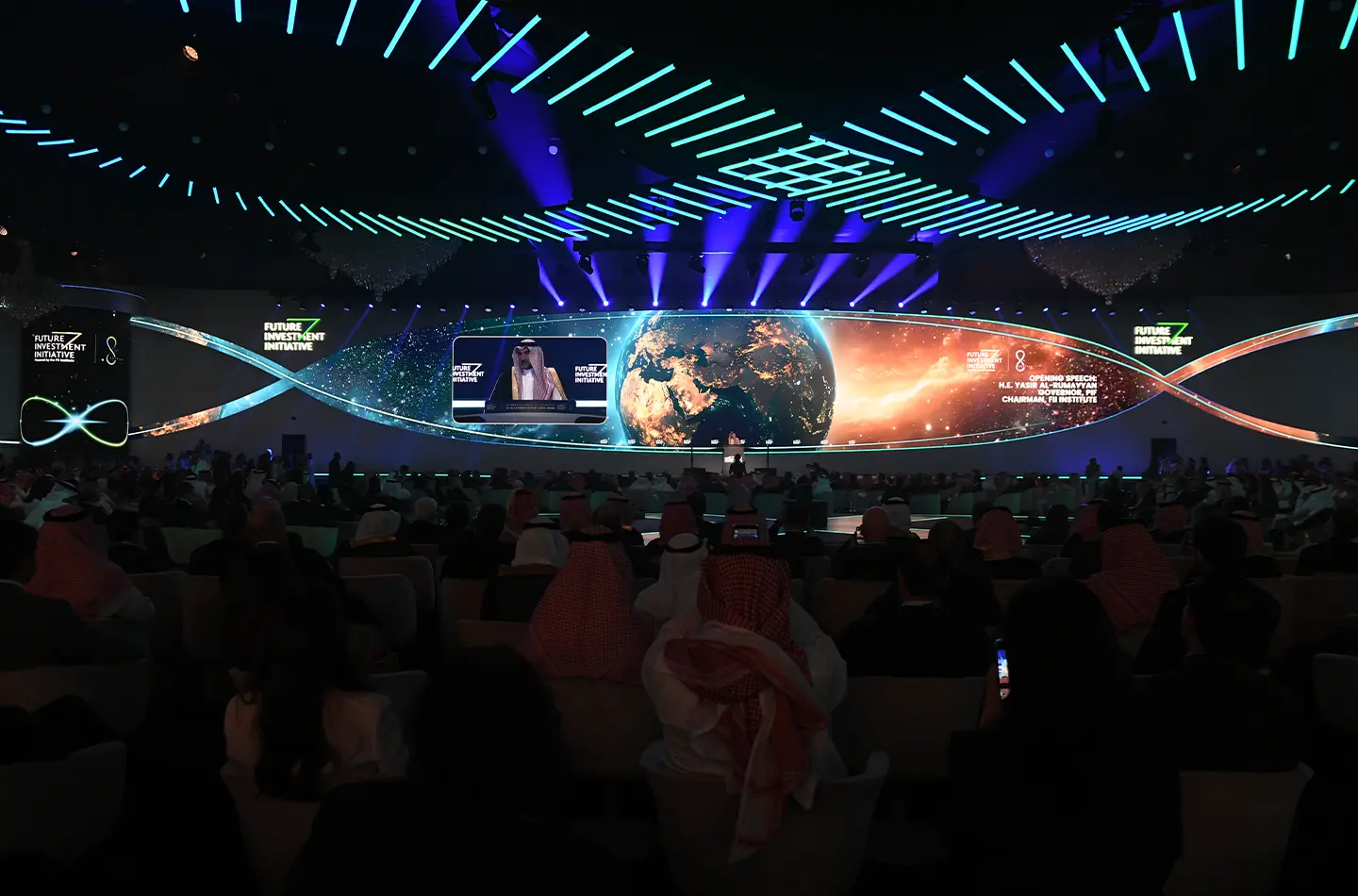
The 10th Future Investment Initiative (FII), which was planned for October 26 to 29 in the King Abdulaziz International Conference Center, has been postponed to 2027. The milestone edition will be made in keeping with expectations of its partners in terms of scale and impact, and new dates will be set, the institute said. “How much of Saudi Arabia’s technological advancement is due to the summit calendar?” is a valid question to ask given the delay. On the evidence of one partnership, the answer is very little.
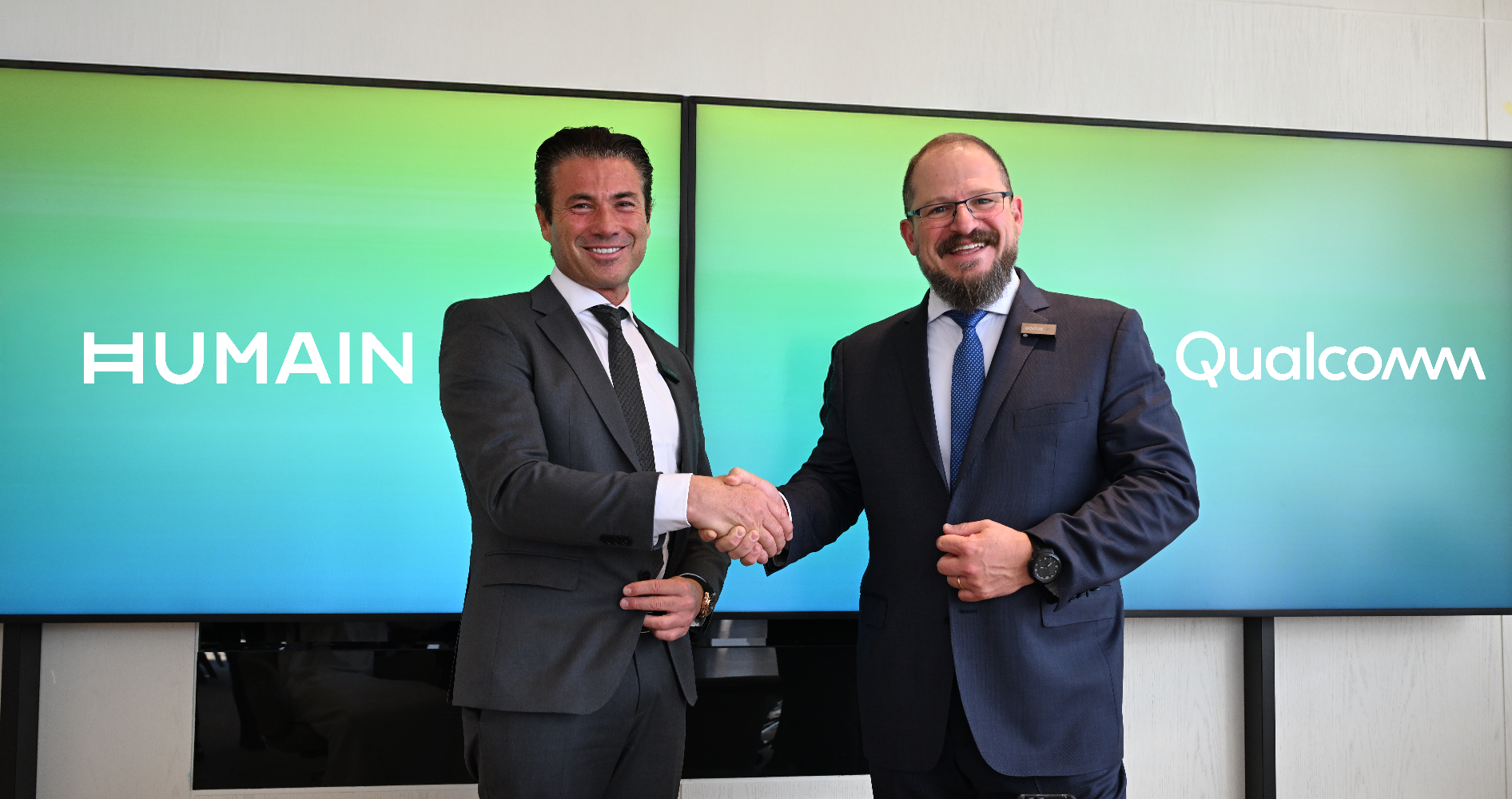
Prior to FII9 last year, the national AI firm, HUMAIN, and Qualcomm announced a partnership on the deployment of 200 megawatts of Qualcomm AI200 and AI250 rack capacity, with the Saudi-built HUMAIN models (ALLaM) to be powered by Qualcomm silicon. A year later, it is working infrastructure, a paying global customer, a Saudi-built AI PC and a permanent Qualcomm base in Riyadh.
HUMAIN stated at Qualcomm’s Riyadh launch that it had deployed 1,024 Qualcomm Cloud AI 100 accelerators, as Middle East AI News reported. It is the first phase of a data center planned to reach 200 MW this year. Adobe is the first customer, and the first global software company to leverage HUMAIN’s regionally hosted, Qualcomm-accelerated infrastructure for AI workloads. Next will be the AI200 racks and the AI250 generation should come in from 2027.
So it took less than a year for the first phase to go live, a large enterprise customer has been signed before buildout is complete, and the roadmap is already listing the next two generations of chips. As each number is dated and can be verified, the record provides a justification for other global companies to follow Adobe’s example.
Qualcomm’s President for EMEA, Wassim Chourbaji, described Adobe’s move as a signal of confidence in the infrastructure being built in Saudi Arabia and highlighted the “central role the region is playing” in Qualcomm’s AI infrastructure strategy. That places Saudi Arabia inside the global production strategy of a company that has been building platforms for 40 years.
Qualcomm was started in 1985 by seven former Linkabit colleagues. It wagered on CDMA, which was a cornerstone of 3G, ahead of the majority, despite much uncertainty about the technology. Snapdragon then turned the phone into a computer before the industry followed. Since its inception, Qualcomm has invested over $100 billion in research and development, the company states.
The current bet is no different: AI inference will shift from the hyperscale cloud to PCs, cars, factories and machines, where it will be run with power-efficient chips. It announced a multi-generational partnership with Amazon on custom silicon for AI data centers and high bandwidth optical connectivity on September 8. Cristiano Amon has stated that what is required for the next generation of AI infrastructure is a combination of computing and connectivity technology.
Saudi Arabia is doing it too, focusing on compute, models, talent and industrial demand simultaneously. It does not wait until one has proven its worth before calling in the next. In 2025, Amon said the Kingdom was making impressive strides toward becoming a global AI leader, and the year since has provided the infrastructure to support the comment.
Qualcomm’s Saudi work is on 4 tracks
At LEAP in late August, Qualcomm and HUMAIN revealed Horizon Ultra for devices. The AI PC uses the Snapdragon X2 Elite platform and took more than a year of joint development.
Qualcomm has partnered with Aramco and the Research, Development and Innovation Authority on Design in Saudi Arabia with AI for startups. The 2026 group specializes in industrial sensors, drone security, edge AI, Arabic-first document intelligence and medical imaging. Start-ups are mentored, offered development platforms and IP training and shortlisted start-ups are eligible for funding assistance and IP filing incentives.
On infrastructure, a memorandum of understanding with Aramco Digital for edge AI across Aramco’s 5G network, covering predictive maintenance and visual anomaly detection, was signed in May 2025. Saudi industrial conditions are likely to shape what Qualcomm develops for other markets.
Qualcomm has also established an AI Engineering Center at HUMAIN’s headquarters in Riyadh, and is in the process of establishing a semiconductor design center with the Ministry of Communications and Information Technology. Companies develop this type of capacity when they are committed to staying.
On August 30, Chourbaji and Saeed AlDobas (Executive Vice President for AI Infrastructure and Cloud at HUMAIN) opened the Majdoul Tower office in a soft launch. At the time it seemed like a normal expansion. With the first racks live and running on those agreements, the base for a full operation has been established.
The updates will be by way of company disclosure and SPA and HUMAIN, not on a conference stage. The pace will be indicated by four things. The commissioning of megawatts and the rollout of AI200 will provide a benchmark on the speed of attaining the target of 200 MW. The progress to date suggests the schedule is holding. Next comes the new tenants. Should Adobe be followed by a second and third global customer, sovereign hosted inference in Saudi Arabia becomes a market of its own.
Expect Saudi engineers being hired, teams being formed and first chip designs being taped out at the design center. That is where the depth of the MCIT partnership will be demonstrated. In the startups, patent applications and first international customers will indicate when Saudi-made AI products are first hitting international markets.
Useful measures are engineers trained, patents filed, products shipped and capacity switched on. By those, the Qualcomm partnership has gone from announced to implemented in a year, with announced dates and public follow-through. There is more to report about FII10 in 2027, and the work that would have been a part of that stage is already underway at Majdoul Tower.