


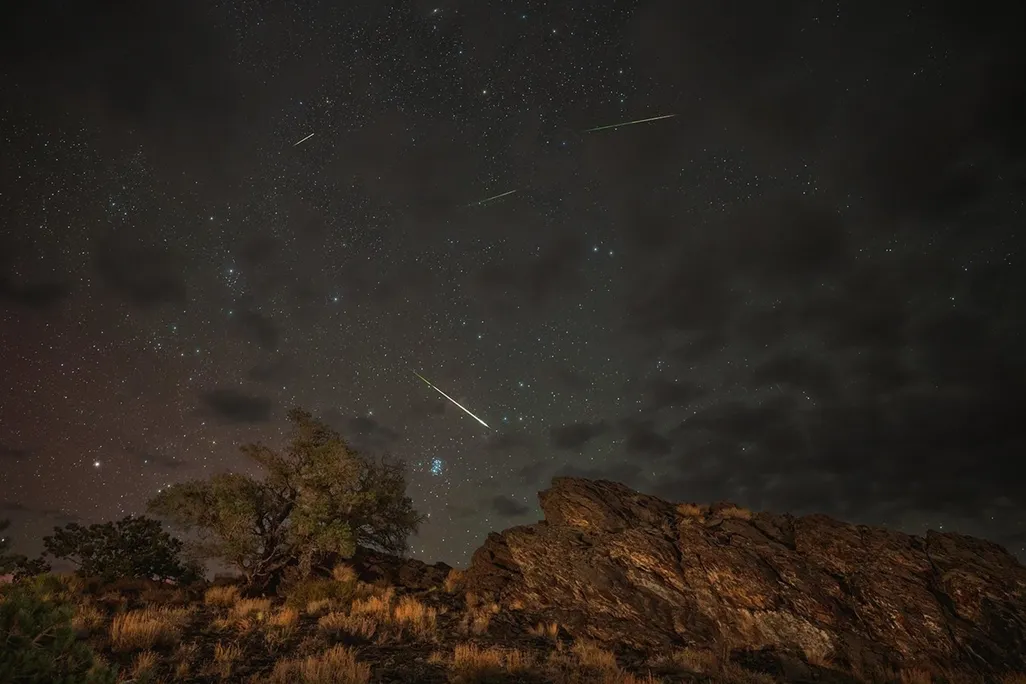
Saudi Arabia is set to witness one of August’s most anticipated astronomical displays as the Perseid meteor shower reaches its peak overnight on August 12 and into the early hours of August 13, 2026.
The Perseids are among the most prominent and popular annual meteor showers, known for their fast and bright meteors as well as occasional spectacular fireballs. The shower is associated with Comet 109P/Swift-Tuttle, which leaves behind a trail of dust and debris as it travels around the Sun. Earth passes through this debris stream each year, producing the Perseid meteor shower.
Peak Activity on August 12-13
According to the International Meteor Organization (IMO), the Perseids will reach their maximum activity on August 13, 2026, with peak rates expected to reach around 100 meteors per hour under ideal observing conditions. NASA’s 2026 forecast estimates a peak zenithal hourly rate of approximately 92 meteors per hour.
This year’s display comes with particularly favorable lunar conditions. A new moon occurs on August 12, meaning there will be virtually no moonlight interfering with observations during the peak, creating darker skies and improving visibility of fainter meteors.
For observers in Saudi Arabia, the best opportunity will come during the late-night and pre-dawn hours, with meteor activity generally becoming more favorable after midnight and toward sunrise.
What Causes the Perseids?
Despite their spectacular appearance, meteors are not stars falling from the sky. They are small particles of dust and debris entering Earth’s atmosphere at extremely high speeds.
The material responsible for the Perseids comes from Comet 109P/Swift-Tuttle. As Earth crosses the comet’s debris trail, tiny particles enter the atmosphere and burn up, creating the bright streaks visible across the night sky.
Perseid meteoroids travel at an average speed of about 59 kilometers per second, contributing to the shower’s fast and bright appearance.
Fireballs Add to the Spectacle
One of the most striking features of the Perseids is the possibility of seeing fireballs, exceptionally bright meteors that can remain visible longer than ordinary meteor streaks.
NASA notes that the Perseids are particularly well known for producing fireballs, which result from larger particles of cometary material entering Earth’s atmosphere.
Where to Watch the Perseids in Saudi Arabia
For the best viewing experience, observers should move away from cities and artificial light sources and choose remote locations with clear skies and minimal light pollution.
No telescope or specialized astronomical equipment is required to watch the Perseids. The shower can be observed with the naked eye, although allowing the eyes to adjust to darkness and avoiding bright lights during the observation period can significantly improve visibility.
NASA recommends the pre-dawn hours as one of the best times to observe the Perseids, particularly across the Northern Hemisphere, as the shower’s radiant rises higher in the sky toward morning.
When to Watch
Date: Overnight August 12 into August 13, 2026.
Best viewing period: After midnight and through the pre-dawn hours.
Expected rate: Up to around 100 meteors per hour under ideal conditions, although the number actually visible to an observer will depend on sky clarity, location and light pollution.
With a new moon providing exceptionally dark skies, the Perseid meteor shower is expected to offer skywatchers across Saudi Arabia a particularly favorable opportunity to enjoy one of the year’s most spectacular celestial events.














