

For two days, Riyadh did not simply host three technology shows. It put AI, gaming and blockchain on the same national operating table.
By Teddy Abou Jaoude
Senior Columnist, The Saudi Times
Three industries that usually keep separate calendars shared one hall in Riyadh.
Inside the Crowne Plaza Riyadh RDC Hotel and Convention, the Global AI Show, the Global Games Show and the Global Blockchain Show ran side by side: three exhibitions, one venue, one ticket, and one clear message. The future economy is no longer being built in verticals. It is being built in systems.
The organizers billed the gathering as three world-class events in one powerful destination. That was the marketing line. The more telling line was the guest list.
Co-location is usually a logistics decision. This one read as a thesis. Saudi Arabia did not import three separate conversations and host them politely. It put artificial intelligence, gaming and blockchain in the same hall because, in the Kingdom’s build plan, they increasingly run on the same inputs: data, talent, capital, infrastructure, regulation and speed.
For The Saudi Times, the partnership was active, not ornamental. As strategic media partner across the shows, the publication was not only covering the room. It was helping shape the conversation inside it. Managing Editor Abeer Abdalla moderated sessions and led fireside chats across the program, including conversations on AI ethics and the relationship between AI and the gaming industry. Senior Columnist Izabella Rekiel also hosted and MC’d the Global Games Show, bringing The Saudi Times’ sports and culture lens into one of the Kingdom’s fastest-growing strategic sectors.
That matters because this was not a conference about technology in isolation. It was about how technology is becoming a national operating system.
One room, real weight
From 29 to 30 June 2026, the shows brought together an audience that organizers put above 10,000 across the two days, with more than 100 speakers, a comparable number of exhibitors and sponsors, and over 200 media on site. They described a delegate base weighted heavily toward CXO level, north of 70 percent by their count.
The marquee billing leaned on globally recognized names across technology, finance and enterprise. But what gave the room its weight was domestic: operators already building, not visitors taking notes.
Saudi Arabia’s technology story is often told internationally through scale. Scale is accurate, but incomplete. The more important point is conversion. The Kingdom has become one of the few markets where a stage conversation can quickly become a pilot, a pilot can become procurement, and procurement can become national deployment.
That is why the three shows belonged together.
AI, the layer under the national projects
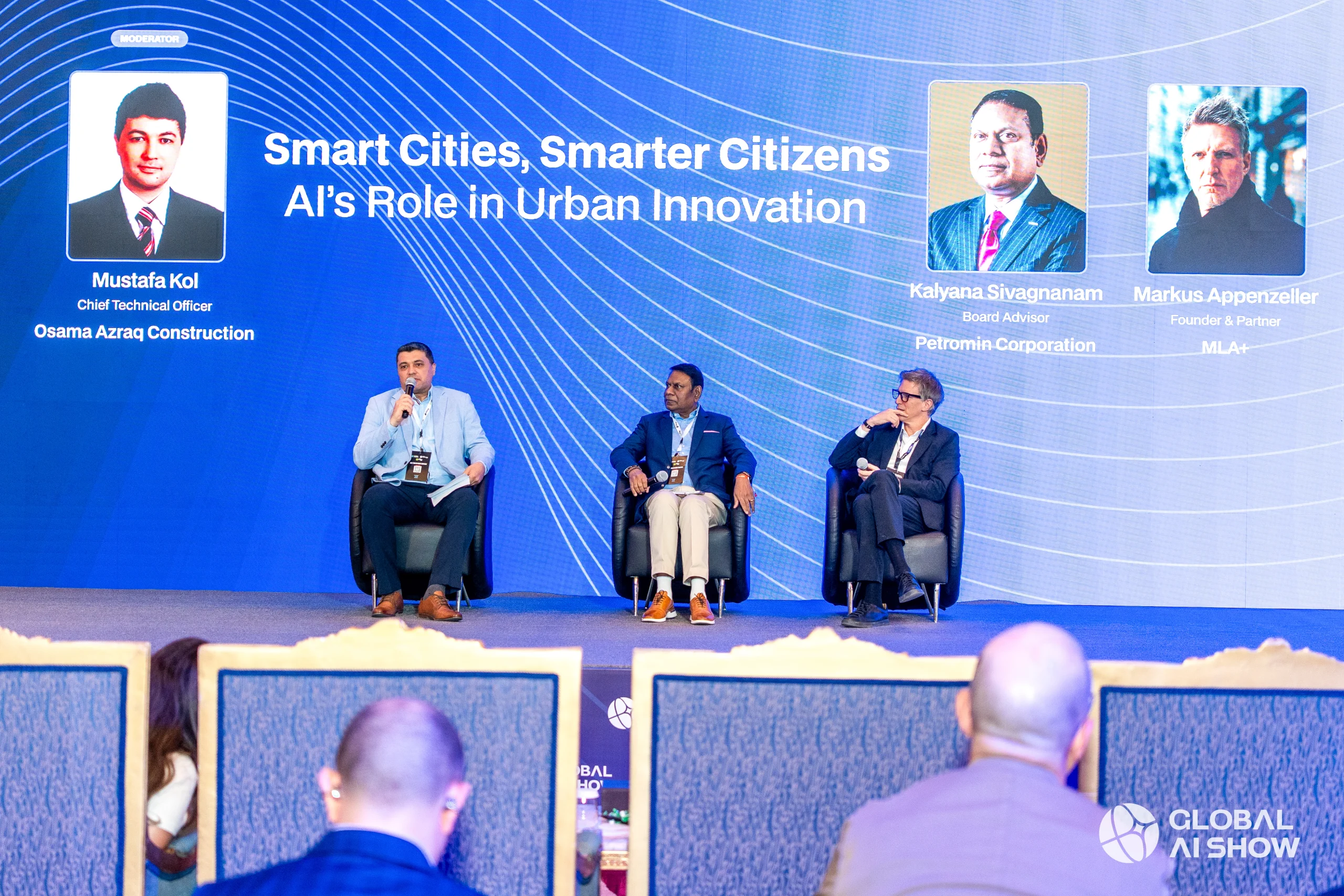
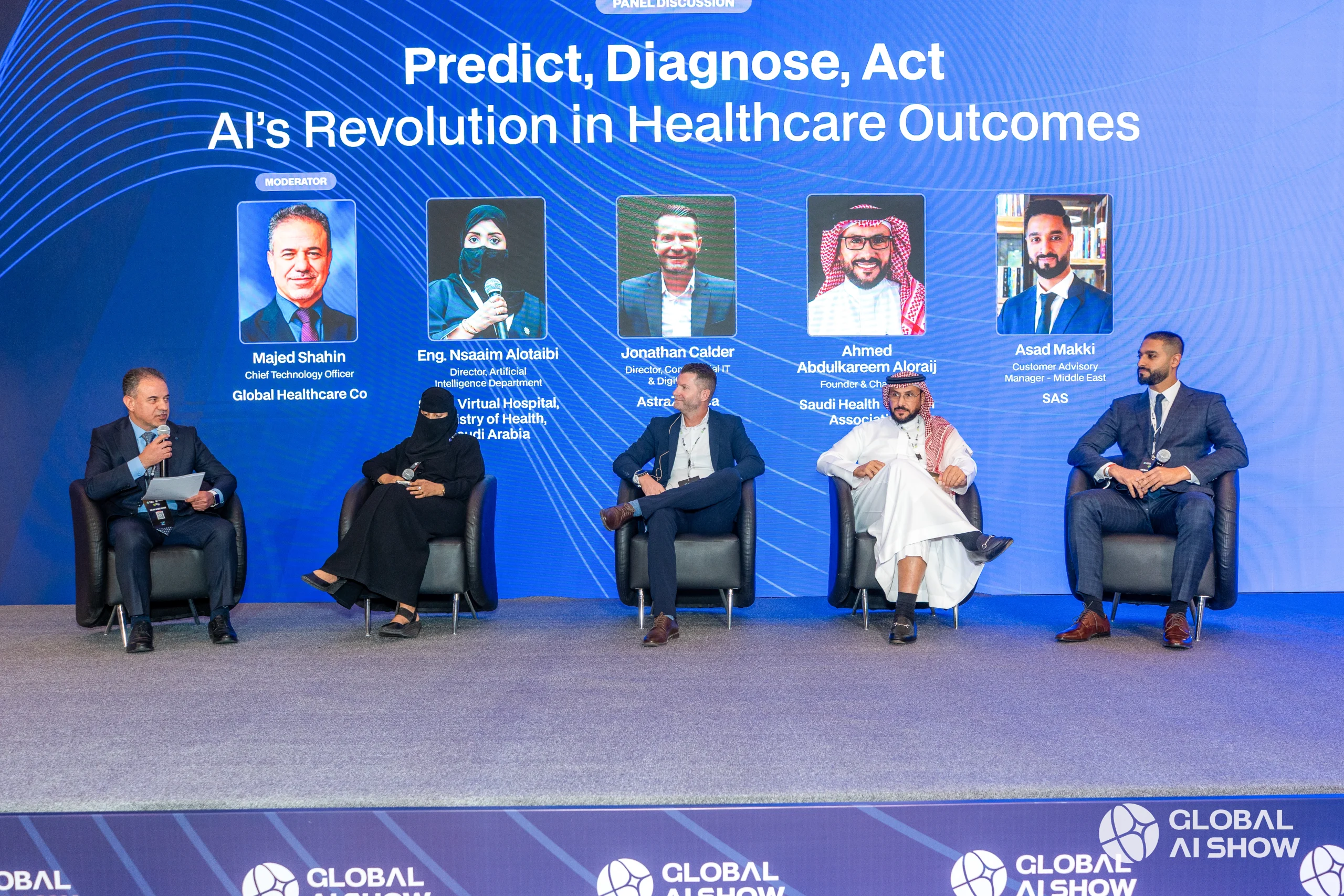
On the AI stages, the Saudi presence was operational rather than aspirational. NEOM, Saudia, Red Sea Global and other national names did not appear to explain what AI might one day do. They appeared because they are already running on it: automation inside greenfield infrastructure, transformation inside a national carrier, intelligent systems across tourism builds, health systems, aviation, energy and urban development.
“At Saudia Group, strategy becomes operations the same way every time,” said Dr. Ibraheem Sheerah, Saudia Group’s Chief Transformation Officer. “We start from the voice of the customer, use AI to hear it at a scale no team ever could, and turn that into value delivered in every interaction, not declared in a document.”
That statement captures the deeper story. In Saudi Arabia, AI is not being treated as a novelty layer. It is being treated as infrastructure. It is the invisible engine under passenger experience, smart cities, healthcare pathways, cybersecurity, energy optimization, and the national projects that are redefining how the Kingdom builds.
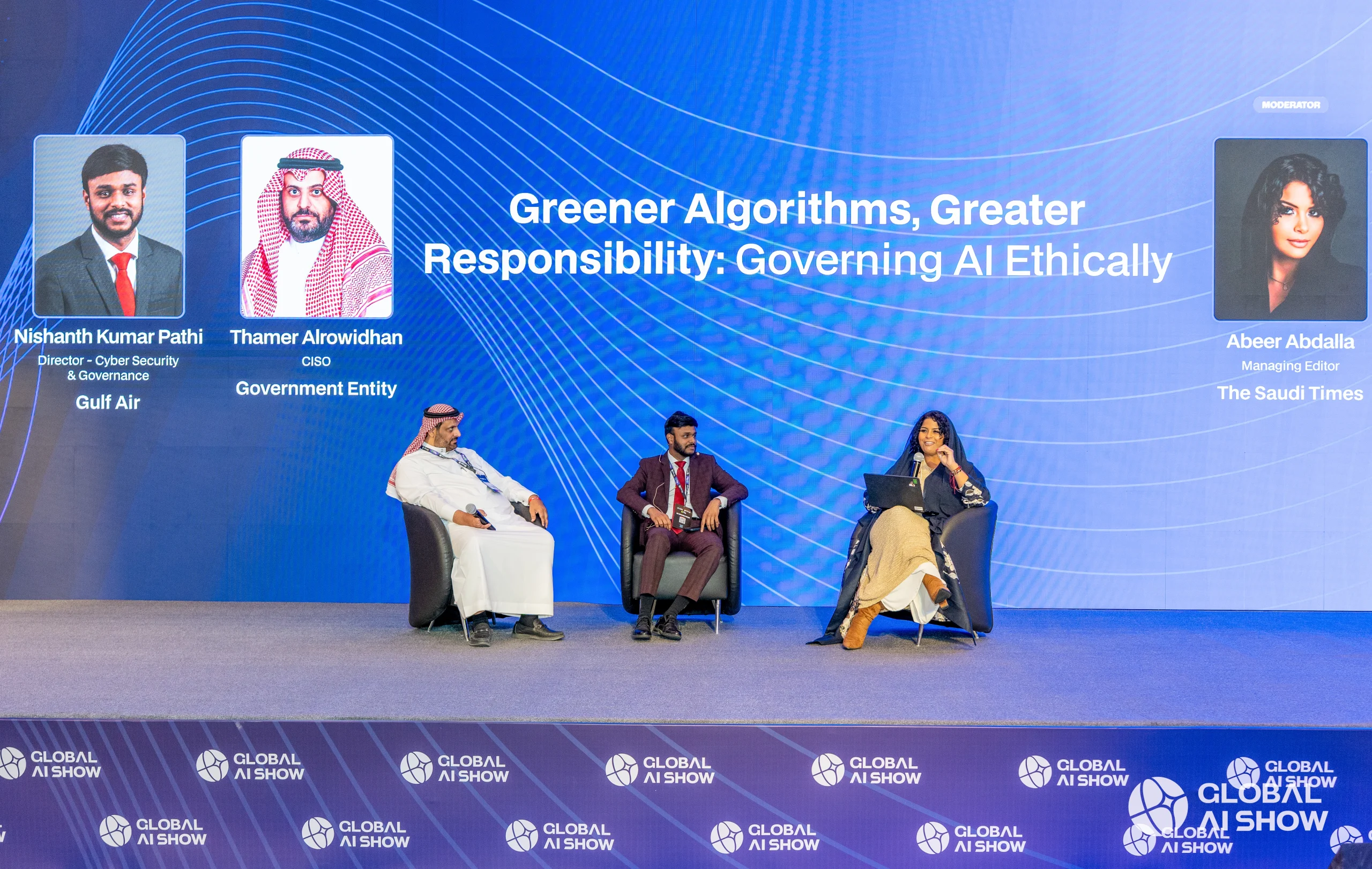
That is why one of the most important conversations of the program was not about speed alone, but responsibility. In “Greener Algorithms, Greater Responsibility: Governing AI Ethically,” Abdalla moderated a discussion with Nishanth Kumar Pathi, Director of Cyber Security and Governance at Gulf Air, and Thamer Alrowidhan, CISO at a government entity. The premise was simple and urgent: AI cannot become national infrastructure without governance, trust, sustainability and security.
The more powerful the machine becomes, the more disciplined the human architecture around it must be.
The same shift is now visible beyond the show floor. In July, Kanz, the Riyadh-based AI recruitment platform led by Roy Baladi, and Saudi Arabia’s Ministry of Human Resources and Social Development were confirmed as joint holders of a Guinness World Records title after 14,075 users joined one artificial intelligence video lesson. The wider program drew 51,693 registrants from 170 countries and produced 4,450 AI projects, with 3,428 already published as working digital products. Baladi put the point cleanly: “The record is good. The apps are better.” In one sentence, he captured the larger Saudi AI story: not attendance, but applied capability.
Gaming, a youth economy with state capital behind it
The gaming floor carried a different energy and the same strategic logic.
This is the Kingdom’s youth story, and it is not being left to chance. Under the National Gaming and Esports Strategy, Saudi Arabia has set clear targets for companies, jobs and GDP contribution by 2030, with the Public Investment Fund’s Savvy Games Group as the most visible vehicle for that ambition.
The point is not only that Saudis play games. The point is that gaming is becoming an industry of employment, intellectual property, content production, software development, esports, creator communities, live events and global soft power.
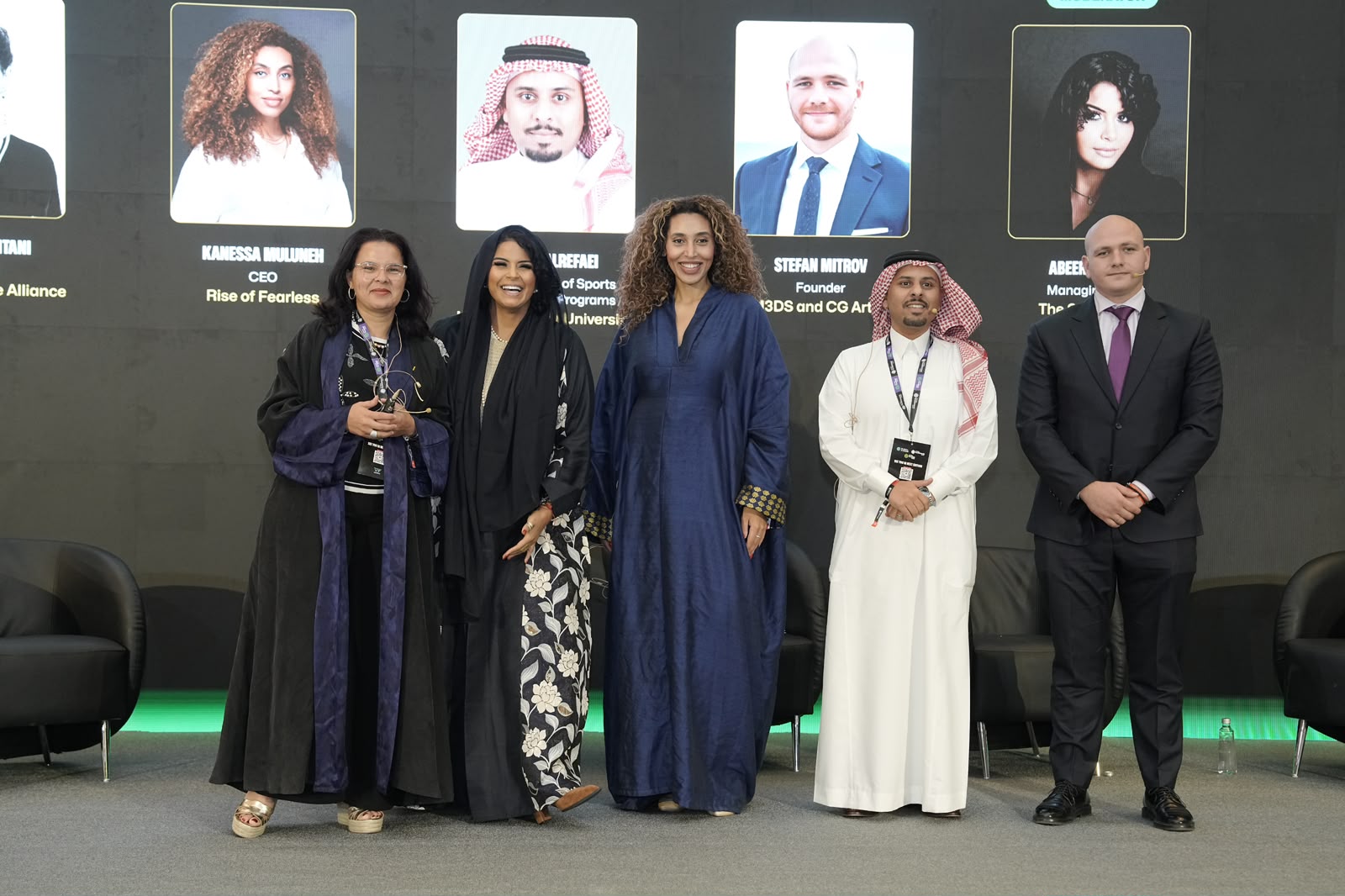
Abdalla’s gaming-stage conversation on community-driven gaming placed that shift in human terms. The panel brought together Kanessa Muluneh, CEO of Rise of Fearless; Ammar Alrefaei, Dean and Director of Sports Management Programs at King AbdulAziz University; Stefan Mitrov, Founder of M3DS and CG Artist; and Yasmina Kazitani, President of the Blockchain Game Alliance.
Read together, the speaker mix told the larger story. African gaming franchises, Saudi sports education, 3D and creative production, and blockchain gaming governance were all on the same stage in Riyadh. That is not random programming. It is the industry’s new map.
Gaming here is three things at once: employment for a young population, a culture export, and soft power with a controller in its hand.
The harder question now is whether foreign scale can be converted into Saudi studios, Saudi developers, and original, Arabic-first intellectual property. That is the line between localization as capability and localization as costume.
Blockchain, the ledger and the fintech hub in the making
The blockchain hall was the least theatrical and arguably the most strategic.
Strip away the speculation and the Saudi interest is concrete: payments, financial inclusion, digital trust, identity, contracts, ownership and Riyadh’s ambition to anchor regional fintech. Blockchain is not only about currencies. It is about how value, rights and verification move through digital systems.
Billal Yamak, Chairman and Co-Founder of the Web3 Alliance of Saudi Arabia, was blunt about what a domestic industry body is for at this stage.
“In an emerging market, the priority is not lobbying, it’s building the foundations,” he said, naming standards, local talent and collaboration between industry, academia and government as the work that comes first. “The countries that attract the next generation of Web3 companies will be those that provide regulatory clarity, not regulatory uncertainty.”
That distinction matters. Builders do not stay in markets because of hashtags. They stay because the rules become legible, the talent base grows, partnerships are real, and products can survive beyond the event cycle.
The blockchain conversation in Riyadh was therefore not separate from AI or gaming. It was the trust layer between them.
Why the world showed up
The honest answer to the weekend’s organizing question is the guest list, again.
Global technology and finance did not travel to Riyadh out of courtesy. They came because the Kingdom holds, together, the three inputs these industries run on: energy to power compute and infrastructure, capital patient enough to build categories rather than chase quarters, and an institutional will to move at scale.
Plenty of countries have one. A few have two. The pitch Saudi Arabia was making, without needing to say it aloud, is that it has all three in the same place at the same time.
The Saudi Times’ role as strategic media partner sharpened that point. Media partnership, in this context, is not just logo placement. It is narrative infrastructure. It is the work of documenting who is building, who is serious, what is shifting, and which conversations deserve to travel beyond the ballroom.
What happens after the hall empties
The test now is not attendance. It is conversion.
The names return only if the operating layer they met keeps shipping: NEOM and Saudia on AI, Savvy’s ecosystem and Saudi studios on gaming, WASA and the Web3 builders on the ledger side, and the national champions proving that emerging technology can become practical capability.
Across the three shows, the line to watch is the same: the difference between those investing in talent and products that outlast the conference, and those who came for the room.
If the next twelve months turn a co-located weekend into joined-up capability, the Global AI Show, Global Games Show and Global Blockchain Show will read less as a convention than as a status report.
On current evidence, Riyadh intends to make it the latter.