


The initiative was launched during the reign of King Abdulaziz bin Abdulrahman Al Saud in the 1930s as part of broader efforts to improve services for worshippers visiting Makkah after the Kingdom’s unification and the restoration of security and stability across the region.
In 1933, King Abdulaziz ordered the installation of a massive clock at the Grand Mosque. The project was overseen by then Finance Minister Abdullah bin Suleiman Al Hamdan, who arranged for the clock to be imported from Germany through Jeddah Port, while Abbas Qattan supervised its installation.
The clock was mounted atop the “Government House” building at a height exceeding 30 meters and featured two large faces, one overlooking the Grand Mosque and the Sa’i area, and the other facing Ajyad Street, with illuminated white backgrounds and black hands visible day and night.
Historical records indicate that the clock became the primary timekeeping reference for worshippers and scholars inside the Grand Mosque, serving as an essential guide for prayer times and daily religious activities.
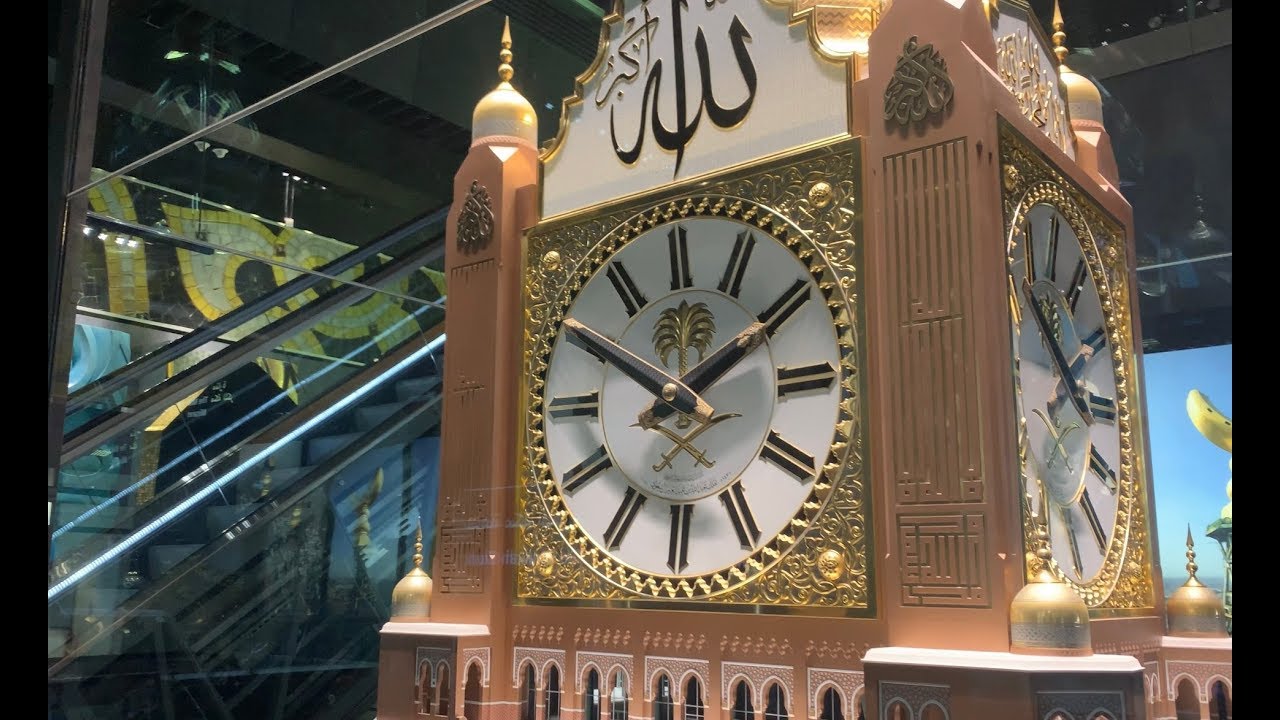
Parts of the original clock are still preserved today at the Two Holy Mosques Architecture Exhibition as a symbol of the Kingdom’s continuous efforts to care for the holy sites from the era of the founder to the present day.
In a modern continuation of that vision, Saudi Arabia inaugurated the new Makkah Clock project in 2011 during the reign of King Abdullah bin Abdulaziz Al Saud, establishing Makkah time as an international reference three hours ahead of GMT.
Located atop one of the towering skyscrapers overlooking the Grand Mosque, the modern clock is designed to operate for nearly 300 years and features around 88 million mosaic pieces and two million LED lights, making it one of the world’s most iconic architectural and engineering landmarks.














