


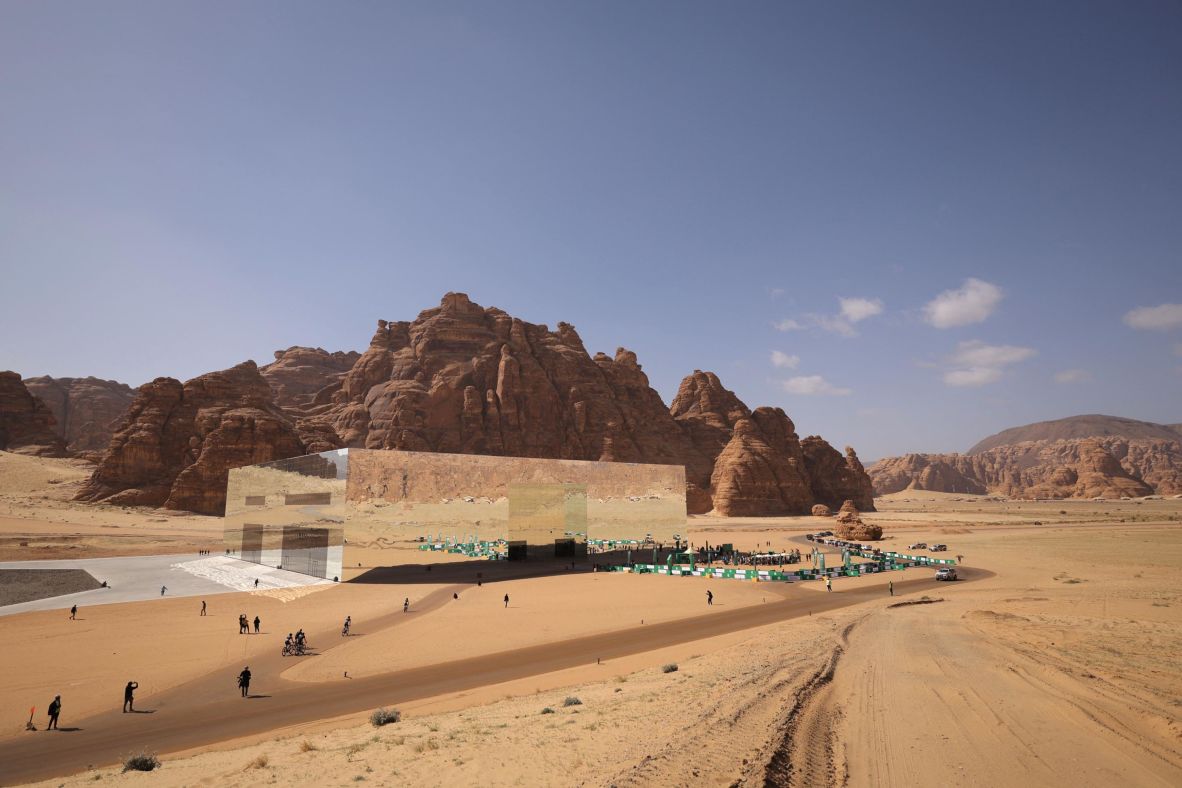
Stone buildings across the Northern Borders region stand as some of the Kingdom’s most distinctive architectural landmarks, reflecting the deep relationship between people and their natural environment.
These structures highlight the ability of local communities to adapt to harsh climatic conditions through practical and sustainable architectural solutions.
They also represent an important historical and cultural legacy tied to traditional desert lifestyles and Bedouin heritage.
Architecture Inspired by Local Environment
These homes were built using natural materials readily available in the region, reflecting generations of accumulated knowledge in utilizing environmental resources to meet daily living needs.
Traditional construction methods demonstrate a strong understanding of desert conditions and the challenges faced by local communities.
The buildings remain a strong example of local architecture that combines simplicity, efficiency, and sustainability.
Natural Insulation Against Harsh Climate
The stone houses are known for their traditional designs using limestone and natural rock sourced from surrounding areas.
Their thick walls provide highly effective natural insulation, helping protect residents from extreme summer heat and harsh winter cold.
This architectural approach reflects early awareness of how natural materials can improve thermal comfort.
Craftsmanship Preserved Through Time
The roofs are supported by locally sourced timber arranged using precise engineering techniques that reflect exceptional craftsmanship and building expertise.
These methods have helped preserve the structures for decades despite the region’s challenging environmental conditions.
A Valuable Architectural Legacy
The stone buildings of the Northern Borders region remain an important part of the area’s cultural and architectural identity.
They represent a significant chapter in the evolution of desert housing and highlight the importance of preserving traditional architecture as part of the Kingdom’s cultural heritage.














