


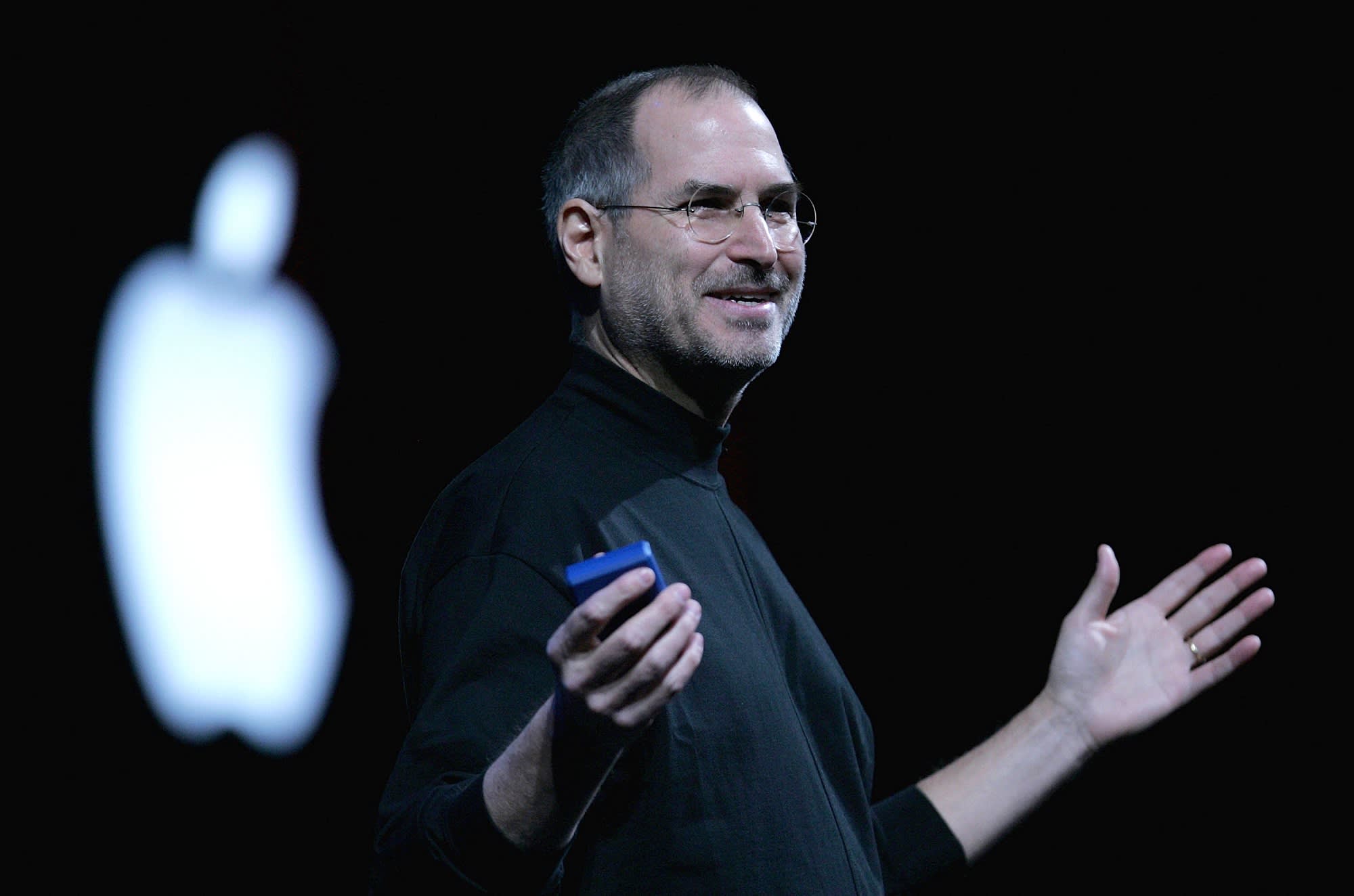
Steve Jobs remains one of the most iconic entrepreneurs in modern history. As the co-founder of Apple, Jobs transformed multiple industries through groundbreaking innovations in personal computing, music, smartphones, tablets, animation, and digital services.
His relentless pursuit of excellence, minimalist product philosophy, and ability to anticipate consumer needs made him one of the most influential business leaders of the twenty-first century.
Even years after his passing, Steve Jobs continues to shape the technology industry through products, ideas, and design principles that remain central to Apple’s identity.
Steve Jobs Age and Early Life
Steven Paul Jobs was born on February 24, 1955, in San Francisco, California, United States.
Shortly after birth, he was adopted by Paul and Clara Jobs, who raised him in California’s Silicon Valley region.
Growing up surrounded by electronics and engineering culture, Jobs developed a fascination with technology and creativity.
His father taught him mechanical skills, while his curiosity drove him to explore electronics from an early age.
These experiences laid the foundation for his future innovations.

Education and Early Interests
Steve Jobs attended Reed College but left after only one semester.
Although he did not complete a university degree, he continued attending classes that interested him, including typography and design.
These seemingly unrelated studies later influenced Apple’s focus on beautiful typography, elegant interfaces, and product simplicity.
Jobs believed learning should follow curiosity rather than convention.
This philosophy influenced both his personal life and leadership style.
Founding Apple
In 1976, Steve Jobs co-founded Apple with Steve Wozniak and Ronald Wayne.
The company’s first products helped introduce personal computing to a much broader audience.
The launch of the Apple II established Apple as one of the fastest-growing technology companies in the world.
Later, the Macintosh introduced graphical user interfaces and the computer mouse to millions of users, fundamentally changing personal computing.
Leaving and Returning to Apple
In 1985, Steve Jobs left Apple after internal leadership conflicts.
Rather than slowing down, he founded NeXT, a computer company focused on advanced workstations for education and business.
He also acquired Pixar Animation Studios, helping transform digital animation.
Pixar later produced groundbreaking animated films that reshaped the entertainment industry.
In 1997, Jobs returned to Apple during one of the company’s most difficult periods.
His return marked one of the greatest corporate turnarounds in business history.
Reinventing Consumer Technology
Under Steve Jobs’ leadership, Apple introduced products that redefined entire industries.
These included:
- iMac
- iPod
- iTunes
- iPhone
- App Store
- iPad
Each product combined elegant design, intuitive software, and seamless hardware integration.
Jobs emphasized creating complete user experiences rather than simply manufacturing devices.
This philosophy became Apple’s greatest competitive advantage.
Leadership Style of Steve Jobs
Steve Jobs was known for his demanding leadership style, attention to detail, and uncompromising pursuit of quality.
His philosophy emphasized:
- Innovation
- Simplicity
- Product design
- Customer experience
- Long-term vision
Although sometimes viewed as a challenging leader, his ability to inspire teams and push creative boundaries became legendary.
Many of today’s technology leaders continue to study his management approach.
Steve Jobs Net Worth
At the time of his death in 2011, much of Steve Jobs’ personal wealth came from his holdings in The Walt Disney Company following Pixar’s acquisition rather than from Apple stock.
Although he was a billionaire, Jobs focused more on building revolutionary products than maximizing personal wealth.
His influence on global business far exceeded financial measurements.
Legacy
Steve Jobs’ impact extends far beyond Apple.
He transformed multiple industries including:
- Personal computing
- Smartphones
- Digital music
- Animation
- Mobile software
- Consumer electronics
His emphasis on design thinking continues to influence businesses worldwide.
Countless entrepreneurs cite Steve Jobs as one of their greatest inspirations.
Key Achievements
Steve Jobs’ major achievements include:
- Co-founding Apple
- Revolutionizing personal computing
- Launching the iPhone
- Building Pixar into a global animation leader
- Transforming multiple technology industries
Few entrepreneurs have changed everyday life for billions of people as profoundly as Steve Jobs.
Final Thoughts
Steve Jobs represents one of the greatest innovation stories in business history.
From building computers in a garage to creating products used by billions worldwide, his journey reflects vision, creativity, persistence, and extraordinary leadership.
His story is not only about building successful companies.
It is about changing how people communicate, create, work, and experience technology.














