


Saudi Arabia’s media sector has successfully delivered one of the largest and most comprehensive media operations in the world during Hajj 1447H, supporting a pilgrimage season that welcomed more than 1.7 million pilgrims from over 165 countries.
The operation showcased the Kingdom’s ability to manage a complex global event that combines religious, security, healthcare, transportation, environmental, technological, and media systems within a limited geographical area.
Unified Media Operations Center
At the heart of the effort was the Unified Hajj Media Operations Center, managed by the Ministry of Media in cooperation with more than 40 government entities.
The center operated around the clock, coordinating messaging, monitoring global media coverage, producing multilingual content, and ensuring the rapid flow of accurate information throughout the pilgrimage season.
It also played a key role in combating misinformation and maintaining a unified narrative that highlighted the Kingdom’s efforts in serving pilgrims.
“Hayyakum Allah” Unified Identity
A major milestone during this year’s Hajj was the launch and expansion of the “Hayyakum Allah” media identity, developed as a unified communication platform for Hajj and Umrah.
The initiative reflected Saudi values of hospitality and service while providing a consistent visual and media identity across multilingual content and awareness campaigns.
Advanced Infrastructure and Technical Capabilities
The Kingdom established an integrated media complex in Mina featuring advanced television and radio studios that enabled journalists and broadcasters to deliver live reports directly from the holy sites.
The operation relied on an extensive technical network that included:
- 120 broadcasting cameras.
- 32 live transmission points.
- 25 editing units.
- 21 satellite vehicles.
- 10 broadcasting trucks.
- 4 mobile studios.
These capabilities enabled seamless coverage of the pilgrimage experience for audiences around the globe.
Government Transparency and Direct Communication
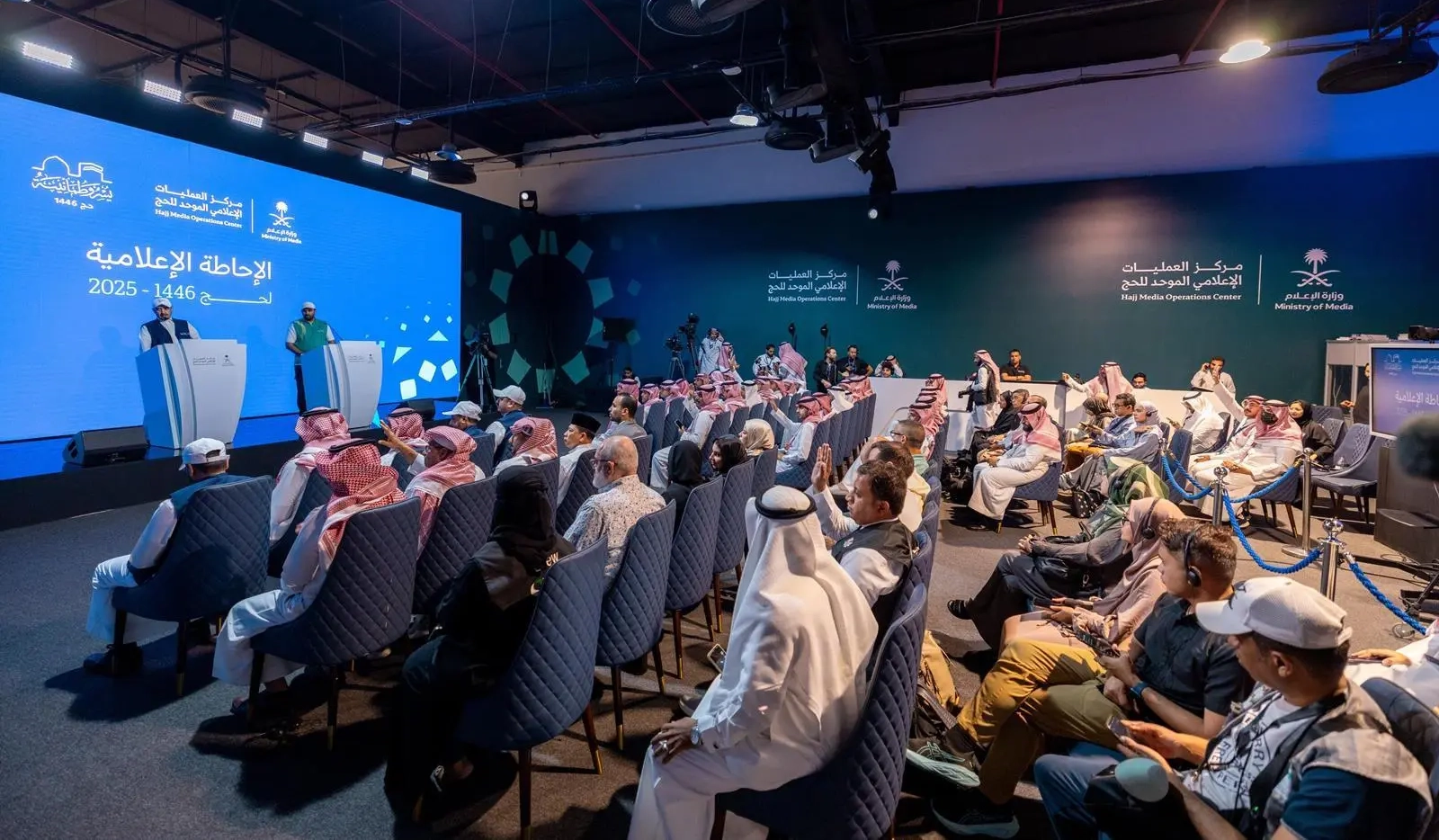
A major government press conference held before the peak Hajj period brought together five ministers representing key service sectors.
The event attracted more than 70 journalists from over 30 media organizations and generated more than 620 million digital impressions across social media platforms.
The conference provided detailed information about operational plans, services, and readiness indicators, reinforcing transparency and public communication.
More Than 700 Hours of Live Coverage
Saudi broadcasting networks delivered extensive coverage throughout the season, including:
- More than 700 hours of live broadcasting.
- Eight television and radio channels.
- 41 specialized programs.
- More than 1,000 reports and media pieces.
- Over 1,100 guests, experts, and commentators.
- More than 100 digital productions.
The coverage helped bring the spiritual and humanitarian dimensions of Hajj to audiences worldwide.
Global Media Participation
More than 1,500 accredited journalists participated in covering the pilgrimage season, while the Ministry of Media hosted over 120 international journalists, content creators, and influencers from across the Islamic world and beyond.
The Kingdom also strengthened cooperation with major global media organizations including Reuters, Associated Press, CNN, BBC, and other international networks to maximize worldwide coverage.
Reaching More Than Two Billion Muslims
The Holy Quran Channel, Sunnah Channel, Quran Radio, and Nida Al-Islam Radio continued their role in delivering live coverage from the Grand Mosque and the Prophet’s Mosque to more than two billion Muslims worldwide.
Supported by advanced broadcasting technology and more than 40 cameras inside the Grand Mosque, including the iconic Falcon Eye camera atop the Clock Tower, these platforms provided uninterrupted coverage of the pilgrimage rituals.
A Digital Story Told in Multiple Languages
Saudi Arabia’s digital media ecosystem produced thousands of multilingual reports, documentaries, short films, and social media content pieces highlighting healthcare services, transportation networks, water systems, communications infrastructure, security operations, and humanitarian initiatives.
Special attention was also given to documenting flagship programs such as the Makkah Route Initiative and the Custodian of the Two Holy Mosques Guests Program.
The success of the 1447H Hajj media operation demonstrates the Kingdom’s emergence as a global leader in large-scale event communication, combining advanced technology, professional journalism, multilingual storytelling, and institutional coordination to deliver the story of Hajj to audiences around the world.














