


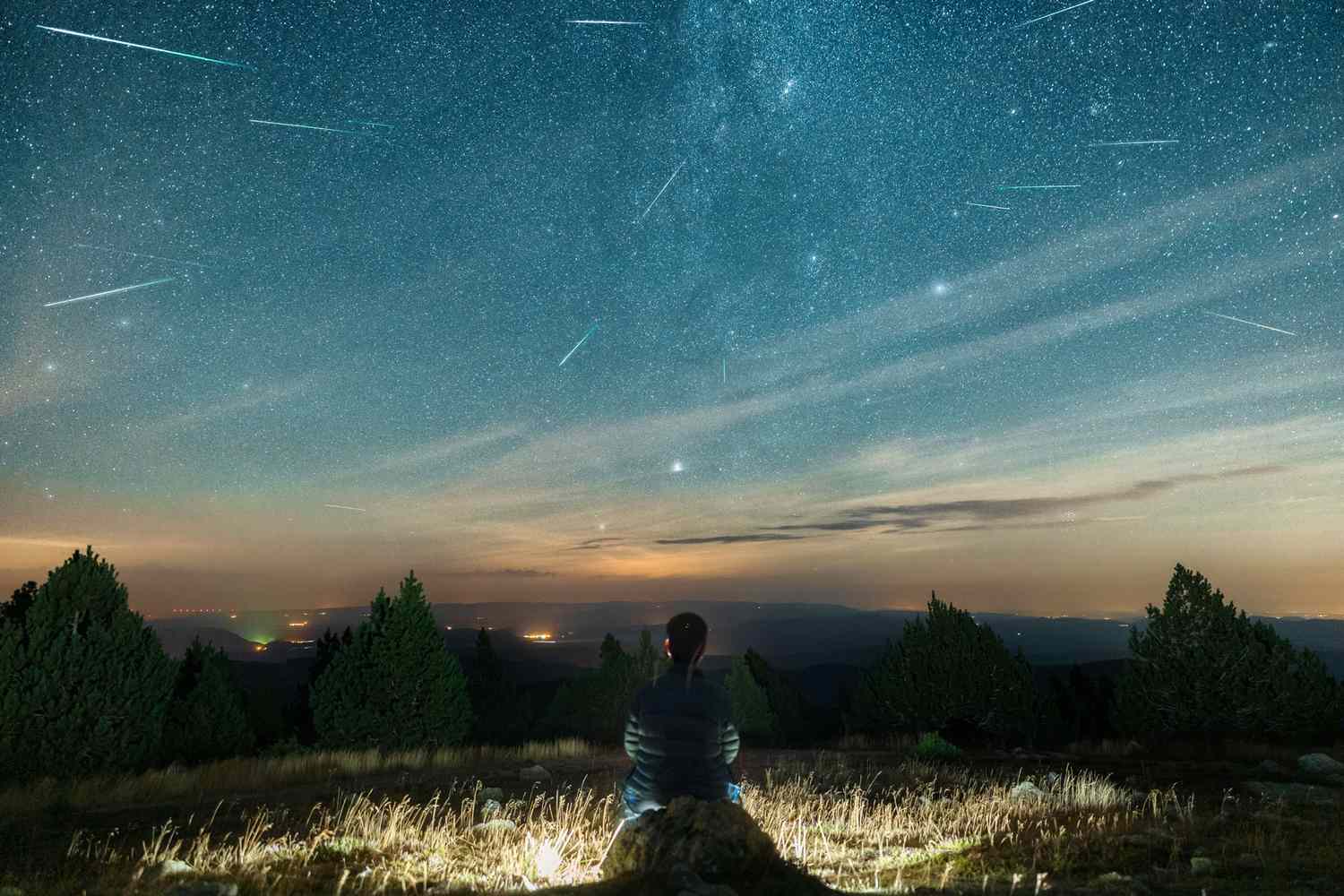
Saudi Arabia is preparing for one of the busiest months of the year for astronomy enthusiasts, as August brings a remarkable series of celestial events ranging from meteor showers and a partial lunar eclipse to outstanding planetary observations.
Thanks to its vast deserts, exceptionally clear skies, and low levels of light pollution, the Kingdom continues to strengthen its reputation as one of the world’s premier destinations for year-round stargazing and astronomical tourism.
As interest in astronomy continues to grow, Saudi Arabia is increasingly combining scientific exploration with cultural tourism, offering visitors opportunities to experience both the beauty of the night sky and the region’s centuries-old astronomical traditions.
Perseid Meteor Shower Takes Center Stage
The highlight of August will be the annual Perseid meteor shower, expected to reach peak activity during the nights of August 12 and 13.
Under favorable moonless conditions, observers in dark locations may witness up to 100 meteors per hour, making it one of the year’s most spectacular astronomical events.
The Perseids occur as Earth passes through debris left behind by Comet Swift-Tuttle. Tiny particles enter Earth’s atmosphere at tremendous speeds, producing bright streaks of light across the night sky.
Solar Eclipse Builds Anticipation for 2027
A total solar eclipse will occur on August 12, although it will not be visible from Saudi Arabia. Instead, observers in parts of Russia, Greenland, Iceland, and Spain will experience totality.
For Saudi Arabia, however, attention is already turning toward August 2, 2027, when the Kingdom is expected to witness a total solar eclipse lasting more than six minutes in some locations, making it one of the most significant astronomical events visible in the region for decades.
Partial Lunar Eclipse Closes the Month
August will conclude with a deep partial lunar eclipse on August 27–28, during which approximately 93 percent of the Moon’s diameter will pass into Earth’s shadow.
The initial stages of the eclipse are expected to be visible from western regions of Saudi Arabia, with viewing conditions varying across the Kingdom.
Bright Planets Dominate the Night Sky
Throughout August, skywatchers will also have excellent opportunities to observe several prominent planets, including Venus, Jupiter, Saturn, and Mars.
The month additionally marks the seasonal transition from summer to winter constellations, allowing observers to enjoy a constantly changing night sky filled with diverse celestial formations.
AlUla and Saudi Deserts Expand Astronomy Tourism
AlUla continues to establish itself as one of Saudi Arabia’s leading astronomy destinations by offering guided telescope experiences and educational programs that explore how ancient communities relied on the stars for navigation, agriculture, and seasonal planning.
Visitors can also experience traditional Bedouin stories about the night sky, creating a unique blend of science, history, and cultural heritage.
Meanwhile, Saudi Arabia’s Northern Borders Region has recently witnessed several remarkable astronomical observations, including the Milky Way, the Summer Triangle, lunar conjunctions with bright stars, and rare alignments involving the Pleiades, Hyades, Mars, and Capella.
Saudi Arabia Strengthens Its Position as a Stargazing Destination
With its expansive desert landscapes, minimal light pollution, and growing investment in eco-tourism and cultural experiences, Saudi Arabia is becoming an increasingly attractive destination for astronomy enthusiasts from around the world.
As astronomical tourism gains international popularity, the Kingdom is leveraging its natural environment to create experiences that combine scientific discovery, cultural heritage, and sustainable tourism, further supporting the goals of Vision 2030.














