


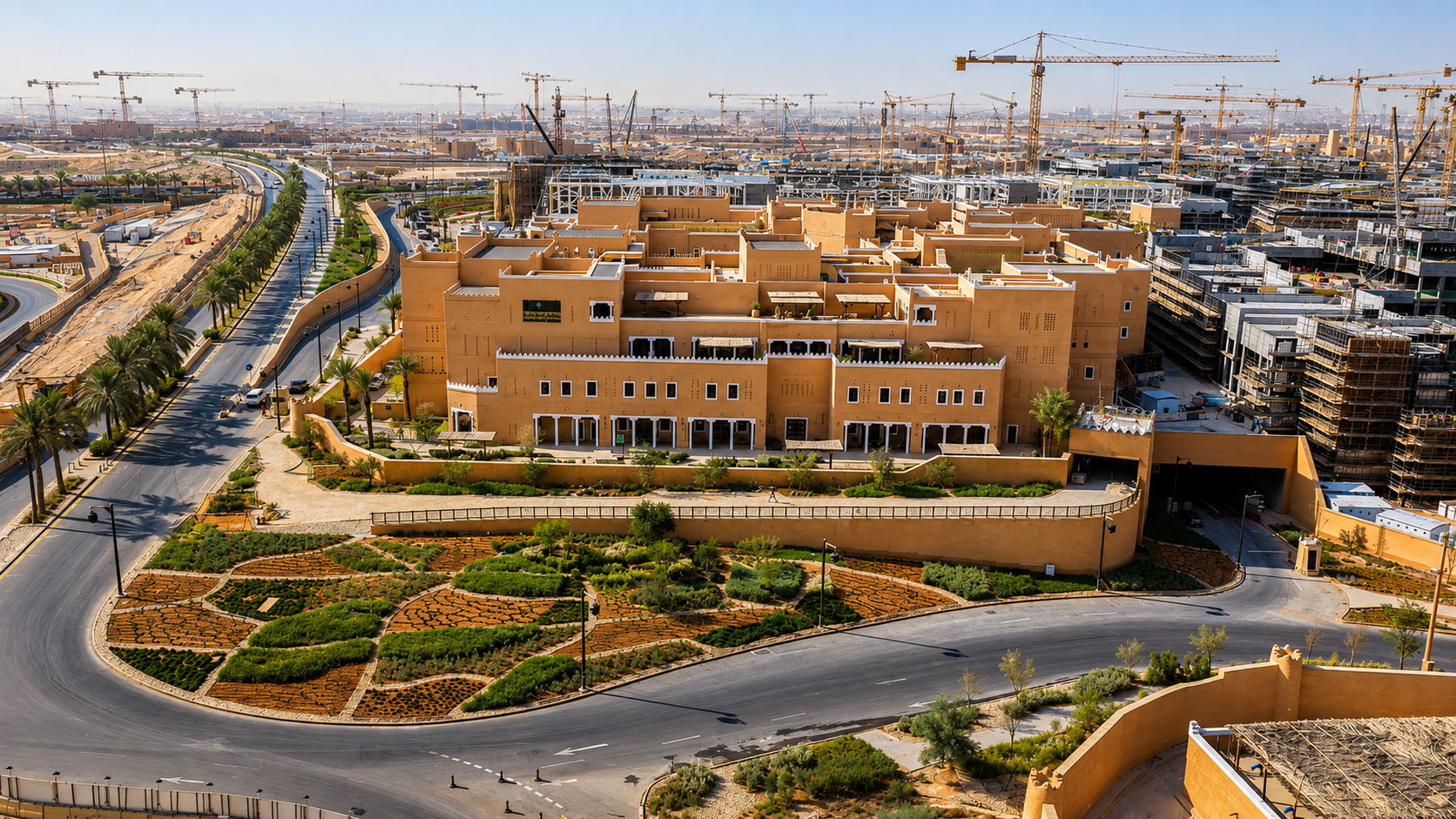
Saudi Arabia’s Ministry of Culture has officially begun operations from its new headquarters in Diriyah after completing its move to a newly developed building within the northern district of the Diriyah development. The move highlights the growing institutional role of the Kingdom’s cultural sector within one of Saudi Arabia’s most significant heritage and urban development projects.
The new headquarters represents an extension of cooperation between the Ministry of Culture and the entities responsible for developing Diriyah. It also reflects Saudi Arabia’s broader approach to creating modern working environments that combine national identity, contemporary design, sustainability and advanced infrastructure while preserving the historic character of Diriyah.
The relocation follows years of institutional cooperation that began with a memorandum of understanding signed in mid-2022 between the Ministry of Culture and the Diriyah Gate Development Authority. The agreement established a framework for coordination and cooperation in developing and implementing cultural projects, initiatives and events within the master plan for Diriyah.
A Headquarters Inspired by Najdi Architecture
The new Ministry of Culture headquarters covers approximately 33,168 square meters within Diriyah’s integrated urban fabric, making it the largest standalone office building in the area.
The building was designed as an integrated working environment capable of meeting the operational needs of the Ministry’s teams. It includes dedicated office spaces, modern facilities and advanced digital infrastructure designed to support daily operations and improve workplace efficiency.
The architectural concept also places strong emphasis on Saudi identity. Rather than adopting a purely contemporary corporate design, the building draws inspiration from traditional Najdi architecture, linking its modern functions to the cultural and architectural heritage of the surrounding area.
This approach reflects an effort to balance modern development with the preservation of local heritage, particularly given Diriyah’s direct connection to the history of Saudi Arabia and its distinctive architectural legacy.
A Long-Term Partnership Supporting Diriyah’s Development
Diriyah Company Group CEO Jerry Inzerillo said the development of the Ministry of Culture’s headquarters forms part of the accelerated transformation of Diriyah into an integrated urban destination for living, working and visiting.
The relocation is also viewed as an important step in developing office environments and workplaces within Diriyah according to international standards, supporting the broader transformation taking place across the development.
For the Ministry of Culture, its presence in Diriyah strengthens the connection between Saudi culture and the Kingdom’s historic sites. It also supports efforts to integrate cultural institutions with locations of significant historical and civilizational value.
Diriyah holds a particularly important position in Saudi Arabia’s cultural landscape. The historic At-Turaif district, located within Diriyah, is listed as a UNESCO World Heritage Site, giving the Ministry’s relocation a significance that extends beyond the administrative function of the new headquarters.
Sustainability at the Center of the New Building
Sustainability is another defining feature of the new Ministry of Culture headquarters.
The building has received international and national green-building certifications, reflecting an emphasis on environmental performance and efficient resource use.
It obtained a Gold certification under the fourth edition of the Leadership in Energy and Environmental Design, or LEED v4, system for green buildings in the category covering building design and construction, including structural and facade development.
The headquarters also received a Gold commercial certification under the Saudi Mostadam green-building rating system.
These certifications reflect the adoption of measures focused on energy efficiency, water conservation, waste management, as well as health and well-being within the workplace.
The approach aligns with the objectives of Saudi Vision 2030, which places significant emphasis on sustainable urban development, improved quality of life, efficient resource management and the adoption of modern infrastructure standards.
Diriyah’s Growing Role as a Cultural Destination
The development of the Ministry of Culture headquarters is closely connected to the wider transformation of Diriyah into an international destination for culture, heritage, education, arts, entertainment and hospitality.
Diriyah Company is developing an integrated urban project with an estimated value of SAR 236 billion, equivalent to approximately $63 billion. The project aims to transform Diriyah into a global destination built around its historic identity while providing modern urban infrastructure and services.
Several major destinations have already opened as part of the development, including Bab Samhan, a Luxury Collection hotel, and AlZalal, a mixed-use destination bringing together restaurants, retail and office spaces in an environment inspired by the area’s authentic character.
The development has attracted more than five million visits, while its long-term plans target more than 50 million visitors annually by 2030.
Major Economic and Urban Ambitions
Diriyah’s development extends beyond tourism and cultural destinations. The project also includes significant economic and urban objectives, including the creation of approximately 180,000 jobs and accommodation for around 100,000 residents.
These targets underline the scale of Diriyah’s transformation and its anticipated contribution to the local economy, cultural tourism and employment, while strengthening Riyadh and the surrounding region as an international destination for visitors and investors.
The presence of the Ministry of Culture at the heart of this transformation adds an important institutional and cultural dimension to the project. The ministry plays a central role in developing Saudi Arabia’s cultural sector, supporting arts, heritage, creative industries and initiatives connected to national identity.
A Headquarters Reflecting Saudi Arabia’s Cultural Transformation
The relocation of the Ministry of Culture represents an important milestone in the broader development of Saudi Arabia’s cultural sector. Cultural institutions are increasingly becoming part of the Kingdom’s wider urban, economic and tourism transformation rather than operating separately from it.
The new headquarters brings together a historically significant location, architecture inspired by Najdi heritage, modern digital infrastructure and internationally recognized sustainability standards.
Its location in Diriyah also creates opportunities for closer integration between institutional cultural work and the historic and cultural destinations surrounding it. This could support the development of additional programs, initiatives and cultural events that draw on the historical significance of the area.
As the wider Diriyah project continues to expand, the Ministry of Culture’s headquarters is expected to become part of a larger urban and cultural ecosystem designed to demonstrate how heritage preservation can coexist with modern urban development.
The relocation therefore represents more than a change of workplace. It reflects a broader strategy to place culture at the center of Saudi Arabia’s urban and economic development and to strengthen the country’s identity within major projects being developed under the objectives of Saudi Vision 2030.














