


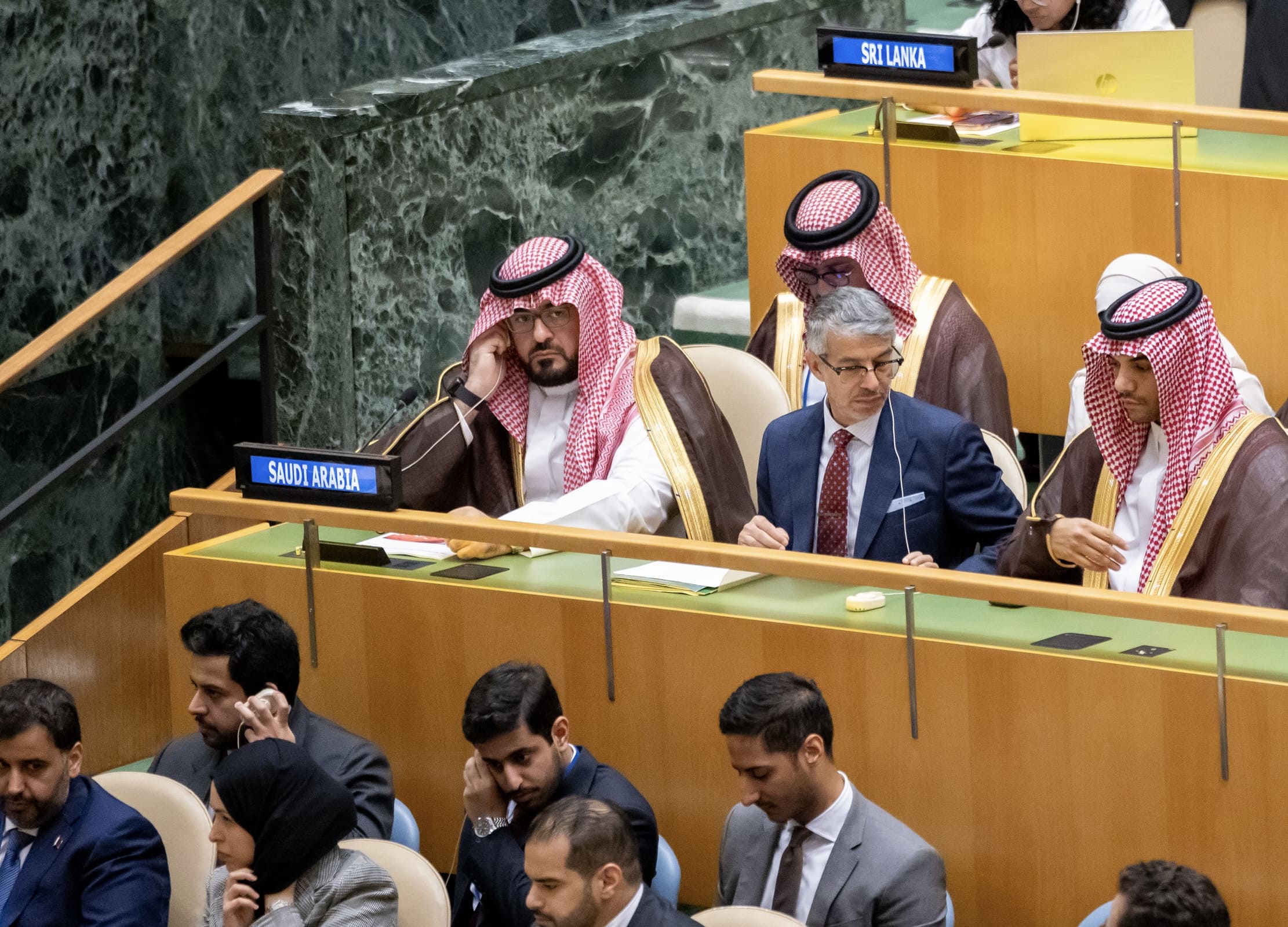
The message was delivered during a high-level event organized by the Ministry of Economy and Planning on the sidelines of the UN High-Level Political Forum on Sustainable Development in New York, with participation from representatives of Saudi Arabia, Singapore, Pakistan, Poland, Ireland, and the United Nations.
Vision 2030 as an Implementation Model
Saudi Arabia’s Deputy Permanent Representative to the United Nations, Fares Al-Otaibi, said governments today face increasingly complex economic, social, and environmental challenges while operating with limited institutional and financial resources.
He stressed that Vision 2030 demonstrates how sustainable development accelerates when long-term ambition is supported by clear priorities, effective governance, coordinated implementation, and strong national ownership.
Nine National Missions
Officials from the Ministry of Economy and Planning outlined Saudi Arabia’s framework for aligning the SDGs with national priorities through nine strategic “missions” covering economic, social, and environmental development.
These missions include water sustainability, resilient food systems, healthier lives, empowered citizens, thriving cities, and inclusive economic growth, each supported by measurable targets and performance indicators.
The Kingdom also explained that more than 90 sustainability themes were assessed before selecting national priorities based on relevance, implementation capacity, performance gaps, and potential cross-sector impact.
Performance Monitoring and Partnerships
Saudi Arabia highlighted that progress is monitored through a centralized governance system led by the Sustainable Development Steering Committee, which regularly reviews implementation and coordinates corrective actions where needed.
The Kingdom is also expanding cooperation with the private sector by developing national sustainability reporting standards and maintaining a public platform that provides transparent sustainability data.
International Exchange of Best Practices
Representatives from participating countries shared their own implementation strategies, emphasizing that while national priorities differ, many delivery challenges are common across governments.
In a recorded address, Deema Al-Khatib, Director of the UN Office for South-South Cooperation, noted that only 36% of global SDG targets are currently on track or making moderate progress. She highlighted Saudi Vision 2030 as one of the integrated national models that can help guide more effective implementation worldwide.














