


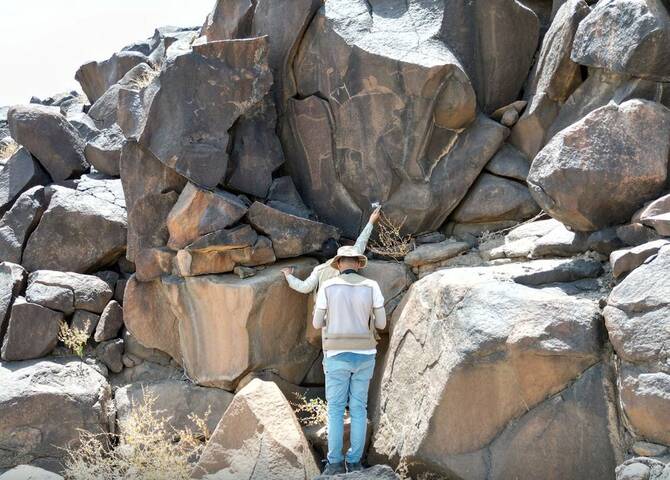
The initiative forms part of ongoing efforts to explore, preserve, and document the Kingdom’s historical heritage while supporting the objectives of Vision 2030.
156 New Archaeological Sites and Rare Inscriptions
The survey covered three key areas, Al-Suwayriqiyah, Al-Muwayhiyah, and Hadhah, where researchers documented 156 new archaeological sites containing evidence of human settlement and activity across different historical periods.
The discoveries included 461 Islamic inscriptions, 34 Thamudic inscriptions, 1,259 rock art panels, 11 stone structures, three historic palaces, two caravan routes, and four ancient wells.
Among the most significant findings were rock inscriptions bearing the name of Caliph Omar ibn Al-Khattab, as well as Arabic poetry engraved on rock surfaces, adding considerable historical and cultural significance to the sites.
Ongoing Efforts to Preserve National Heritage
The Heritage Commission emphasized its commitment to continuing archaeological survey and documentation programs across the Kingdom to safeguard historical sites and strengthen public understanding of Saudi Arabia’s cultural heritage.
These discoveries provide valuable insights into the civilizations that once flourished in the Arabian Peninsula and contribute to expanding historical knowledge of the region.
Additional Discoveries at the Historic Al-Juhfah Site
In a related development, the commission recently completed the first season of its joint scientific mission with University of Exeter at the historic Al-Juhfah Miqat site, one of the most important stations along the ancient Egyptian pilgrimage route.
Excavations uncovered more than 1,700 artifacts, including everyday household items, six pottery kilns, a water channel believed to have served pilgrims and travelers, and 13 tombstones dating back to the Umayyad and Abbasid eras.
Researchers also identified artifacts originating from the Levant, Egypt, and Ethiopia, reflecting the diverse backgrounds of pilgrims who traveled through the site over centuries.
A Historic Site Linked to Early Islamic History
Located approximately 187 kilometers northwest of Makkah, Al-Juhfah has served as an important miqat since the early Islamic period and is historically associated with the Prophet’s migration era.
Historical evidence suggests the site flourished during the second Hijri century, featuring water facilities, markets, and services that supported pilgrims and travelers, making it one of the most significant heritage locations connected to the history of Hajj and trade routes in the region.














