

Saudi Arabia has launched a new initiative to rehabilitate natural pastures and combat land degradation, supporting efforts to expand vegetation cover, restore ecosystems and improve the sustainability of natural resources under the Saudi Green Initiative.
The National Center for Vegetation Cover Development and Combating Desertification is implementing the program with a target of rehabilitating 350,000 hectares of pasture by 2030 through the expansion of native plant species, climate-based planning and the strategic use of rainfall forecasts to improve the success of restoration efforts.
More Than 51,000 Hectares Restored in Two Years
Over the past two years, the center has restored more than 51,000 hectares of degraded land across 58 sites, including 15 valleys and meadows.
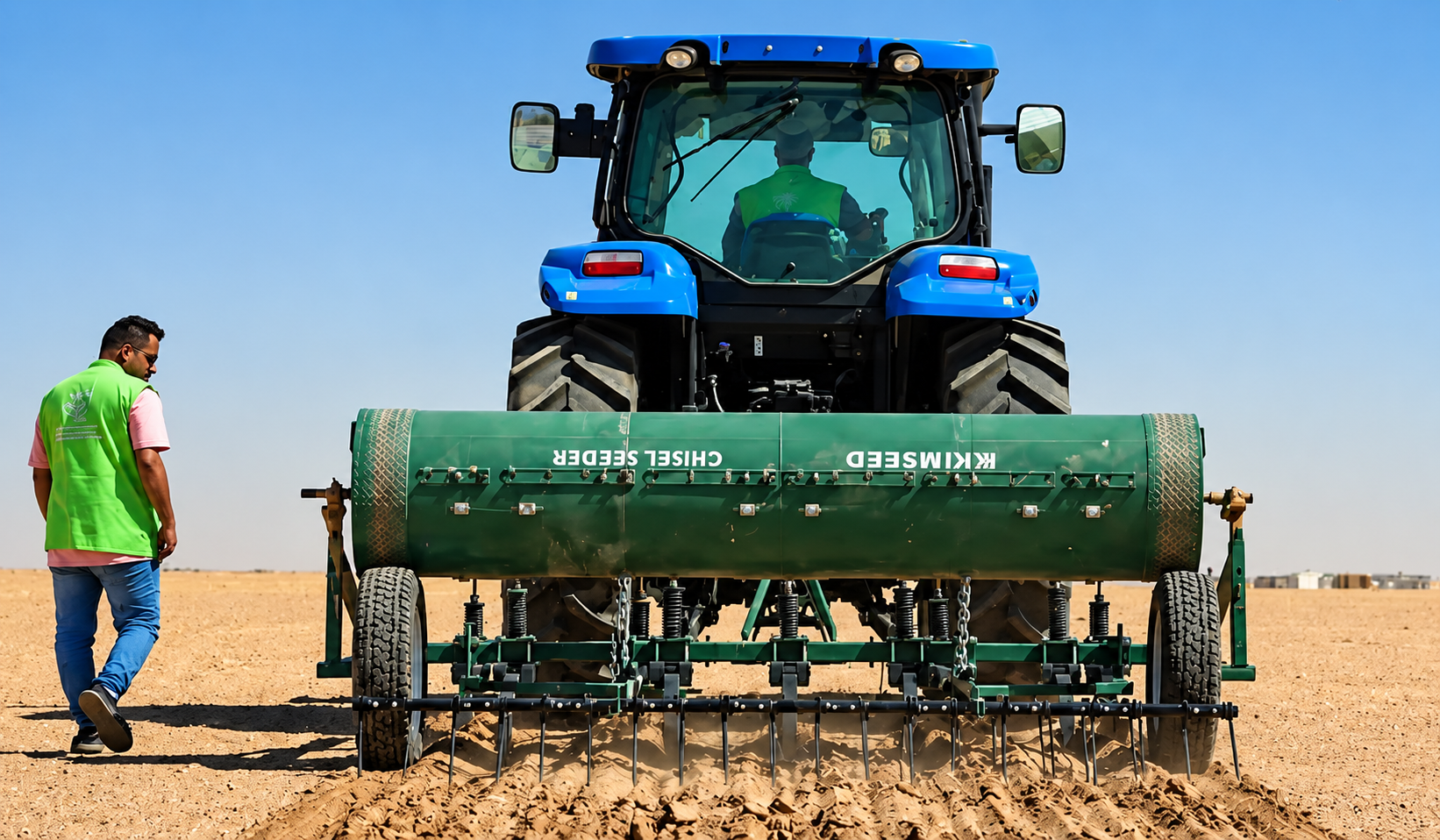
The work involved dispersing approximately 109 tonnes of seeds representing 40 plant species, supporting efforts to restore vegetation cover and improve the ability of degraded pasturelands to recover.
The initiative forms part of broader efforts to protect Saudi Arabia’s natural resources, particularly areas affected by environmental, climatic and land-use pressures.
Additional 60,000 Hectares Targeted This Year
The program is expanding significantly this year, with plans to rehabilitate an additional 60,000 hectares across 70 sites and 25 valleys and meadows.
More than 110 tonnes of seeds representing 70 plant species are expected to be dispersed as part of the effort, supporting vegetation recovery and greater plant diversity across targeted areas.
The use of a broader range of species is intended not only to increase vegetation cover but also to support the resilience and sustainability of local ecosystems.
Seed Quality Testing Supports Germination
The center has introduced strict quality controls for the seeds used in rehabilitation projects.
All distributed seeds underwent six quality tests in accordance with standards established by the International Seed Testing Association (ISTA).
The testing process is designed to improve seed quality and maximize germination rates, helping ensure that restoration activities achieve the greatest possible environmental benefit.
Seed quality is particularly important in pasture rehabilitation projects, where germination and plant survival can be influenced by soil conditions, temperatures, water availability and planting schedules.
Restoration Timed With Rainfall Forecasts
One of the program’s key features is its use of climate data to determine when and where seeds should be dispersed.
The center has aligned its sowing schedules and rainwater-harvesting efforts with the Regional Cloud Seeding Program, using rainfall forecasts and climate data to identify areas expected to receive higher levels of precipitation.
The approach aims to take advantage of favorable natural conditions, improving germination prospects and plant survival while making restoration activities more closely aligned with seasonal weather patterns.
Combating Desertification Through Vegetation Restoration
Rehabilitating natural pastures is an important tool in addressing land degradation and desertification, particularly in arid environments where natural resources require careful management.
Restoring vegetation can support biodiversity, help stabilize soil and reduce erosion, while also improving the ability of landscapes to retain and benefit from seasonal rainfall.
The pasture rehabilitation program therefore forms part of a broader environmental strategy focused on protecting natural landscapes and strengthening ecosystem resilience across the Kingdom.
Supporting the Saudi Green Initiative
The program is part of the Saudi Green Initiative, the Kingdom’s national framework for climate and environmental action, which includes expanding vegetation cover, combating desertification and improving environmental sustainability.
With more than 51,000 hectares already rehabilitated over the past two years and another 60,000 hectares targeted this year, Saudi Arabia is expanding the scale of its pasture restoration efforts as it works toward the broader goal of 350,000 rehabilitated hectares by 2030.
The initiative reflects an increasingly data-driven approach to environmental restoration, combining seed quality, native plant selection, climate forecasting, rainfall harvesting and strategic planting schedules to build more resilient ecosystems capable of withstanding the challenges posed by land degradation, desertification and climate change.