


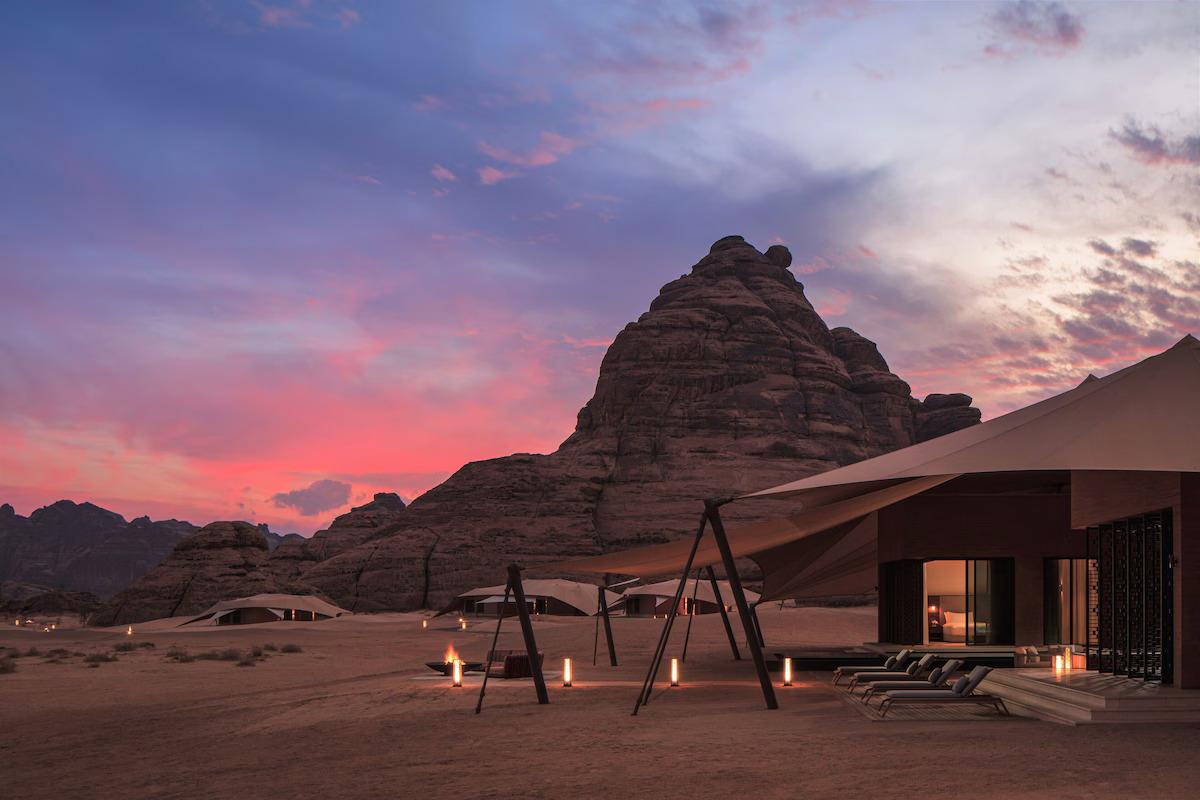
Saudi Arabia marked World Photography Day on August 19 by highlighting the role of photography in documenting the Kingdom’s diverse natural and cultural landscapes, preserving heritage and wildlife, and showcasing the work of local photographers.
The annual observance coincided with initiatives and programs across the Kingdom that reflect growing recognition of photography not only as an art form, but also as a powerful tool for documenting places, people, heritage and environmental conservation.
Diverse Landscapes Offer Endless Subjects
Saudi Arabia’s geographical diversity provides photographers with a broad range of visual subjects, from mountains and valleys to coastlines, deserts, archaeological sites and agricultural oases.
AlUla remains one of the country’s most prominent photography destinations, offering dramatic rock formations, archaeological sites and agricultural landscapes that reflect different periods of the region’s history.
The area has also attracted astrophotographers who take advantage of relatively low levels of light pollution in parts of the region to capture the Milky Way above ancient rock formations and desert landscapes.
Beyond AlUla, photographers can explore vastly different environments across the Kingdom, from the mountains of Asir to the Red Sea coastline and expansive desert regions, with each setting requiring a distinct approach to composition, light and visual storytelling.
Photography as a Record of Memory
For 35-year-old Saudi photographer Ahmad Al-Ghamdi, the photography scene has changed considerably since he began working in the field.
He noted that photographers today have more opportunities to showcase their work and develop their skills through exhibitions, competitions and workshops, alongside growing public interest in photography as an art form.
Al-Ghamdi believes photography serves a purpose beyond producing visually appealing images. It can preserve places, people and details that may look entirely different years later.
He also pointed to the impact of smartphones and social media, which have made photography accessible to a much wider audience without requiring expensive equipment.
However, he emphasized that taking thousands of photographs is not the same as learning how to tell a story through a single image.
Kingdom Photography Award Supports Local Talent
The Kingdom Photography Award, launched by the Visual Arts Commission in 2022, has emerged as one of the initiatives supporting local photographers and expanding the role of photography within Saudi Arabia’s cultural landscape.
Since its launch, the award has received more than 2,000 submissions and selected nearly 41 winners across three editions.
Each edition has taken participants to a different region, beginning in Tabuk before expanding to Al-Ahsa and Asir. This approach has exposed photographers to contrasting landscapes, architecture, cultural heritage and local environments.
The award has also incorporated skills-development workshops, giving participants opportunities to strengthen their technical and creative abilities while exploring new approaches to visual storytelling.
Saudi Photography Gains International Exposure
Saudi photography has also gained visibility internationally, with selected works from the Kingdom Photography Award featured in the “In a New Light” exhibition at the Abbazia Building in Venice, Italy.
The exhibition provided an international audience with an opportunity to explore contemporary Saudi photography and the ways local artists interpret landscapes, heritage, identity and everyday life.
The international exposure reflects the growing visibility of Saudi visual arts as cultural initiatives continue to provide local photographers and artists with platforms both inside and outside the Kingdom.
Photography Supports Environmental Conservation
Photography is also playing an increasingly important role in environmental conservation across Saudi Arabia.
In the Prince Mohammed bin Salman Royal Reserve, a six-month training program recently concluded with the aim of equipping employees with the skills needed to document wildlife, heritage and conservation activities within the protected area.
The program initially trained 36 staff members in smartphone photography before selecting 13 participants, nine men and four women, for advanced training using professional DSLR cameras under the guidance of international photographer Angela Buckland.
The participants included environmental inspectors, biologists and community development specialists.
Over six months, they documented wildlife, heritage and conservation efforts, including the reintroduction of red-necked ostriches, Arabian hares and Asian houbara bustards into the reserve.
Documenting Wildlife Through the Lens
Environmental inspector Abdullah Al-Huwaiti used photography to document field inspections and wildlife, while marine inspector Salma Aziz Al-Qusair focused on coastal species and turtle nesting sites in Duba.
Ali Al-Faqih, the reserve’s biodiversity and research director, also used photography as part of his field and research work. In 2025, he documented the first sighting in Saudi Arabia in more than two decades of a white-tailed eagle.
The participants’ photographs have since been displayed in Duba and Al-Wajh, alongside winning works from a school art competition involving more than 1,000 local young people.
The reserve is preparing to hold a national photography exhibition in 2027 and plans to introduce video production training, expanding the use of visual storytelling in environmental and wildlife documentation.
Photography as a Record of People and Places
For Al-Ghamdi, the true value of photography becomes increasingly apparent with time, when images become records of places and moments that may have changed or disappeared.
Looking back at photographs taken years ago, he said, can reveal how much certain places have changed and remind people that some of those captured in the images may no longer be there.
From art and heritage to nature and environmental conservation, photography continues to strengthen its role in Saudi Arabia as a medium that combines creativity with documentation.
Through competitions, exhibitions and training programs, local photographers are gaining greater opportunities to develop their skills and present a changing visual portrait of the Kingdom’s landscapes, culture, wildlife and everyday life to audiences both at home and internationally.














