


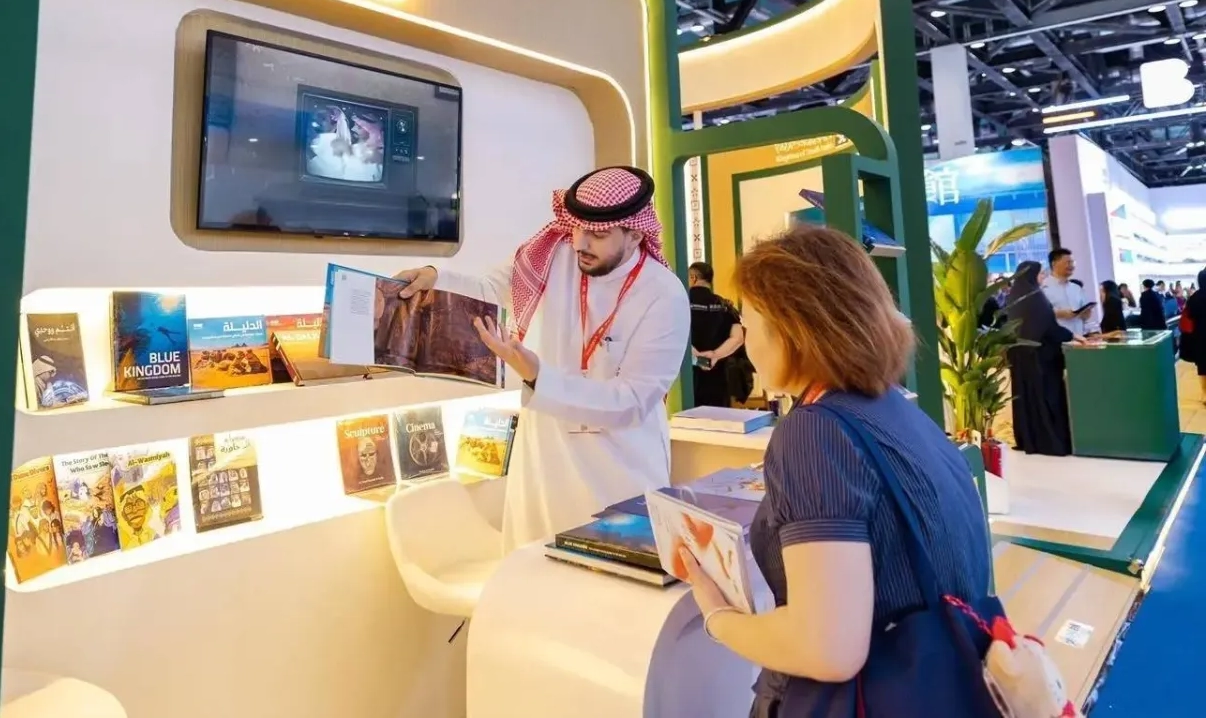
Saudi Arabia has strengthened its international cultural presence through its participation in the Beijing International Book Fair, reflecting the Kingdom’s growing influence in the global publishing and cultural sectors.
The Saudi pavilion, led by the Literature, Publishing and Translation Commission, attracted significant attention from visitors during the exhibition, which was held at the China National Convention Center in Beijing from June 17 to 21.
The participation highlights Saudi Arabia’s continued efforts to expand its global cultural footprint and strengthen cooperation with Chinese and international cultural institutions, in line with Vision 2030 goals aimed at supporting cultural growth and creative industries.
Through its pavilion, the Kingdom showcased key national initiatives in literature, publishing, and translation, along with programs designed to support creativity and knowledge production.
The exhibition also provided an opportunity to highlight the major transformation taking place across Saudi Arabia’s cultural sector, particularly in areas related to publishing, translation, and literary development.
Dr. Abdul Latif Al-Wasel, CEO of the Literature, Publishing and Translation Commission, stated that the participation successfully introduced Saudi literature and culture to wider international audiences while strengthening the presence of Saudi publishers in global markets.
He noted that the Beijing fair served as an important platform for expanding professional partnerships and exchanging expertise in publishing, translation rights, and content creation, while also reinforcing cultural cooperation between Saudi Arabia and China.
The strong turnout at the Saudi pavilion reflected growing international interest in Saudi culture and the remarkable progress being made across the Kingdom’s cultural landscape.
The pavilion hosted a diverse cultural program featuring panel discussions and literary events with prominent Saudi writers and cultural figures. Discussions covered topics related to literature, translation, and the publishing industry, further promoting cultural dialogue with Chinese and global audiences.
Visitors also gained insight into Saudi Arabia’s evolving literary and publishing ecosystem, as well as national initiatives aimed at empowering creators and strengthening the cultural economy.
The Saudi pavilion included several leading cultural institutions, including King Abdulaziz Foundation, King Abdulaziz Public Library, King Abdulaziz Public Endowment Library Complex, and the Saudi Cultural Attaché in Beijing, alongside other specialized cultural entities.
The participation underscores Saudi Arabia’s commitment to strengthening its presence in international cultural platforms, expanding global knowledge partnerships, and positioning Saudi culture as a key pillar of the Kingdom’s soft power and global cultural engagement.














