


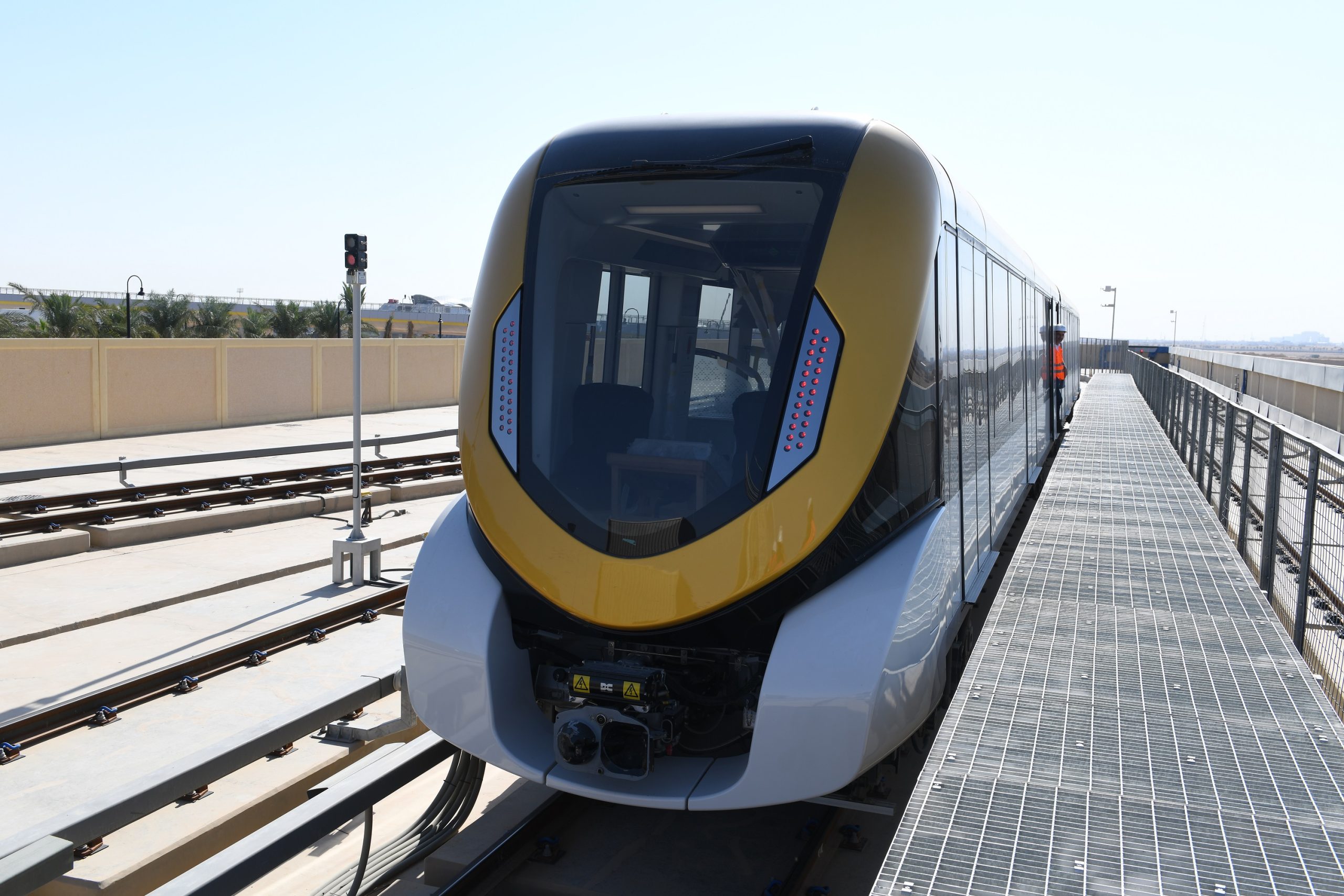
Royal Commission for Riyadh City has officially launched full operations at the Western Station of the Riyadh Metro, marking the completion of the capital’s four iconic main metro stations.
The Western Station is now the largest among Riyadh Metro’s landmark stations, covering more than 112,000 square meters and joining King Abdullah Financial District Station, STC Al-Olaya Station, and Qasr Al-Hokm Station as key components of the city’s transport network.
Located in the Dhahrat Al-Badiah district southwest of downtown Riyadh, the station sits along the Orange Line, which connects western and eastern Riyadh from Jeddah Station and Tuwaiq to Khashm Al-An.
Designed with sustainability and operational efficiency in mind, the station has earned LEED Gold certification for environmental performance and energy efficiency.
The facility includes commercial spaces, public amenities, parking areas with capacity for more than 600 vehicles, and a mosque capable of accommodating around 550 worshippers.
The station is also built to manage heavy passenger traffic, with the ability to serve more than 60,000 metro passengers and 1,300 bus passengers per hour, making it a critical interchange hub within Riyadh’s integrated transport system.
The launch reflects the Kingdom’s rapid progress in urban infrastructure development and supports broader efforts to improve quality of life, enhance mobility, and reduce reliance on private vehicles under Saudi Vision 2030.
Riyadh Metro is considered one of the region’s largest public transport projects, aiming to transform mobility across the capital through a modern network connecting residential districts, business centers, and major destinations.














