


Estimated to be around 300 years old, the manuscript brings together three of the most renowned Arabic calligraphy styles, Thuluth, Rayhani and Naskh, alongside intricate botanical decorations and delicate gilding.
Three Calligraphy Styles in One Manuscript
The Qur’anic verses are written in black ink, with the three calligraphic traditions incorporated into the manuscript, highlighting the skill of the scribe and the artistic sophistication of historical Qur’an production.
The verses were carefully marked with diacritical signs, while sections of the manuscript, particularly its opening pages, feature botanical motifs and detailed gilding that reflect the artistic traditions associated with Qur’anic manuscripts of the period.
Gilded Verse Markers
Among the manuscript’s distinctive features are gilded circular markers placed between verses, serving both a practical function in separating the text and an aesthetic purpose in enhancing the visual composition of the pages.
The manuscript demonstrates how historical Qur’an production extended beyond precise writing and vocalization to encompass a sophisticated combination of calligraphy, ornamentation and gilding.
Selected Surahs
The manuscript does not contain the complete Qur’an. Instead, it includes a selection of surahs beginning with Al-Fatihah, followed by chapters including Al-An’am, Al-Kahf, Saba, Fatir, Ya-Sin, Al-Fath, Al-Waqi’ah, Al-Mulk and An-Naba, concluding with Al-Ikhlas.
Preserved among the collections of the King Abdulaziz Public Library, the manuscript provides a valuable historical example of the development of Qur’anic calligraphy, manuscript decoration and gilding during the 12th century AH.
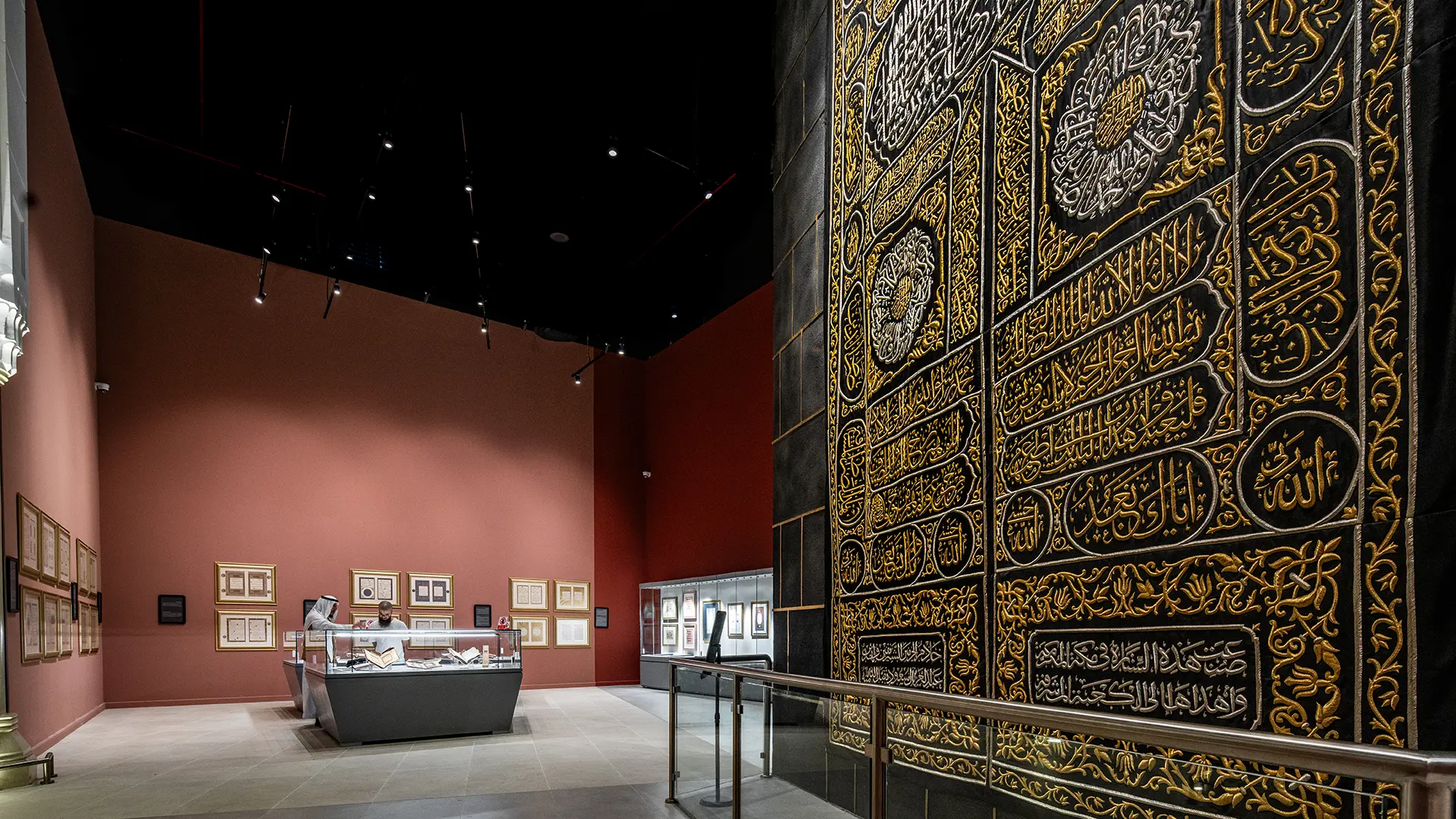
Its exhibition in Makkah gives visitors an opportunity to explore a remarkable chapter in the history of Qur’anic preservation and the evolution of Arabic calligraphy within Islamic art.














