

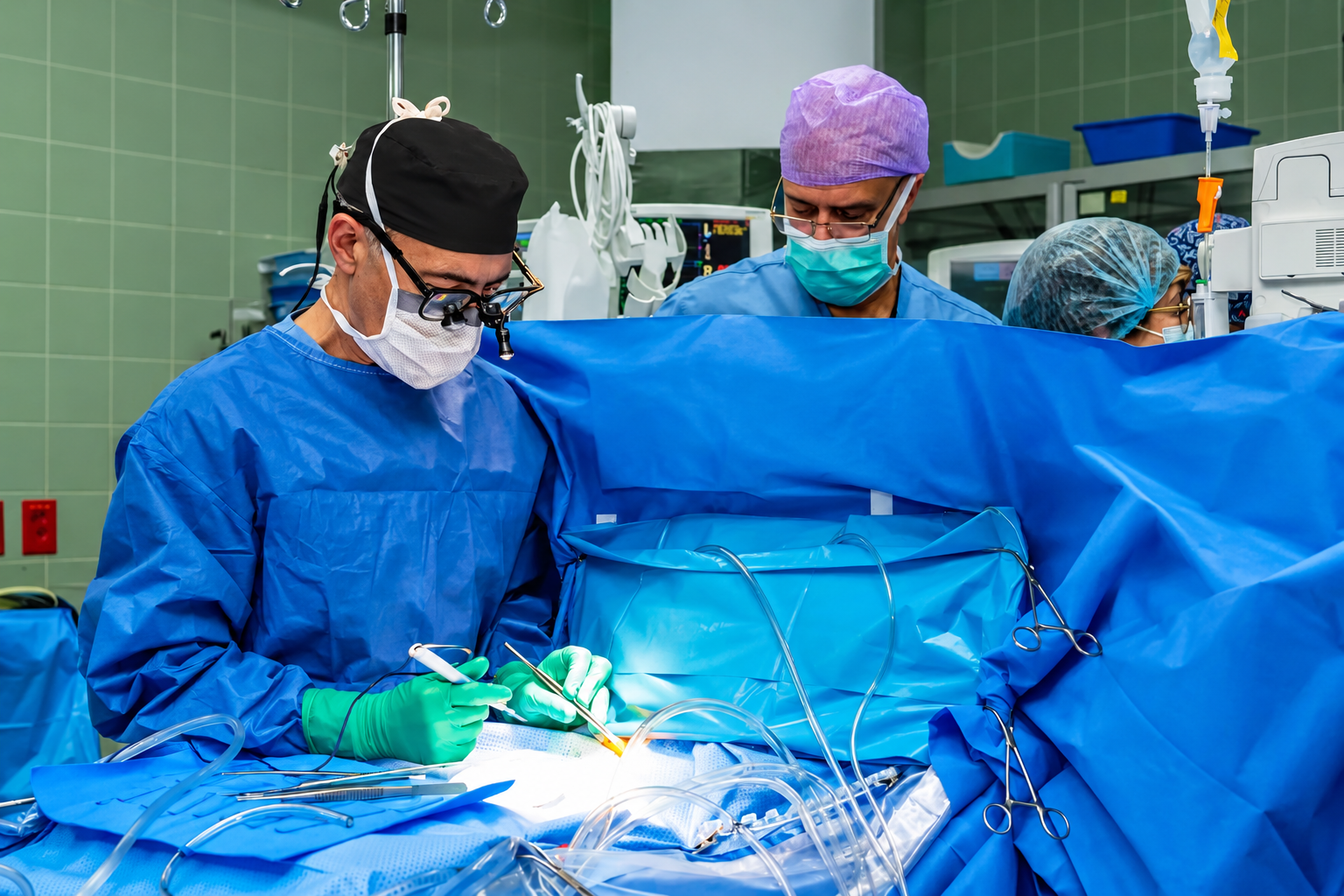
King Faisal Specialist Hospital and Research Centre has successfully treated two children using a single donor heart in what the hospital described as the first pediatric domino heart transplant of its kind in the Middle East and Europe.
The procedure demonstrates how advanced transplant and congenital cardiac surgery can extend the therapeutic value of a single donated organ beyond the patient who initially receives it.

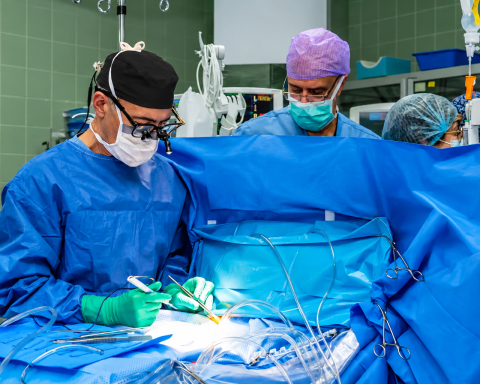
The donor heart was transplanted into a 12-year-old boy suffering from dilated cardiomyopathy and end-stage heart failure. After his original heart was removed, surgeons identified that its pulmonary valve and root remained healthy and suitable for transplantation.
Those viable tissues were then used to help treat a nine-year-old boy suffering from severe aortic stenosis and regurgitation.
How one donor heart helped two children
The first patient had spent approximately six weeks in hospital receiving continuous medication to support his failing heart while awaiting transplantation.
Once a suitable donor heart became available, he underwent a complete heart transplant.
However, the medical team did not simply discard the healthy portions of his original heart. His pulmonary valve and root were preserved because they could provide viable tissue for another patient.
The second child had already undergone two previous procedures to repair his diseased aortic valve. He subsequently underwent a complex Ross procedure, in which his healthy pulmonary valve was moved into the aortic position to replace the damaged valve.
That created a new requirement: the pulmonary position also needed to be reconstructed.
Surgeons used the pulmonary valve and root taken from the first child’s explanted heart to reconstruct the second child’s pulmonary position.
The sequence effectively allowed one donated heart to contribute to the treatment of two children.
What is a domino heart transplant?
A domino heart transplant is a highly specialised approach in which healthy tissue from the heart removed from a transplant recipient can be used to treat another patient.
The technique is designed to maximise the therapeutic value of donated organs and viable cardiac tissue.
In this case, the first child was both the recipient of a complete donor heart and the source of healthy cardiac tissue used in the treatment of the second child.
The procedure therefore required precise timing and coordination between two major cardiac operations.
A living valve with the potential to grow
One of the notable advantages of the procedure is that the transplanted valve consists of living tissue.
Because living tissue can grow with a child, the approach may reduce the need for repeated valve replacement procedures as the patient grows, unlike conventional prosthetic valves that remain fixed in size.
The child will nevertheless require long-term cardiac follow-up, as is expected after complex congenital heart surgery and transplantation.
A highly coordinated medical effort
The operation required collaboration between multiple specialist teams, including heart transplantation, pediatric and congenital cardiac surgery, pediatric cardiology, heart failure, cardiac imaging, anesthesia and critical care.
Perfusion, nursing and transplant coordination teams also supported the procedure, while specialists were responsible for assessing, preserving and preparing the viable cardiac tissue for transplantation.
Such coordination is particularly important in procedures where two complex operations must be planned around the same sequence of tissue availability and surgical requirements.
Expanding the possibilities of pediatric cardiac care
Dr. Hani Alsergani, Executive Director of the Heart Centre of Excellence at KFSH, described the procedure as one of the rarest forms of partial heart transplantation in children.
He said the achievement places the hospital among a select group of centres worldwide capable of performing such procedures and builds on its experience in heart transplantation and complex congenital cardiac surgery.
The case also highlights a broader issue in pediatric transplantation: the importance of using available donor organs and viable tissues as efficiently as possible.
Rather than viewing the donor heart as benefiting only its primary recipient, the domino approach creates the possibility of extending that benefit to another patient when the medical circumstances are suitable.
A milestone for advanced medical care
King Faisal Specialist Hospital and Research Centre has continued to expand its expertise in highly specialised medical services, including transplantation and complex cardiac procedures.
The hospital says it was ranked first in the Middle East and Africa and 12th globally among the world’s top 250 academic medical centres for 2026. It has also received recognition from Brand Finance and Newsweek in several healthcare categories.
The significance of the latest procedure, however, lies primarily in the clinical achievement itself: two children received life-changing cardiac treatment through a carefully coordinated sequence that maximised the use of one donated heart.
The pediatric domino transplant represents a notable example of how transplant medicine, congenital cardiac surgery and multidisciplinary teamwork can come together to expand treatment possibilities for children with severe heart disease.
One donor heart ultimately became part of a treatment pathway for two young patients — demonstrating how advances in surgical technique and tissue transplantation can extend the impact of a single act of organ donation.