

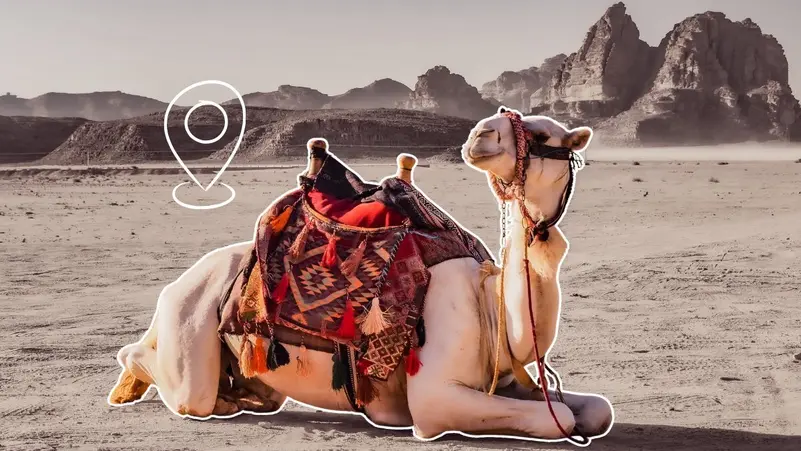
The innovation comes as part of efforts to apply AI technologies to real-world challenges relevant to Saudi Arabia’s environment and heritage.
The system uses drones equipped with low-cost commercial cameras, providing a practical and cost-effective alternative to traditional tracking methods such as GPS collars and satellite communication systems, which are often expensive and difficult to deploy on a large scale.
The research project was led by Professor Basem Shihada and focused on building a smart monitoring solution capable of identifying camels accurately in desert environments.
Researchers used a single camera mounted on a drone to collect aerial footage of camel herds across Saudi Arabia before training an AI model using machine learning techniques.
One of the major challenges was teaching the system to distinguish camels from surrounding desert features such as rocks and shrubs, due to their visual similarity in aerial images.
The system successfully demonstrated high detection accuracy despite the complexity of the desert environment.
The research also revealed important findings about camel behavior.
Data showed that camel movement patterns are not random, as previously believed, but instead follow organized and repeatable routes that can be tracked and analyzed.
Observations indicated that camels, especially older ones, travel long distances during the day in consistent movement patterns before returning to familiar locations near sunset.
Tests also showed that camels are highly sensitive to drone noise.
To avoid influencing natural behavior, researchers operated drones at altitudes of no less than 120 meters during monitoring.
The system is expected to help herders improve herd management, reduce the risk of animals going missing, and minimize traffic accidents caused by camels crossing roads.
It also provides researchers with a valuable tool for studying animal behavior and grazing patterns more accurately.
This technology is especially significant given the challenges camel owners face, as herds can travel up to 50 kilometers per day, increasing risks of loss and road-related incidents.
Camels remain one of the most iconic symbols of Arabian heritage and continue to play an important economic role in Saudi Arabia, contributing more than SAR 2 billion annually through sectors such as food production, textiles, and tourism.
In the next phase, KAUST researchers plan to expand the dataset by collecting footage from larger and more diverse herds to improve system accuracy under different environmental conditions.
The project highlights how artificial intelligence can serve local communities while preserving cultural heritage and strengthening national identity.