


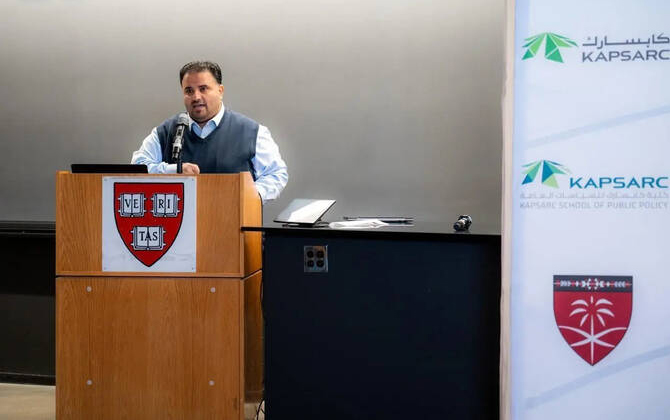
The event highlighted the continued success of the Custodian of the Two Holy Mosques Scholarship Program, one of the Kingdom’s flagship initiatives designed to prepare future leaders and support the goals of Saudi Vision 2030.
The ceremony was attended by Saudi Cultural Attaché to the United States Tahany Aleisa, along with graduates, their families, academics, and members of the Saudi community.
Graduates from World-Class Universities
The honored graduates represented several of America’s leading academic institutions. Harvard University accounted for 29 graduates, followed by Boston University with 19 graduates, the Massachusetts Institute of Technology (MIT) with nine graduates, and Tufts University with ten graduates. Additional graduates came from the University of Massachusetts Boston and Johnson & Wales University.
Their academic fields included medicine, public health, dentistry, engineering, computer science, artificial intelligence, business administration, public policy, law, finance, and supply chain management, areas closely aligned with Saudi Arabia’s future development priorities.
Building Human Capital for Vision 2030
Tahany Aleisa emphasized that the achievements of Saudi students reflect the Kingdom’s commitment to investing in its people and developing globally competitive talent.
She described the Custodian of the Two Holy Mosques Scholarship Program as a cornerstone of Saudi Arabia’s strategy to build a knowledge-based economy and prepare highly qualified professionals capable of contributing to innovation, economic diversification, and national development.
According to Aleisa, the program’s modern approach aligns academic disciplines with emerging labor market needs and priority sectors identified under Vision 2030.
From Scholarship Program to Strategic National Initiative
The scholarship program was originally launched in 2005 by the late King Abdullah bin Abdulaziz to expand educational opportunities for Saudi students at leading international universities.
As part of Saudi Vision 2030, the initiative was restructured and enhanced to focus more directly on the Kingdom’s future economic and technological needs. In 2022, Crown Prince Mohammed bin Salman launched a new strategy aimed at expanding access to elite global institutions while preparing future Saudi leaders in key sectors.
Targeting 70,000 Students by 2030
The updated strategy seeks to send approximately 70,000 Saudi students to top international universities by 2030, with a strong emphasis on future-focused disciplines and high-demand skills.
The United States remains the largest destination for Saudi scholarship students, hosting around 18,000 Saudi students and sponsored dependents across American educational institutions.
Many are enrolled in advanced programs covering science, technology, engineering, medicine, artificial intelligence, and business leadership.
Investing in the Future
The Harvard ceremony represented far more than a graduation celebration. It showcased Saudi Arabia’s broader commitment to investing in human potential as the foundation of long-term national success.
As the Kingdom continues expanding its scholarship programs and strengthening ties with world-class educational institutions, it is building a new generation of globally competitive professionals ready to contribute to innovation, economic growth, and Saudi Arabia’s emergence as a leading knowledge-based economy.














