

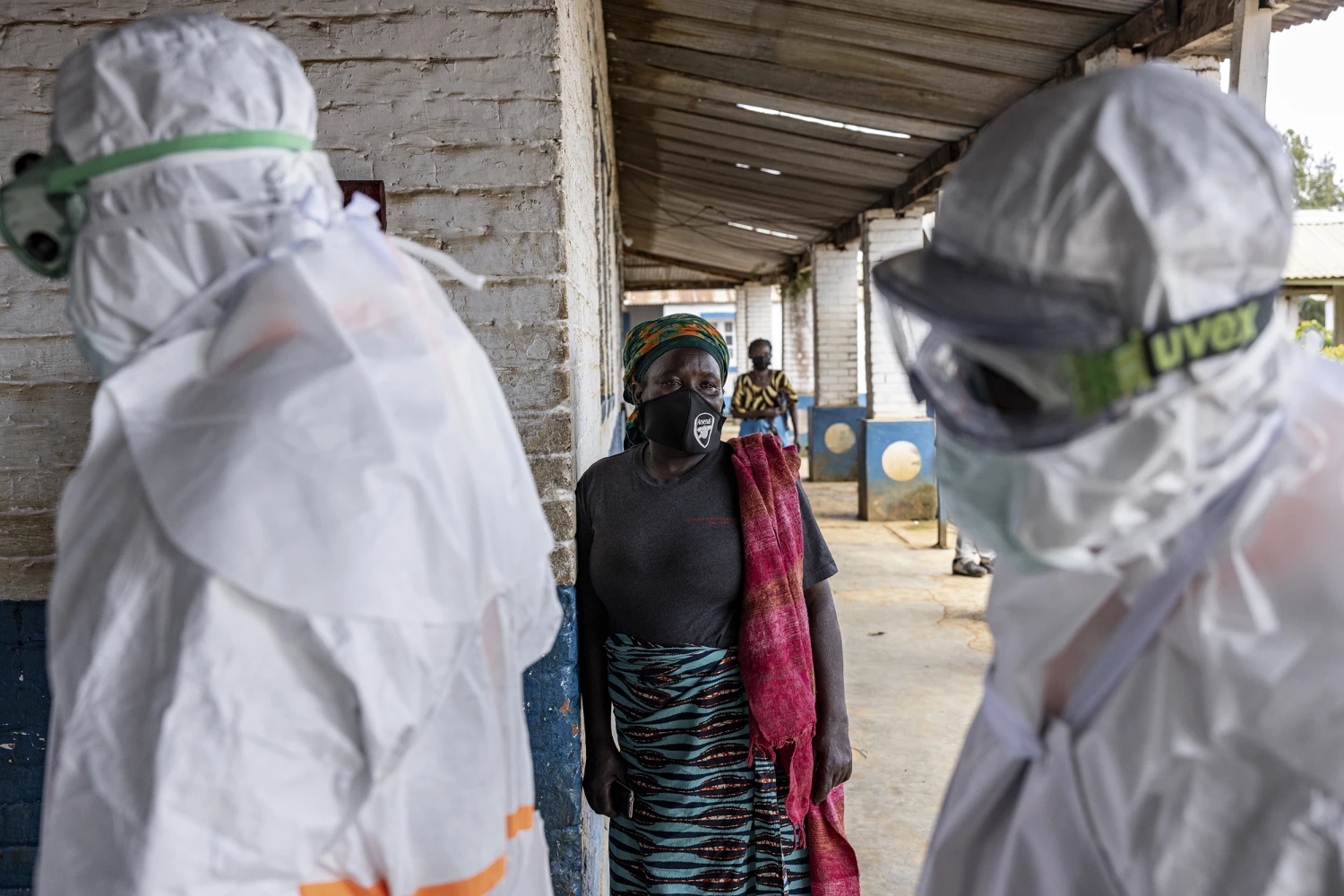
The Ebola outbreak in the Democratic Republic of Congo continues to worsen as ongoing armed conflict in the eastern part of the country severely complicates efforts to contain the deadly virus.
The World Health Organization has warned that the combination of disease and violence is creating a major humanitarian and public health emergency, making outbreak control significantly more difficult.
Rising Death Toll and Suspected Cases
Health authorities have confirmed 10 Ebola-related deaths, while more than 220 additional deaths are suspected to be linked to the outbreak. Nearly 900 suspected infections have been reported since the outbreak was officially declared in mid-May.
Experts believe the actual number of infections and fatalities could be considerably higher due to limited testing capacity and restricted access to affected communities.
Dangerous Strain Without an Approved Vaccine
Health officials are particularly concerned because the outbreak involves the Bundibugyo strain of Ebola, for which no approved vaccine or specific treatment currently exists.
As a result, outbreak control depends heavily on early detection, patient isolation, contact tracing, and rapid response measures.
Conflict Disrupts Health Operations
The outbreak is centered in Ituri Province, a region that has experienced years of armed conflict and instability.
Ongoing violence has forced large numbers of people into overcrowded displacement camps, creating conditions that can accelerate disease transmission.
Attacks on healthcare facilities and insecurity across affected areas have also made it increasingly difficult for medical teams to identify cases, trace contacts, and deliver essential healthcare services.
WHO Calls for Immediate Ceasefire
The World Health Organization has urged all parties involved in the conflict to agree to an immediate ceasefire to allow health workers safe and sustainable access to affected communities.
According to WHO officials, containing the outbreak requires uninterrupted humanitarian operations and secure conditions for frontline medical teams.
Growing Humanitarian Concerns
The Ebola outbreak presents a significant challenge for the Democratic Republic of Congo, which is already struggling with displacement, insecurity, and limited healthcare infrastructure.
Public health experts warn that stronger international support, improved security conditions, and expanded medical access will be critical to preventing further spread of the virus and avoiding a larger regional health crisis.