

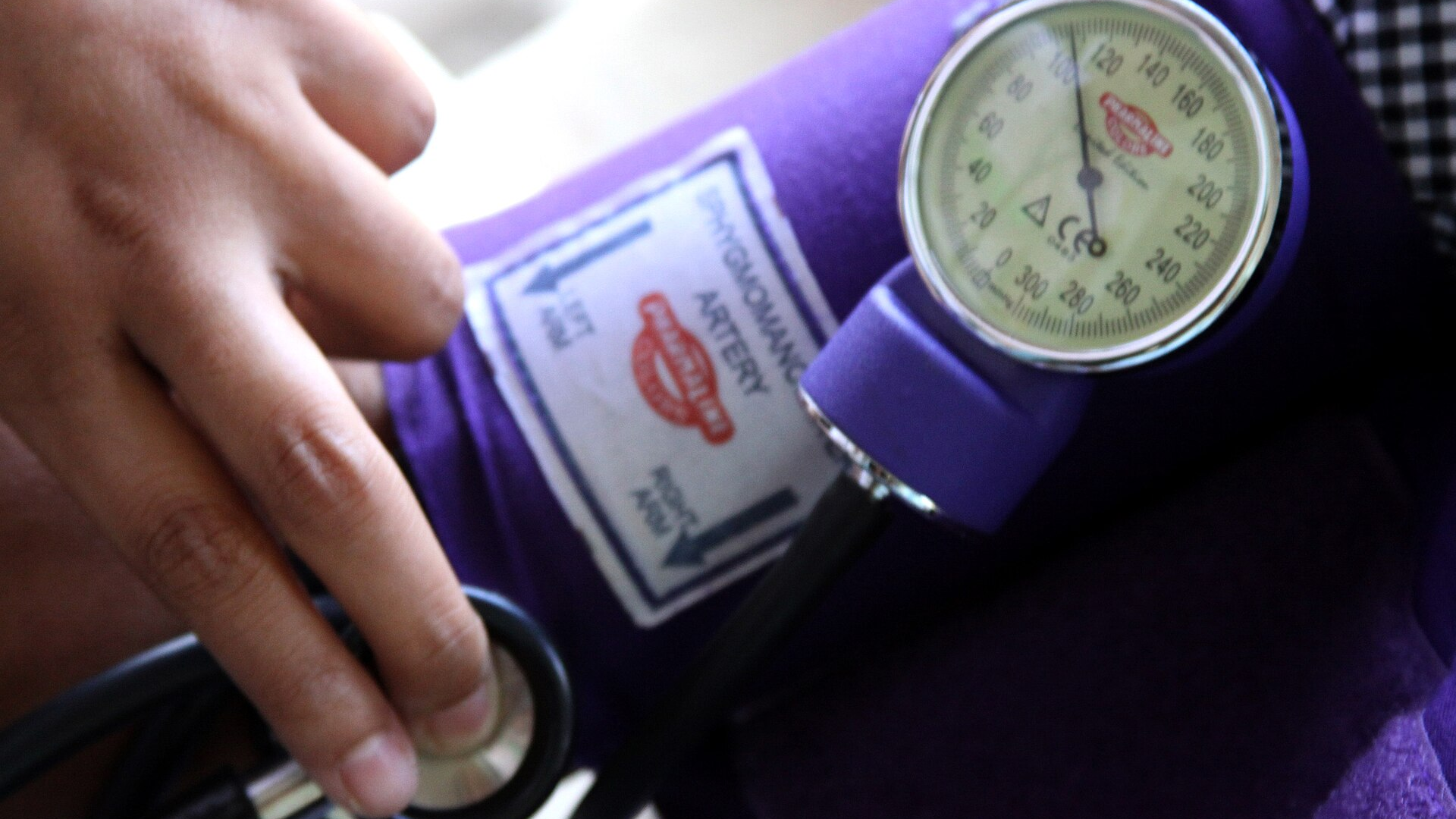
Could two small clips on the ear help where pills have not? A British trial set out to test exactly that in people whose blood pressure stays high despite medication, and the answer so far is mixed: the treatment was safe and patients stuck with it, yet across the whole group it did no better than a dummy device.
The SCRATCH-HTN study was led by Dr Ajay Gupta of Queen Mary University of London, who also practises as a consultant at Barts Health, and its results appear in Hypertension, a journal of the American Heart Association. It enrolled 63 adults with uncontrolled hypertension, all already on at least one blood pressure drug, and randomly assigned them to an active or a sham device in a double-blind design.
The handheld unit, made by Afferent Medical Solutions, sends a gentle electrical current through clips placed on the tragus, the small flap of cartilage in front of the ear canal. The idea, called transcutaneous autonomic neuromodulation, is to influence the autonomic nervous system, which helps set heart rate and blood pressure. Participants used it at home for 30 minutes a day for two weeks, then once a week for another ten weeks, with their usual medicines left unchanged.
The more encouraging signal came from a subgroup the team had defined before the results were in. People who started with more severe hypertension saw a larger fall in blood pressure on the active device than on sham. Gupta called the approach highly acceptable to patients and said it could one day offer a cheap option that scales to millions.
The researchers stress that the trial was small, that the subgroup result must be confirmed in larger studies, and that it is not yet clear who, if anyone, benefits most. The work was funded by the UK's National Institute for Health and Care Research.