


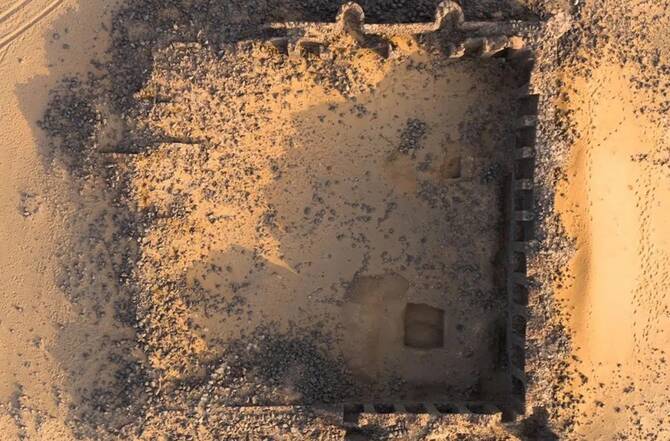
Saudi Arabia’s Heritage Commission has announced the discovery of more than 1,700 archaeological artifacts at the historic Miqat Al-Juhfah site, shedding new light on one of the most significant landmarks associated with Islamic pilgrimage routes and the Prophet’s migration journey.
The findings were revealed as part of the first phase of archaeological survey and documentation work conducted in cooperation with the University of Exeter, using advanced research and excavation techniques to better understand the site’s historical significance.
Rich Collection of Archaeological Finds
The discoveries include more than 1,700 artifacts consisting of pottery fragments, glass pieces, stones, shells, beads, and metal objects that were once part of the daily lives of travelers and pilgrims passing through the area.
Researchers also uncovered six pottery kilns and a water canal believed to have supplied water to pilgrims and travelers along the route.
Among the most significant findings are 13 historical tombstones, some dating back to the Umayyad and Abbasid eras, providing valuable insights into the social and cultural history of the region.
A Crossroads of Civilizations
Initial analysis revealed that many of the artifacts originated from different regions, including the Levant, Egypt, and Abyssinia, highlighting Al-Juhfah’s role as a major transit point for pilgrims arriving from across the Islamic world.
The diversity of the findings demonstrates the site’s historical importance not only as a pilgrimage station but also as a center of cultural interaction and commercial exchange connecting various civilizations.
Historical Significance of Al-Juhfah
Located approximately 182 kilometers northwest of Makkah, Miqat Al-Juhfah has served as one of the recognized pilgrimage entry points since the early Islamic period.
The site also played an important role along the Prophet Muhammad’s migration route between Makkah and Madinah, making it a key stop for travelers and trade caravans.
Historical records suggest that Al-Juhfah flourished between 719 and 816 CE, featuring markets, water facilities, and services designed to support pilgrims traveling to the holy cities.
Advancing Research and Heritage Preservation
The excavation and survey project forms part of the Heritage Commission’s broader efforts to identify, document, and preserve archaeological and historical landmarks located along the Hijrah route.
The initiative supports scientific research, archaeological exploration, and historical documentation while providing new insights into Saudi Arabia’s rich cultural heritage and Islamic history.
Opening a New Window into the Past
The discovery represents another significant milestone in Saudi Arabia’s growing archaeological achievements and highlights the vast historical treasures preserved across the Kingdom.
As research and excavation work continue, experts expect additional findings that could further enhance understanding of ancient pilgrimage routes, trade networks, and the social and economic life that once flourished along them for centuries.














