


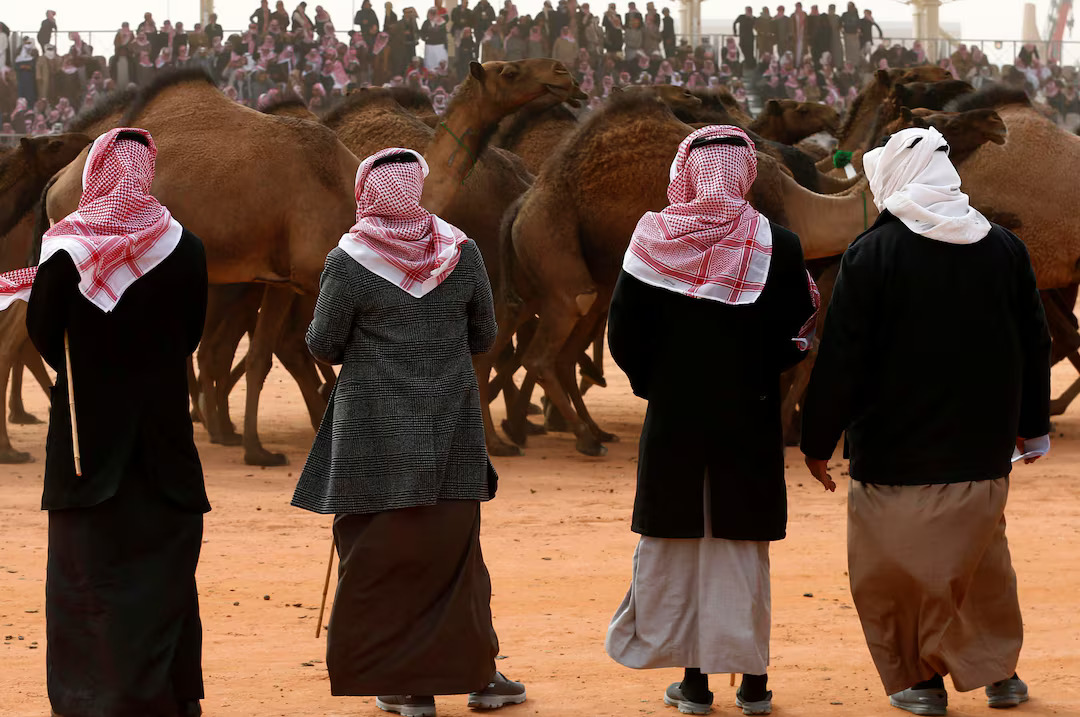
Camels continue to hold a special place as one of Saudi Arabia’s most iconic historical and cultural symbols, deeply connected to life in the desert for centuries.
They have long served not only as a means of transportation and source of livelihood, but also as a core part of Bedouin identity and Saudi cultural heritage.
Among the traditional practices linked to this legacy is camel taming, a long-standing Bedouin craft focused on training camels to become more familiar with humans and responsive to commands.
Training Begins at an Early Age
Camel breeders typically begin the taming process at an early age, as younger camels are more adaptable and easier to train than older ones.
Historically, Bedouins relied on specific seasons to begin this process, ensuring gradual adaptation and better behavioral development.
The early training stages involve familiarizing camels with handling tools and teaching them to respond to basic commands.
Trust Is the Foundation of Taming
Camel taming goes far beyond teaching movement or obedience. At its core, it is about building trust between the breeder and the animal.
Training includes teaching camels commands such as kneeling, standing, walking, and stopping, before gradually introducing them to environmental factors like noise, movement, vehicles, and crowds.
The Arabic language itself reflects the depth of this historical bond, with the term “Al-Dhaloul” used to describe a trained and obedient camel.
Despite modern advancements in animal care and training methods, camel taming still relies heavily on patience, gradual progress, and understanding animal behavior.
Camel festivals and heritage events across Saudi Arabia have also played an important role in reviving and preserving this traditional craft, ensuring its knowledge continues to be passed on to future generations.














