

The Kingdom has achieved a major environmental milestone with the return of the endangered Arabian oryx to King Salman bin Abdulaziz Royal Reserve after more than 90 years.
The development marks a significant step in wildlife conservation and reflects ongoing efforts to restore ecological balance and protect endangered species in their natural habitats.
Success of Breeding and Reintroduction Programs
The King Salman Royal Reserve Development Authority announced the successful breeding and reintroduction of Arabian oryx into the reserve, with several births already recorded in multiple areas.
This highlights the effectiveness of conservation programs aimed at ensuring sustainable wildlife populations and supporting long-term ecological recovery.
The results also reinforce the success of broader biodiversity protection strategies across the reserve.
Supporting Ecological Balance
The reintroduction of Arabian oryx plays an important role in strengthening biodiversity and restoring ecological balance within the reserve.
The species has faced significant population decline over the decades due to environmental pressures, shrinking vegetation cover, and overhunting.
Conservation authorities continue working to address these challenges through specialized wildlife protection programs.
Iconic Species of the Arabian Peninsula
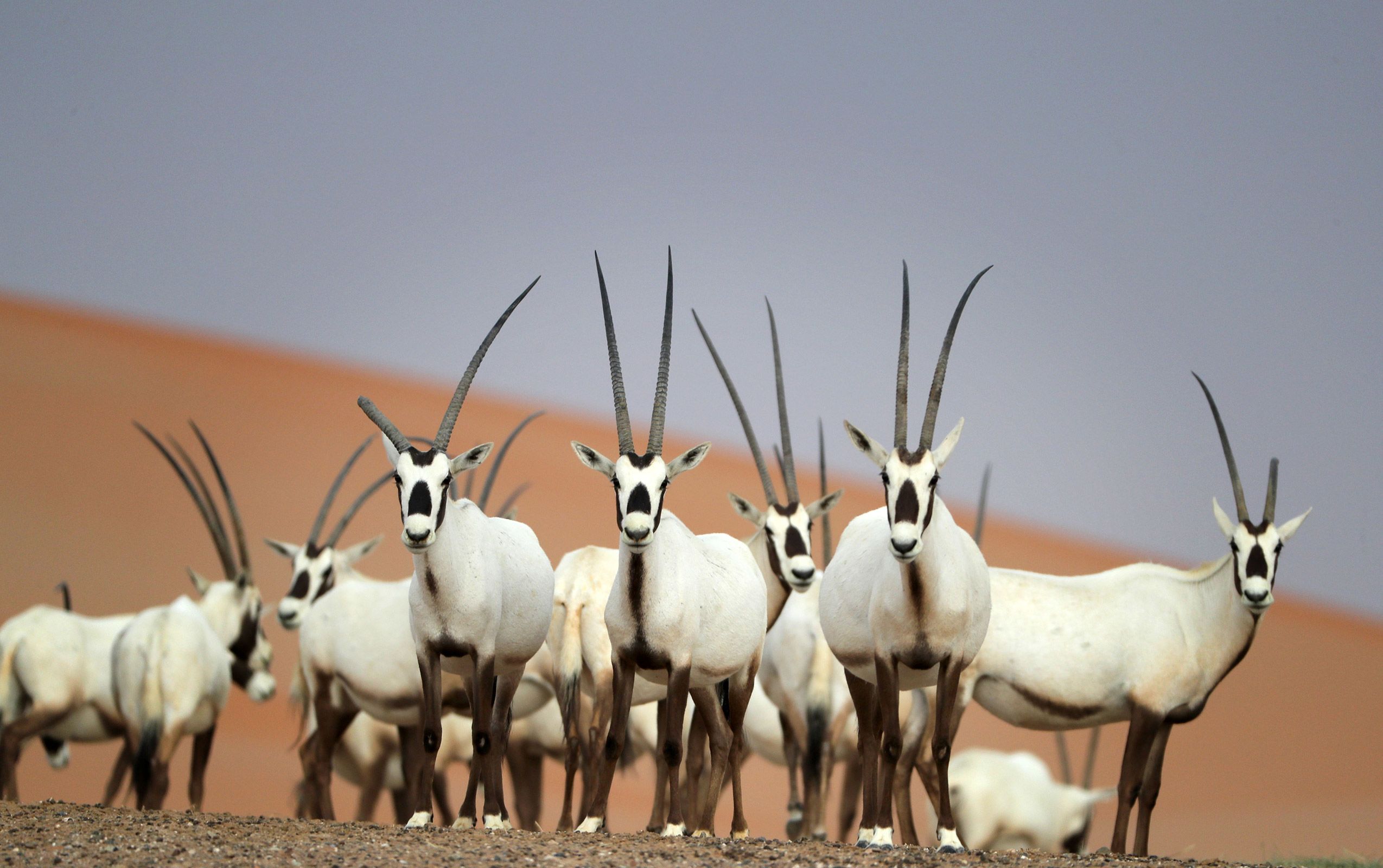
The Arabian oryx is one of the most iconic wildlife species associated with the Arabian Peninsula.
It is known for its strong build, long straight horns, white coat, and distinctive black facial markings.
The species feeds on herbaceous plants and is highly adapted to harsh desert environments.
Its return to the reserve carries both environmental and symbolic significance as an important part of the Kingdom’s natural heritage.
Continued Commitment to Wildlife Conservation
The Kingdom continues to invest in programs dedicated to preserving endangered species and restoring wildlife populations.
In 1990, Saudi Arabia launched a specialized Arabian oryx breeding program at Prince Saud Al-Faisal Center for Wildlife Research, which was established in 1986 in Taif Governorate with an initial herd of 38 oryx.
The National Center for Wildlife has since expanded reintroduction programs across protected areas, closely monitoring released animals to ensure long-term success.
The return of the Arabian oryx to King Salman Royal Reserve stands as another major success in the Kingdom’s environmental sustainability and conservation efforts.