


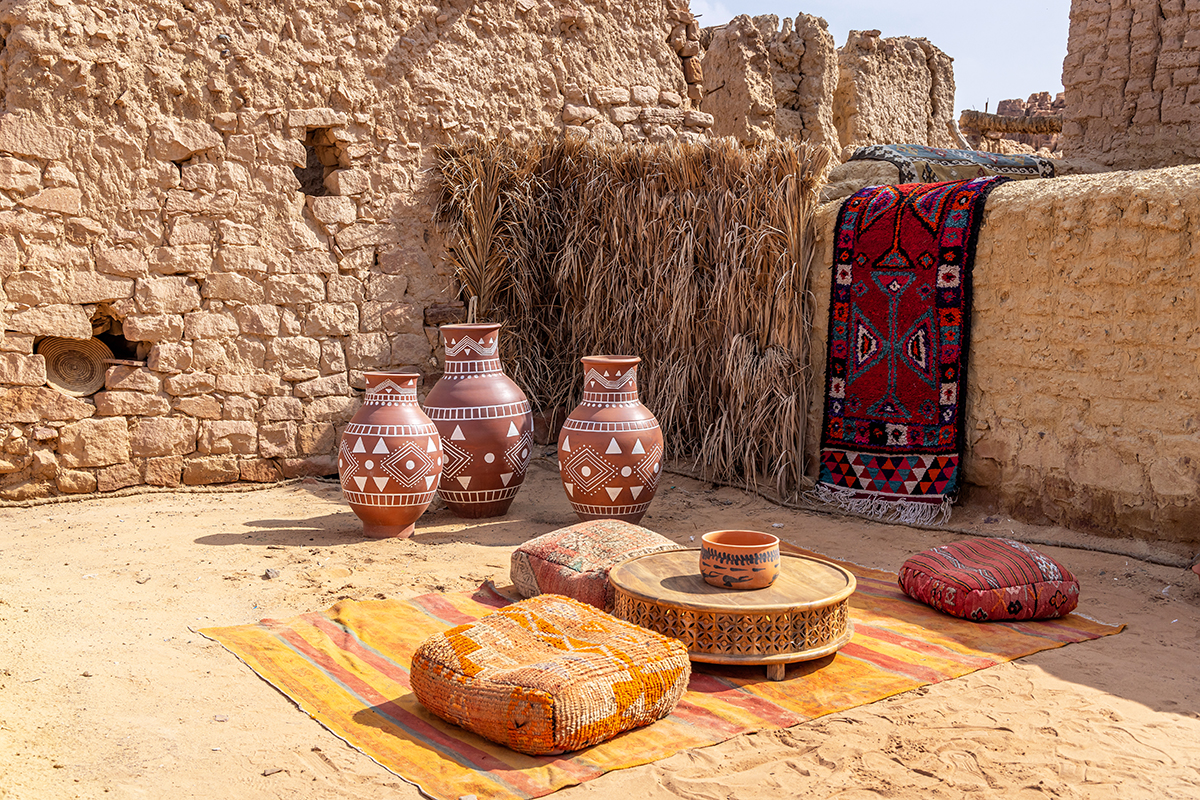
Archaeological discoveries in AlUla continue to reshape our understanding of the history of northwestern Arabia, with recently studied pottery offering remarkable insights into everyday life while highlighting the region’s long-standing role as a major commercial and cultural crossroads.
The Royal Commission for AlUla said the artifacts provide valuable archaeological evidence that enables researchers to reconstruct ancient lifestyles, trace the evolution of local industries, and understand the trade routes that connected AlUla with neighboring civilizations over thousands of years.
Pottery as a Historical Archive
Far more than simple household objects, pottery fragments serve as one of archaeology’s most reliable historical records.
By examining manufacturing techniques, decorative styles, materials, and shapes, researchers can determine the age of archaeological layers, identify cultural influences, and better understand how communities developed over time.
Because pottery survives for centuries, it remains one of the most important tools for reconstructing ancient civilizations.
Everyday Life Preserved in Clay
The discoveries include vessels used for cooking, storing food and water, serving meals, and burning incense, offering a vivid picture of daily life in AlUla throughout different historical periods.
The diversity of these objects reflects changing lifestyles, technological progress, and the practical needs of communities that inhabited the region.
Researchers also found evidence showing how pottery production evolved from hand-shaped techniques to the use of the potter’s wheel, allowing artisans to create more refined and consistent products.
Artistic Expression Through Design
Many pottery pieces feature carefully crafted geometric patterns and decorative motifs.
Natural pigments, including red, brown, black, and white, were used to decorate surfaces, demonstrating that aesthetic value was considered alongside practical function.
These artistic elements provide further evidence of the cultural sophistication of AlUla’s ancient inhabitants.
Evidence of International Trade
Among the most significant discoveries are imported Nabataean and Attic pottery pieces, confirming that AlUla maintained extensive commercial and cultural links with regions both inside and beyond the Arabian Peninsula.
These imported artifacts reinforce AlUla’s historical importance as a major stop along ancient trade routes connecting Arabia with the wider ancient world.
More Than Two Millennia of History
Archaeological studies suggest pottery production in AlUla dates back to the ninth century BCE, while some artifacts have been dated between the sixth and first centuries BCE.
This chronological record enables researchers to trace the region’s urban development and document successive civilizations that flourished in AlUla over many centuries.
Preserving Heritage for Future Generations
Today, AlUla’s pottery discoveries continue to enrich archaeological research while supporting cultural tourism and heritage preservation initiatives.
Through ongoing excavation and scientific research, the Royal Commission for AlUla aims to uncover additional discoveries that deepen global understanding of the region’s remarkable historical legacy and reinforce AlUla’s position as one of Saudi Arabia’s most significant archaeological destinations.














