


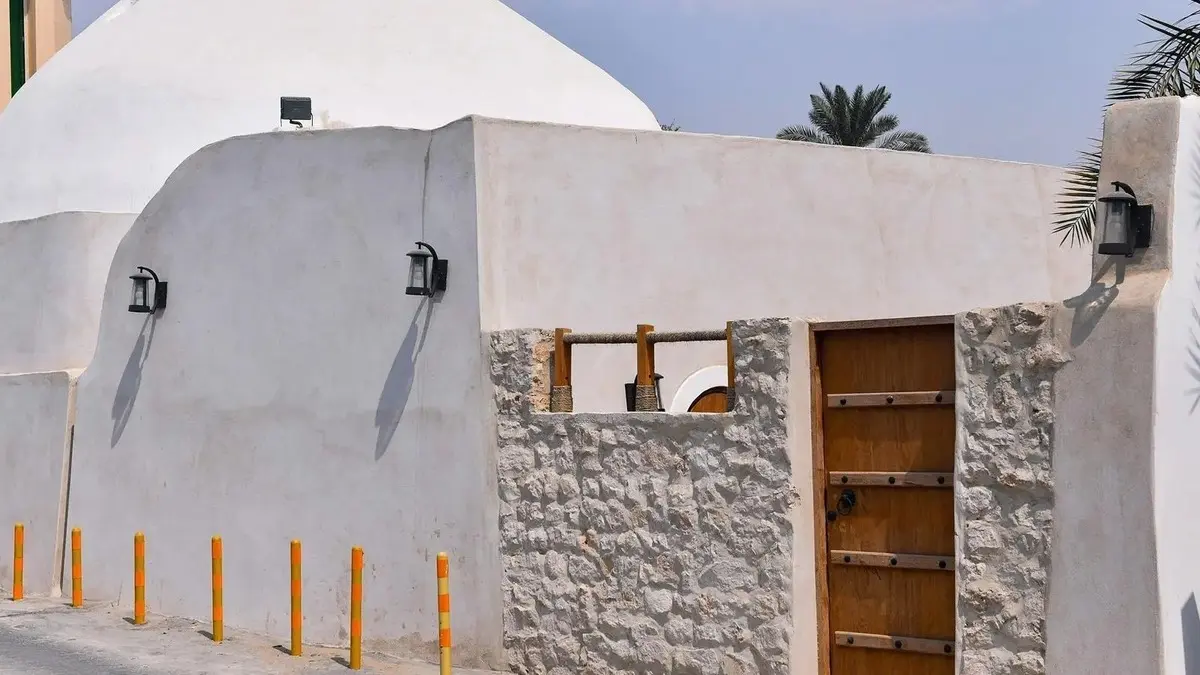
“Abu Loza” stands as one of the heritage landmarks closely associated with the history of Qatif and its renowned water springs. Built over one of the region’s prominent springs, the historic structure served local residents and visitors for decades and is now being restored and prepared for potential activation as a cultural destination.
A Historic Structure Dating Back to the 13th Century AH
Located in the Al-Khabbaqa district northeast of Al-Tubi village in Qatif, the Abu Loza building was constructed in 1289 AH, offering a distinctive example of traditional local architecture based on materials available in the surrounding environment.
Local builders used marine stone, plaster and palm trunks, employing construction techniques common in the Eastern Province at the time. These materials and methods gave the building an architectural character closely connected to the region’s coastal environment.
The structure consists of separate sections for men and women, as well as a rectangular room positioned alongside the spring. The room contains traditional seating areas known locally as “dakkat.”
The site also includes bathing rooms and a rectangular pool supplied directly by the spring through a water channel, with an elevated platform surrounding the pool that was used for seating.
Built Over One of the Springs of Qatif
Abu Loza is closely connected to the network of natural springs that historically defined Qatif.
Local heritage researcher Abdulrab Al-Gharyafi said the building was constructed over one of the springs of “Saihat Qatif,” a natural water system believed to date back thousands of years.
The spring is surrounded by a number of other water sources, while the location of the building was linked to the importance of its water, which was known for its sulfur properties, according to the researcher and recent studies cited in the report.
The relationship between the building and the spring reflects the historical importance of water sources in Qatif, where springs played a central role in daily life, settlement patterns and social activities.
Three Stone Roofs and Traditional Building Materials
The building retains distinctive elements of traditional architecture, with archaeological reports indicating that its origins date back hundreds of years.
Abu Loza consists of three stone roofs constructed using gravel, marine stones and palm trunks. The first roof covers the spring itself, the second covers a pool designated for women, while the third covers the passage leading to the bathing area.
The structure also features five openings that provided natural lighting and ventilation, along with traditional seating areas known as “dakkat.”
These features demonstrate how traditional local architecture responded to the region’s climate and the practical needs of its users.
A Connection to Pearl Diving
Abu Loza is also linked to the maritime history of Qatif, particularly pearl diving and the region’s traditional fishing economy.
According to heritage researcher Abdulrab Al-Gharyafi, divers would descend into the bottom of the spring each year to clean it after the pearl-diving season ended.
The practice was connected to the lives of local divers and the importance of natural water sources to the community.
The last documented diving operation at the spring took place in 1980, preserving another important chapter in the site’s social and maritime history.
Restoration and Rehabilitation
In 2025, the Heritage Commission carried out a multi-stage restoration project for the Abu Loza building, including documentation, structural reinforcement, restoration and rehabilitation works.
The project aims to preserve the building’s historical and architectural features and strengthen its role as a tangible representation of Qatif’s traditional built, environmental and social heritage.
A plan is currently being prepared to activate the site and transform it into a cultural destination in the Eastern Province, allowing the public to experience and learn more about its historical significance.
From Historic Landmark to Cultural Destination
The rehabilitation of Abu Loza forms part of broader efforts to protect heritage sites, preserve their historical character and develop them in ways that reflect their cultural value.
The significance of the site extends beyond its traditional architecture. It combines architectural heritage with the history of natural springs, local social life and the traditional pearl-diving economy, giving it multiple layers of cultural importance.
Activating the site as a cultural destination could provide visitors with an opportunity to explore Qatif’s history and understand how communities developed around its water springs and natural resources, while also highlighting traditional construction techniques used across the region.
Preserving Local Heritage Through Cultural Development
The rehabilitation of Abu Loza is part of Saudi Arabia’s broader efforts to protect cultural heritage and preserve historic sites, in line with the objectives of Vision 2030 to support the cultural sector and develop heritage destinations.
Restoration and rehabilitation projects can transform historic sites from structures requiring protection into active cultural destinations through which current and future generations can connect with their communities’ history, while supporting cultural tourism and local development.
Abu Loza represents a unique heritage site where architecture, water, maritime history and collective memory come together, offering a glimpse into the cultural landscape that developed over centuries in Qatif and the wider Eastern Province.














