


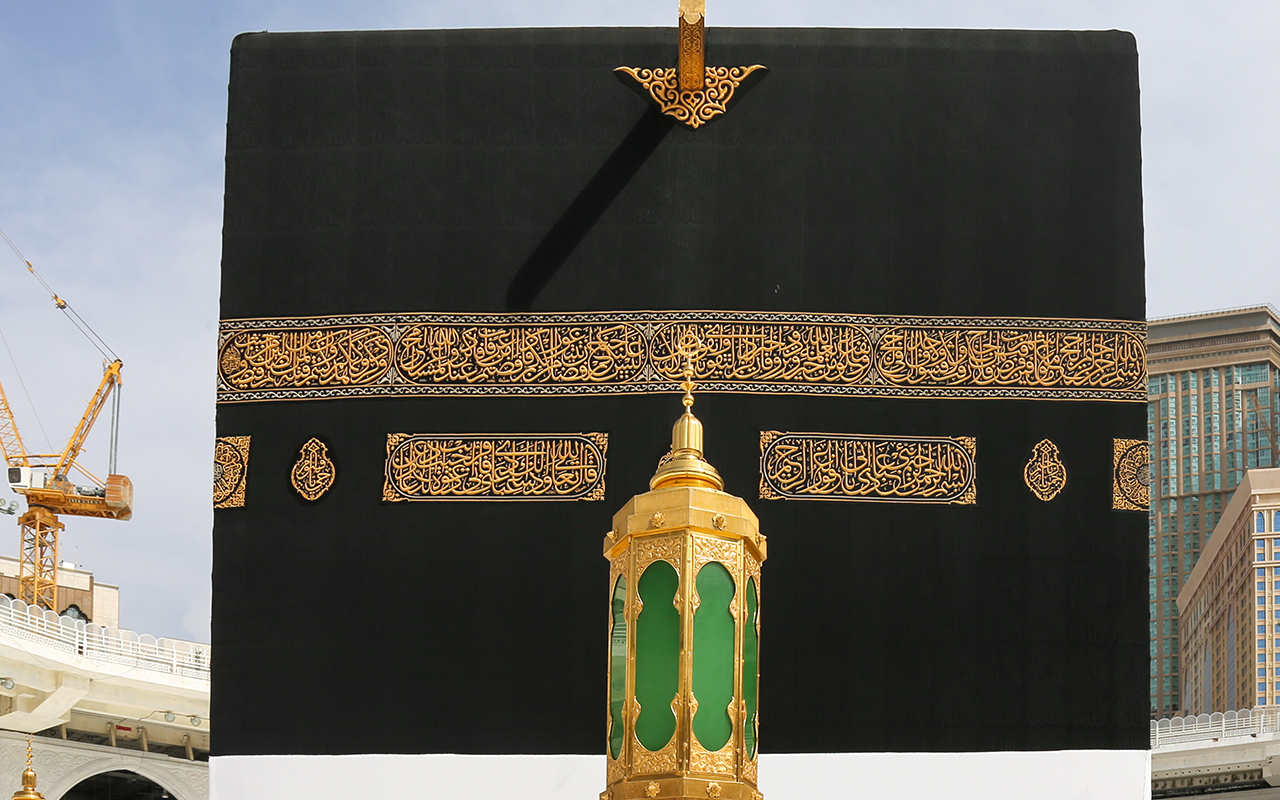
The late Abdul Rahim Amin Bukhari is remembered as one of the most influential figures in the history of the Holy Kaaba’s kiswa, leaving behind a remarkable legacy in Arabic calligraphy and Islamic decorative arts.
His contributions played a significant role in shaping the artistic identity of the kiswa, combining spiritual significance with exceptional craftsmanship.
Early Life in Makkah
Born in Makkah in 1917, Bukhari grew up in an environment deeply connected to Islamic culture and traditional arts.
From a young age, he demonstrated extraordinary talent in Arabic calligraphy, eventually developing his skills into a distinguished career that earned him recognition throughout the Kingdom and the Islamic world.
Decades of Service to the Holy Kaaba
Bukhari dedicated much of his professional life to the creation and refinement of the Kaaba’s kiswa.
His responsibilities included designing and producing the embroidered Quranic inscriptions and decorative calligraphy featured on the sacred covering.
He also contributed to the design and calligraphy of the Kaaba’s door curtain and supervised decorative inscriptions associated with several of the Holy Kaaba’s gates.
Contributions to 21 Kiswas
Over a period exceeding three decades, Bukhari participated in the production of 21 different kiswas for the Holy Kaaba.
He also oversaw calligraphy and decorative work for three Kaaba gates, establishing himself as one of the most respected figures in the field of Islamic calligraphy and sacred craftsmanship.
A Name Preserved in History
In recognition of his dedication and exceptional service, Bukhari’s name was inscribed on the kiswa during the reign of King Faisal.
His name remains present on the kiswa to this day, serving as a permanent tribute to his contributions and preserving his legacy for future generations.
Inspiring Future Generations
Abdul Rahim Amin Bukhari’s story reflects the important role artists and craftsmen play in preserving Islamic heritage.
His work continues to inspire calligraphers and artisans while remaining an integral part of the rich history and artistic tradition surrounding the Holy Kaaba.














