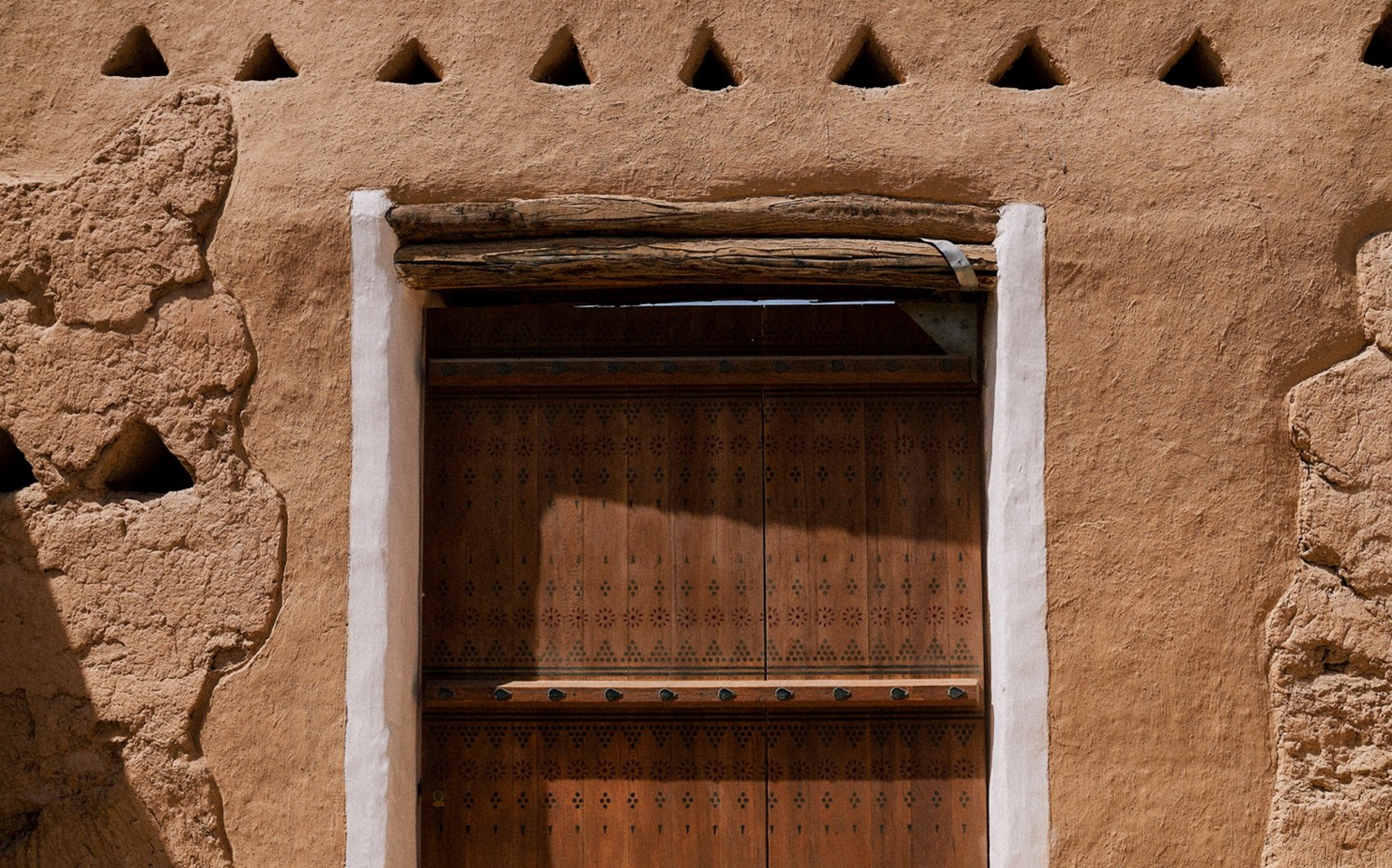
At Bab Samhan in Diriyah, the Jeddah house Charmaleena turns the legend of Qays and Laila into a Najdi door small enough to wear, in 18-karat gold, diamonds and ruby.
By Abeer Abdalla, Managing Editor, The Saudi Times
In Diriyah, doors have never been merely doors. They are thresholds between public and private worlds, between desert light and cooling shadow, between what a home reveals and what it chooses to protect. Their geometry is practical and it is also poetic. A row of triangular openings admits air. A carved panel carries the signature of its maker. A heavy wooden entrance turns arrival into ceremony.
One of the more precise new expressions of Saudi luxury takes the form of a door small enough to wear against the heart.
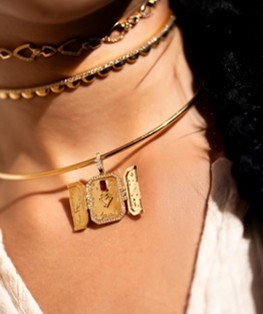
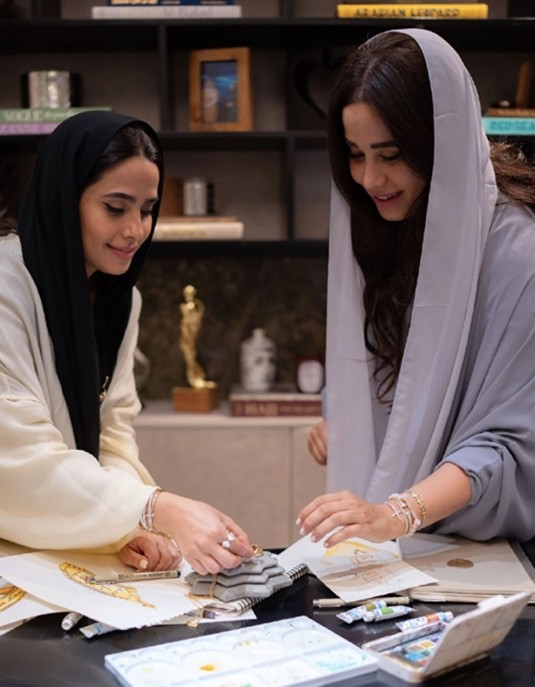
Charmaleena Jewellery, the Jeddah house founded in 2012 by the sisters Leena and Hala M. El Khereiji, has created a locket with Bab Samhan, a Luxury Collection Hotel, Diriyah. The partners announced it as the Locket of Love.
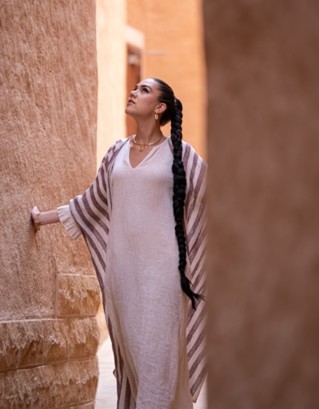
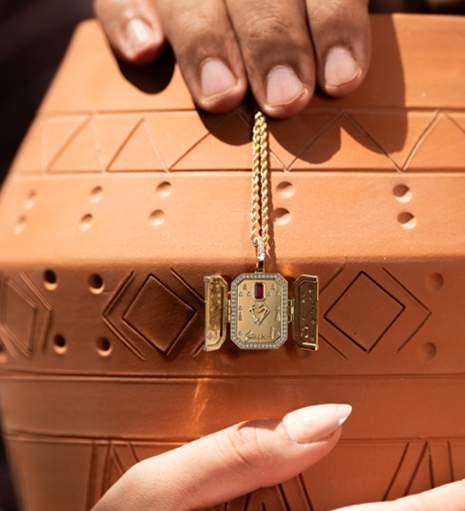
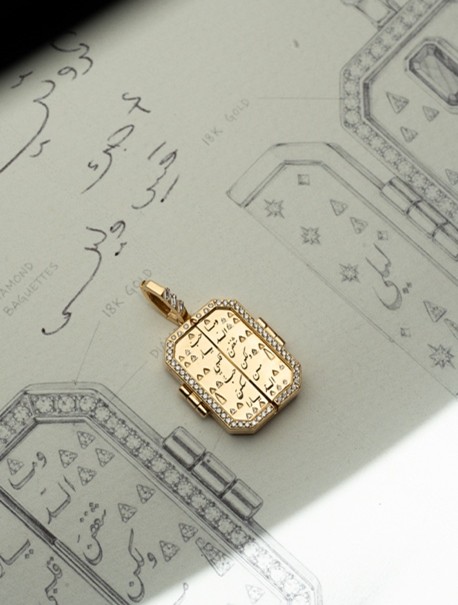
Charmaleena lists it at retail as the Tales & Treasures Love Locket. It is worked in 18-karat yellow gold, pavé set with 0.80 carats of diamonds, centered on a ruby, engraved with a verse from the tradition of Qays and Laila, and built to open like a pair of Najdi doors. Two names can be added inside. The partners describe the piece as a limited edition.
Across its surface runs the verse that gives the object its emotional key:
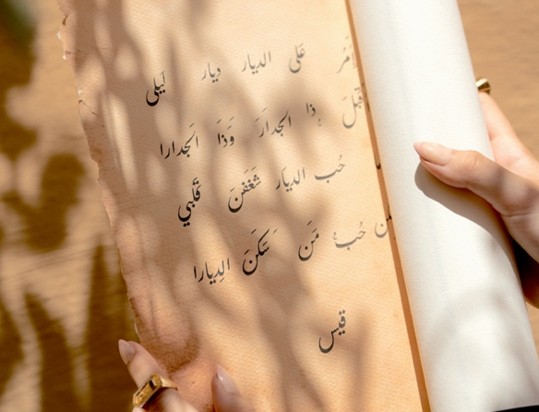
The beloved transforms a place, and the place becomes impossible to separate from the beloved. Read against a hotel collaboration, the logic is exact. A hotel is a temporary home. A locket is a portable one.
The architecture of longing.
In Arabic literary memory, Qays is the lover who becomes Majnun, consumed by a love for Laila that cannot find an ordinary ending. The story traveled far beyond Arabia and drew poets, painters and musicians across centuries. Its power remains intimate. It asks what happens when love cannot be possessed and must instead be preserved through language.
The verse chosen for the locket turns architecture into emotion. The dwelling matters because of the person who inhabited it. The doorway matters because of the one who once crossed it. In Charmaleena’s hands that idea becomes tactile. The pendant’s double doors are edged with diamonds and punctuated by motifs that recall the triangular apertures of Najdi buildings. Open them and the composition turns private: a ruby sits at the center, and two names can be added to make an old story unmistakably personal.
This is where the house is most assured. Charmaleena was founded in Jeddah in 2012 by Leena M. El Khereiji, its creative director, and Hala M. El Khereiji, its managing director, on the conviction that jewelry can carry narrative as precisely as it carries stones. Its Tales & Treasures collection revisits memory through contemporary heirlooms, drawing on family, sacred geographies and the visual vocabulary of Arabia without reducing them to ornament. The locket belongs to the collection’s newest chapter, a Love Edition that also includes a ring and a ruby necklace.
“When we first met with Bab Samhan, I thought long and hard about what symbol and collection could work to present them and us together,” said Leena M. El Khereiji, “To tell a new tale, I looked at the place and all I could see, and feel is my love for architecture, culture, and poetry. Modernizing it and crafting it into a piece of jewelry, was the result from our love stories came the inspiration of our new love locket was created.”
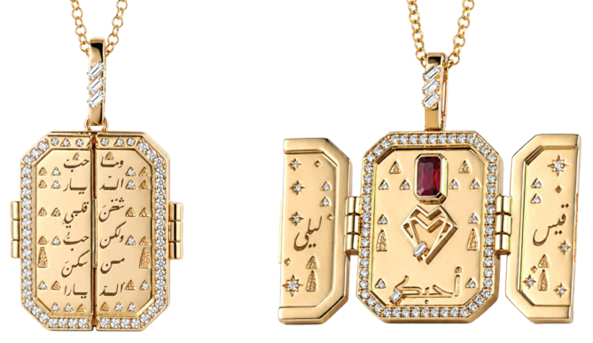
There is sensuality in the scale of the object. A necklace rests where a promise might be whispered. A locket demands touch. It has to be held, opened and closed. Its meaning is not exhausted at first glance. The diamonds offer brilliance, but the private interior is the point. This is jewelry designed to be known rather than only seen.
A hotel named for a gate
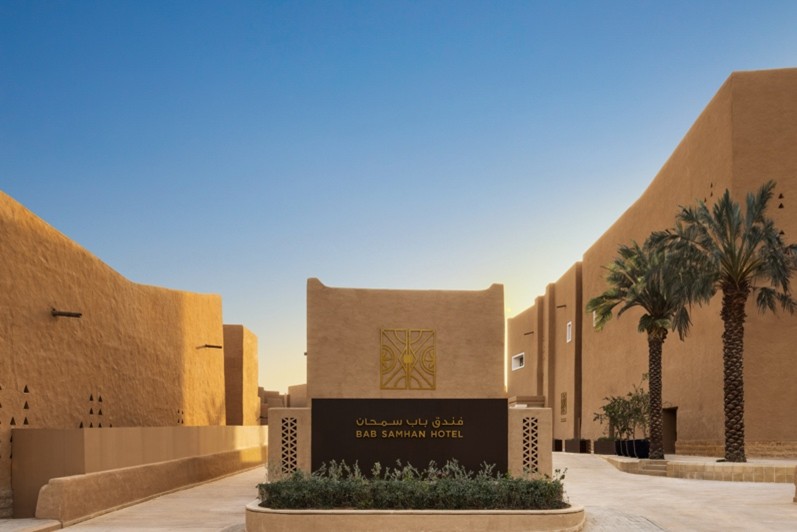
Bab Samhan is not incidental scenery. The hotel takes its name from one of historic Diriyah’s gates, associated with Imam Abdullah bin Saud and the defense of the city, and it operates as a threshold in its own right, introducing contemporary travelers to the textures, proportions and rituals of Najd.
By Marriott International’s account it was the first hotel to open in Diriyah, the seat of the First Saudi State, founded in 1727. It sits beside At-Turaif, the UNESCO World Heritage Site whose restored palaces, mosques and mudbrick structures remain among the most complete surviving expressions of Najdi earthen architecture. Its 134 rooms and suites, 23 of them suites, translate that inheritance through earth-toned materials, courtyards, geometric ornament and decorated doors. The effect is not theatrical. At its best it feels grounded, quiet and specific.
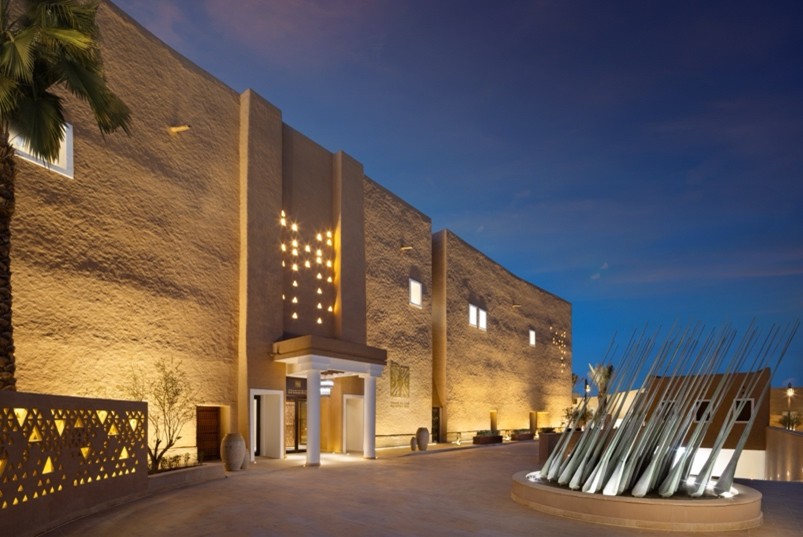
That specificity continues through the guest experience. At Jareed, Najdi cooking is presented on its own terms, kabsa and matazeez among the dishes. At Taleed, chef Michael Mina brings Mediterranean inflection to regional flavors. At Nafel Alwadi Spa, the language of renewal draws on the resilient plants of the valley. The hotel belongs to Marriott’s Luxury Collection, and its cultural center of gravity remains Saudi.
The new confidence of Saudi luxury
The most telling detail about the collaboration is what it declines to do. It does not flatten its references for an international audience. It does not treat heritage as a decorative mood board. The Arabic verse is not translated into anonymity, and the Najdi door is not softened into a generic geometric motif. The source stays visible.
That is where Saudi luxury is becoming most interesting. Its strongest new expressions are not imitations of elsewhere worn with a local accent. They are acts of cultural authorship. They proceed from the understanding that global relevance does not require the surrender of specificity. It can begin with a line of poetry, the geometry of an earthen wall, the glow of gold at dusk, or the memory held by a door.
For Charmaleena that has been the proposition from the beginning. Saudi stories can become fine jewelry of international standing because their meaning is not a limitation. It is the value. “Embrace the allure of culture, history, and the beauty of jewelry with the new Love Locket from the “Tales and Treasures” collection, where poetry, architecture, and culture come together in a piece of jewelry,” said, Hala M. El Khereiji. “Through the Love Locket, we create truly exceptional pieces of wearable art.”
For the hotel, the partnership extends its role beyond accommodation. It becomes a cultural host, bringing a Saudi design house into conversation with a place whose walls already hold centuries of memory. For Charmaleena, Diriyah supplies more than a setting. It supplies a living architectural language.
The result is romantic and it is not fragile. Gold gives the story permanence. Diamonds turn light into movement. The ruby, held within, reads almost as a pulse. Personalization carries the locket beyond Qays and Laila, letting another pair of names enter the tale.
Qays wrote because love could not be contained by absence. Centuries later, Charmaleena and Bab Samhan answer with an object designed to contain what matters: a verse, a place, two names, a private chamber of gold.