


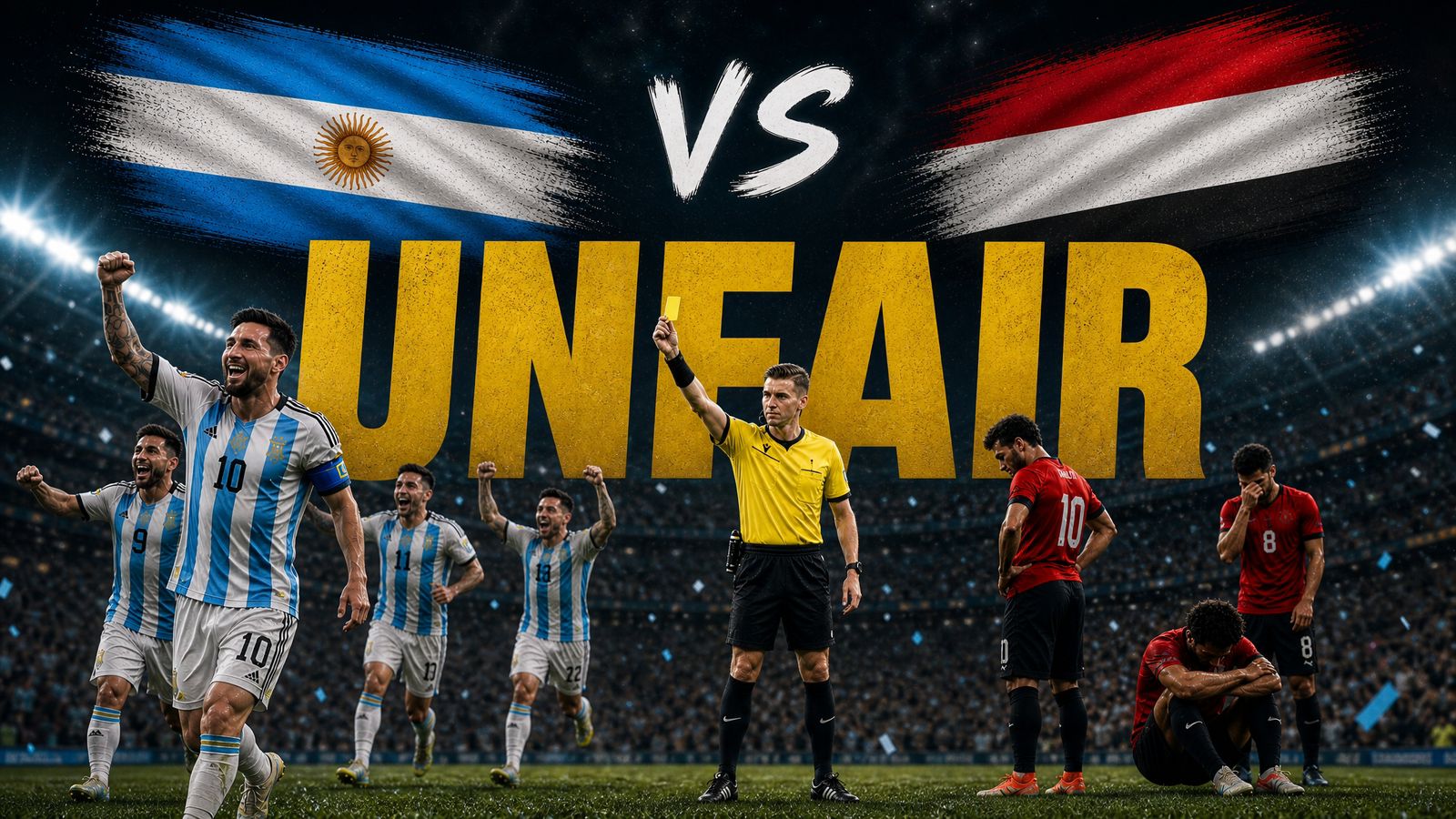
Argentina advanced past Egypt in what many are calling one of the most contentious matches of the 2026 FIFA World Cup, as referee decisions dominated the post-match conversation more than the goals themselves. The Group C fixture, played to a packed stadium, ended in an Argentina victory, but the scoreline alone fails to capture the extent of the controversy that surrounded nearly every key moment of the match.
Throughout the 90 minutes, Egyptian players and coaching staff were visibly frustrated by a series of calls that appeared to favour the South American giants. From questionable offside decisions that ruled out Egyptian attacks to penalty appeals waved away under pressure, the officiating left a bitter taste for the North African side and their supporters watching from across the Arab world.
Key Moments That Sparked Controversy
The tension began early, when Egyptian striker Mostafa Mohamed appeared to be brought down inside the penalty area in the 22nd minute, a moment that replays showed clearly warranted a closer look. The referee waved play on without consulting VAR, a decision that instantly drew protest from the Egyptian bench. Minutes later, another Egyptian goal was ruled out for an offside so marginal that analysts on multiple broadcast networks struggled to confirm it even after multiple slow-motion reviews.
Argentina’s winner came under similarly clouded circumstances, with Egyptian defenders raising their hands in unison claiming handball before the goal was ratified. FIFA’s Video Assistant Referee system, which had been touted as one of the key innovations of this World Cup, appeared to offer no additional clarity or intervention throughout the match.
Social Media and Expert Reaction
Social media erupted immediately after the final whistle, with Egyptian fans and football analysts pointing to several key moments they believe cost their team a fair result. The hashtag calling for VAR transparency trended across Arabic-language platforms for hours following the game, accumulating hundreds of thousands of posts. Former players and pundits across Arabic-language channels were equally vocal, with many arguing that the match highlighted a persistent double standard in how top South American sides are treated compared to African and Middle Eastern nations at major international tournaments.
Former Egyptian international Hossam Hassan was among the most prominent voices to speak out, stating in a television interview that the pattern of officiating seen against Egypt is not new, but that the global audience of the 2026 World Cup had placed it under unprecedented scrutiny. Several European football journalists and analysts echoed similar sentiments on their own platforms.
Argentina Focused on Progress
Argentina, who have historically been at the centre of refereeing controversies in major tournaments dating back decades, remained measured in their post-match reaction. Coach Lionel Scaloni praised his team’s resilience and composure under pressure, while key players pointed to the work still ahead as they advance in the competition. Their celebrations were understandably focused on progression to the knockout rounds rather than the manner of the victory.
FIFA’s Response and the VAR Debate
FIFA has yet to issue a formal comment on the officiating during the Argentina and Egypt match, though calls for greater VAR review transparency are growing louder across the football world. Several national football associations have previously called for the governing body to publish detailed explanations of VAR decisions in real time during matches, a proposal that is gaining renewed momentum in the wake of this game.
The result sees Egypt exit the group stage after competitive performances throughout the tournament. The broader conversation it has ignited about fairness and consistency in international refereeing is likely to remain a defining storyline of the 2026 FIFA World Cup long after the final whistle blows.














