


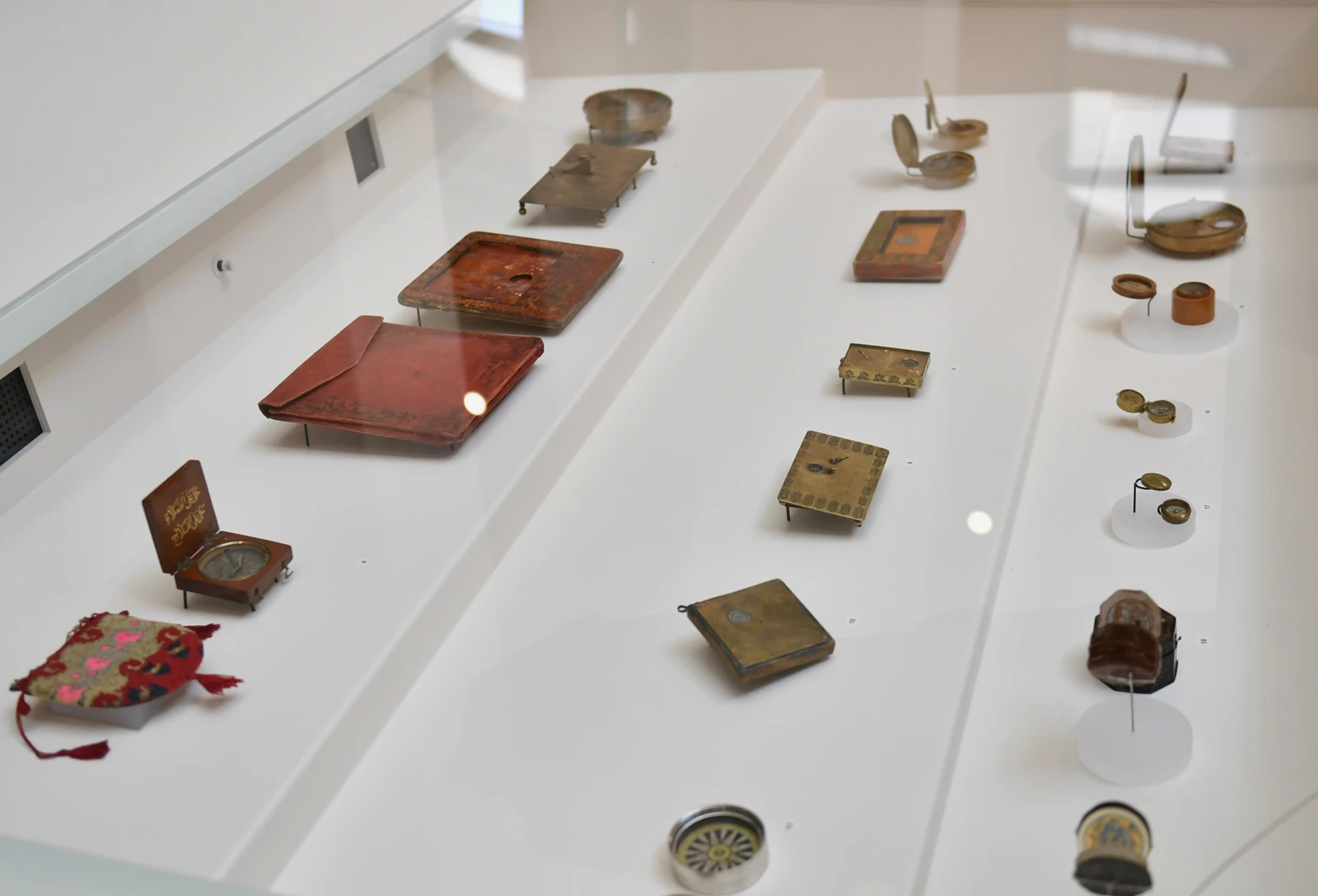
The Red Sea Museum in Historic Jeddah continues to highlight an important part of Islamic maritime heritage through a rare collection of traditional navigation instruments that reflect the remarkable advancement of marine and astronomical sciences in Islamic civilization.
The museum houses more than 20 historical navigation tools, some of which are over 400 years old. These include qibla indicators, compasses, and sundials, many of which feature Islamic engravings containing Quranic verses, prayers, and supplications.
These artifacts demonstrate the close relationship between navigation sciences and the religious and cultural identity of the Islamic world.
Rare Artifacts Reflect the Evolution of Navigation
The museum showcases pieces dating from the 17th to the 20th centuries, crafted from materials such as copper, silver, wood, ivory, and glass.
These instruments illustrate the technological progress made in navigation, timekeeping, and determining the direction of prayer across different historical periods.
Qibla indicators and compasses stand out among the most important tools used by travelers and sailors. They combined magnetic compass technology with guidance systems to accurately determine the direction of Makkah from various locations, enabling Muslims to perform prayers while traveling.
Astronomy in Service of Maritime Travel
The sundials on display reveal the high level of scientific progress achieved by Islamic civilization in calculating time and prayer schedules based on solar movement.
This highlights the strong integration between astronomy and navigation, both of which played a crucial role in maritime travel and route planning.
Among the museum’s most notable exhibits is a 19th-century qibla indicator and compass decorated with a detailed map of the Red Sea and its coastal cities, alongside an illustration of the Kaaba.
The artifact beautifully reflects the historical connection between maritime trade routes and pilgrimage journeys across the Red Sea.
Preserving Heritage for Future Generations
The Red Sea Museum continues its efforts to preserve and showcase this rich cultural heritage through exhibitions documenting the history of Islamic navigation and the Red Sea’s civilizational significance.
These efforts are part of wider initiatives to revitalize Historic Jeddah and strengthen its position as a global cultural destination, in alignment with the goals of Saudi Vision 2030 in preserving national heritage and promoting cultural identity.














