

Saudi Arabia’s small and medium enterprise landscape is entering a new phase of capital market maturity. The Tomoh program, developed by the Small and Medium Enterprises General Authority known as Monshaat, has now supported the listing of 40 companies on the Kingdom’s Nomu parallel market, a milestone that signals growing confidence among Saudi entrepreneurs in public markets as a sustainable path to growth financing.
A Program Built Around the Full SME Journey
Tomoh was designed from the outset as an integrated support ecosystem rather than a one-size-fits-all grant scheme. The initiative connects high-growth small and medium enterprises with service providers, regulatory bodies, and capital market participants across both the public and private sectors. Since its inception, more than 3,250 establishments have registered under the program, and their combined revenues have surpassed SR40 billion, a figure that reflects the cumulative economic weight of a segment that Saudi policymakers have placed at the center of the Vision 2030 diversification agenda.
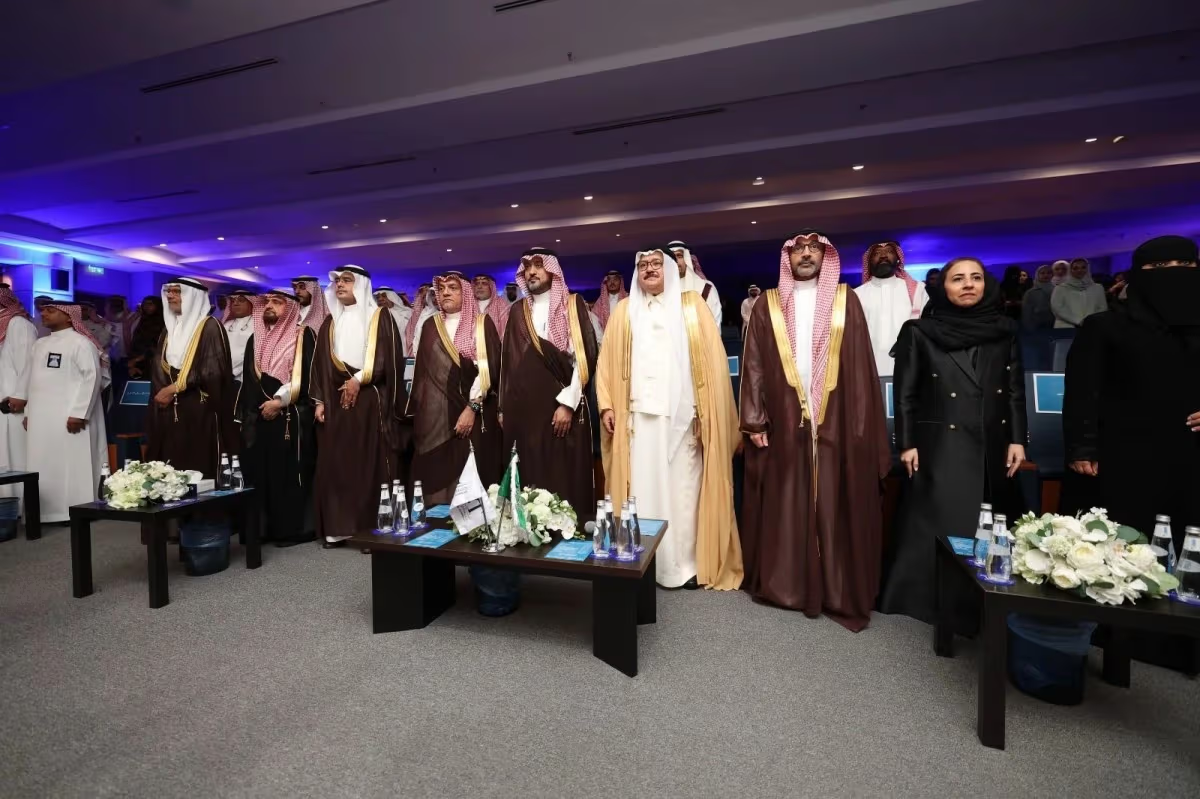
Monshaat Governor Sami Al-Husseini presented the latest indicators during a meeting with entrepreneurs at the Jeddah Chamber of Commerce, where he outlined the depth of the SME sector’s footprint across the governorate. In Jeddah alone, 138,091 SME establishments are active, employing a workforce of approximately 889,800 people. The Tomoh program itself registered 562 companies from Jeddah, while 3,172 investment opportunities were presented through commercial franchising channels.
Training, Branding, and Financial Relief Driving SME Competitiveness
Beyond capital market access, Tomoh operates across several service lines that tackle different pain points in the SME lifecycle. Training through Monshaat’s academy has reached 30,300 beneficiaries, equipping business owners with the operational and financial literacy needed to navigate growth. The Josor service, which facilitates connections between enterprises and institutional partners, served 1,036 beneficiaries, while the Mazaya service, focused on reducing SME operating costs through preferential pricing on more than 620 services, generated over SR71 million in financial savings for enrolled businesses, with an average discount rate of 37 percent.
The franchise ecosystem is another area where the program is building lasting infrastructure. The Commercial Franchise Center has helped grow the total number of active trademarks in the sector to 1,479, with local franchisor trademarks alone reaching 757. Across all channels, the center has created more than 35,000 investment opportunities, and an additional 482 licenses have been issued for business incubators and accelerators. With 40 companies already listed on Nomu and a robust pipeline still in the works, Monshaat’s Tomoh program is positioning itself as one of the Kingdom’s most consequential tools for building a private sector that can stand on its own.