


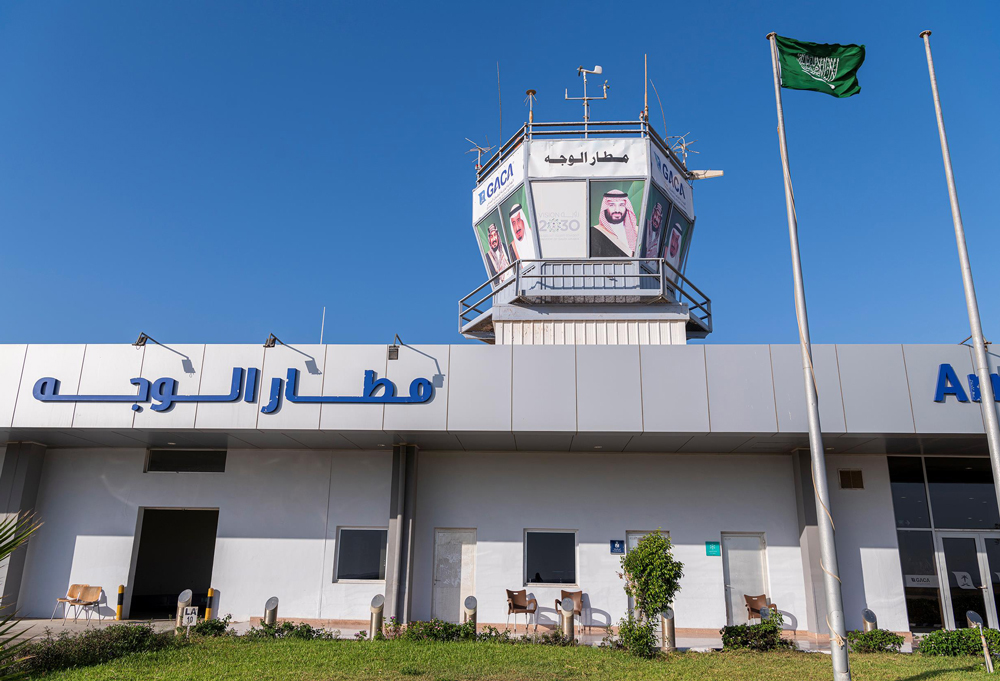
Al-Wajh International Airport in Saudi Arabia’s Tabuk region has resumed operations following a comprehensive modernization project completed by Red Sea Global, marking a significant step toward enhancing regional connectivity and supporting tourism growth in the Kingdom’s northwest.
The project forms part of broader efforts to strengthen transportation infrastructure and improve accessibility to key development areas across the region.
Major Increase in Passenger Capacity
The airport’s annual passenger capacity has increased dramatically from 100,000 to 500,000 travelers, enabling it to accommodate rising demand and support future growth.
The upgraded terminal features four gates and can process up to 330 arriving and departing passengers per hour during peak operating periods.
Currently, the airport is served by Saudia with three weekly flights from Riyadh and two weekly flights from Jeddah, while international services are expected to be introduced in future phases.
Supporting Tourism Development in Northwest Saudi Arabia
The upgraded facility is now capable of handling larger aircraft, including Airbus A320 and Boeing 737 family aircraft, as well as seaplanes.
John Pagano, Group CEO of Red Sea Global, said the project is intended to strengthen regional connectivity and provide additional transportation options for residents and visitors.
Abdulaziz Al-Abdan, Executive Director of Aviation and Airport Operations at Red Sea Global, noted that the modernization will allow the airport to accommodate greater passenger volumes while supporting future route expansion in cooperation with airline partners and regulatory authorities.
Gateway to Amaala and Future Growth
The airport is expected to play an important role in serving visitors traveling to Amaala, the luxury tourism destination under development on Saudi Arabia’s northwestern Red Sea coast, located approximately 45 minutes away by road.
The renovated terminal includes passenger lounges, retail outlets, banking services, car rental facilities, and parking areas, while also supporting helicopter and seaplane operations.
The project represents Red Sea Global’s first completed infrastructure development outside its core tourism portfolio, highlighting the company’s growing contribution to broader regional development and connectivity initiatives.














