

The Kingdom has proved that AI capability can scale. The next mandate is to turn a record-breaking cohort into a builder economy, and to change how institutions recognize talent.
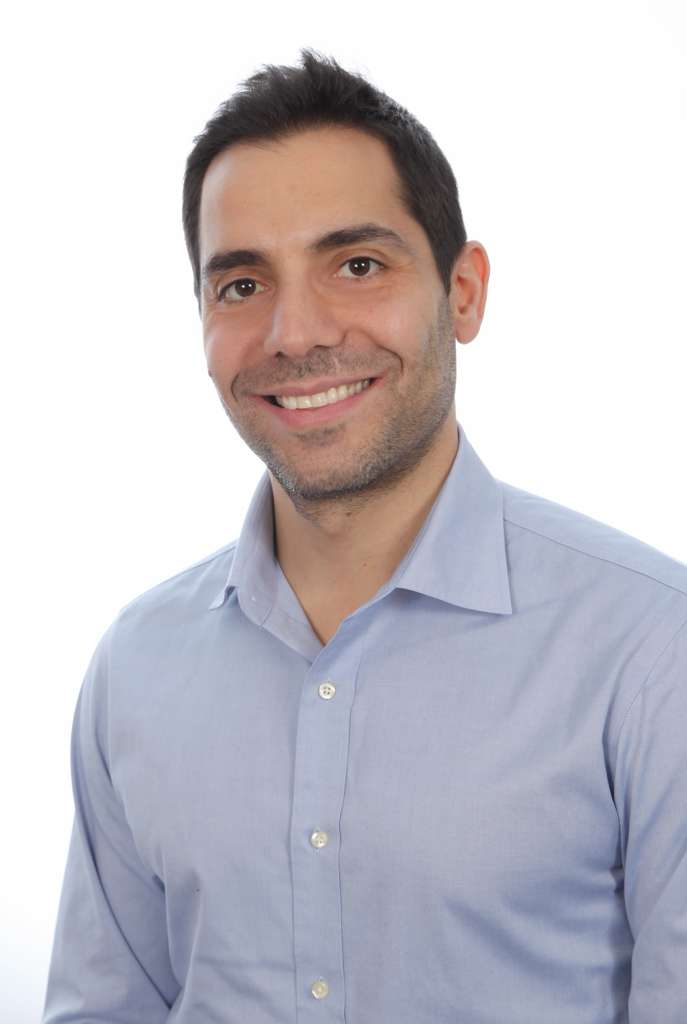
By Roy Baladi, Founder and Chief Executive Officer, Kanz
Every era chooses a shorthand for talent. The industrial economy trusted the credential. The internet economy trusted the resume and the profile. The AI economy will demand something more direct: proof of work.
I believe the countries and companies that lead this era will be those that discover, trust and mobilize builders faster than everyone else. They will not ask only who has used artificial intelligence. They will ask who has turned it into something useful.
That distinction matters because AI is changing production faster than most labor markets are changing how they recognize ability. Degrees, job titles and years of experience still have value, but they remain proxies. A working product is evidence.
When natural language can become an application, an agent or an automated workflow, the defining question is no longer simply, “Can you code?” It is, “Can you identify a real problem, frame it clearly, build a solution, test it and improve it?” That is not a minor technical shift. It is a new definition of economic capability.
A record, and a mandate
On July 15, 2026, Kanz and Saudi Arabia’s Ministry of Human Resources and Social Development set the Guinness World Records title for the most users in an artificial intelligence video lesson, with 14,075 people participating. Across the eight-day hackathon, 51,693 people registered from 170 countries.
A record proves that people arrived. What they built proves that a new economy can begin.
Participants submitted 4,450 AI projects. Of those, 3,428 became published digital products with links that anyone, including an employer, can open and test. That is the number I keep returning to. The record demonstrated reach. The products demonstrated conversion.
Saudi Arabia formed the largest national cohort, with more than 19,000 registrants and more than 1,900 submitted projects. This is Vision 2030 in its most consequential form: not a population waiting to consume the future, but a population equipped to build it.
Build a market around proof
Our ambition at Kanz is larger than a training event. We want to help build a labor market in which every person can show what they can create, every employer can inspect that evidence, and every institution can translate learning into opportunity. The resume will remain, but it should no longer have the final word.
Imagine one million job seekers whose portfolios contain working AI products, not just lists of skills. Imagine employers searching for demonstrated judgment, problem-solving and execution instead of filtering first by pedigree. Imagine talent becoming visible before it has the perfect title, network or geography. That is not simply recruitment technology. It is mobility infrastructure.
The hackathon also showed what serious partnership looks like. The Ministry made the challenge national. The Lebanese American University Academy of Continuing Education made achievement legible. Lebanon’s Ministry of Information Technology and Artificial Intelligence through NUMŪ, together with Berytech, the Hariri Foundation, Forward MENA, Classera, C.XSEED Ventures and Voice of Lebanon, made access travel. Technology partners including Replit, Google, Anthropic, ElevenLabs, Magnific, Suno, n8n and HUMAIN made creation immediate.
Leadership is not the number of logos around an initiative. It is the ability to align public purpose, academic credibility, community reach and technology around a measurable outcome.
The invitation at LEAP
From August 31 to September 3, Riyadh will host LEAP 2026, where Kanz has been shortlisted for Rocket Fuel, the event’s flagship startup pitch competition with a $1 million equity-free prize fund. We will arrive with more than a pitch. We will arrive with a proposition for the AI economy.
Every major AI initiative should be judged not only by attendance, investment or tool adoption, but by the builders it produces, the products they publish, the businesses they create and the people who move into work.
Employers should open the portfolio before dismissing the candidate. Educators should make publishing part of learning. Investors should look beyond familiar founder profiles to domain experts newly able to prototype. Institutions should count verified outputs and economic transitions, not participation alone. And builders should release the work. Unpublished potential cannot change a market.
At Kanz, our commitment is to keep building the infrastructure that connects proof to opportunity. The Guinness World Records title honors what a remarkable coalition achieved. Vision 2030 gives that achievement its larger direction.
Saudi Arabia has shown that it can convene the AI future at record scale. Now we must give that future a market. At LEAP, the invitation is simple: do not come only to see what AI can do. Come ready to discover who can build with it, back them, hire them and put their work into the world.