

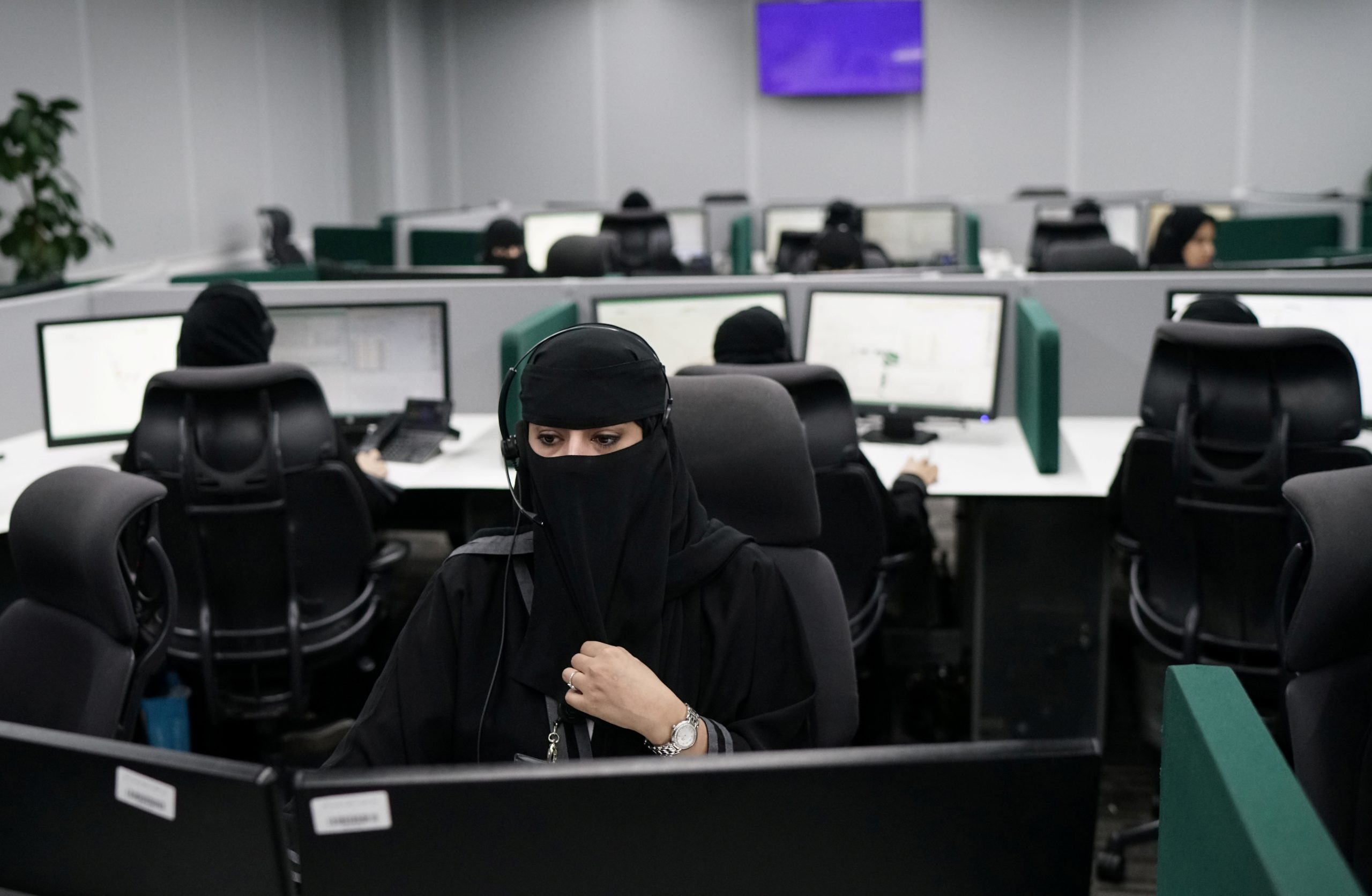
Saudi Arabia has witnessed a major transformation in women’s participation in the labor market, becoming one of the clearest indicators of the country’s broader economic and social changes under Vision 2030.
Since 2016, female labor-force participation has increased significantly, supported by regulatory reforms, expanding employment opportunities, training programs and initiatives designed to create a more supportive working environment.
According to data attributed to the General Authority for Statistics, women’s labor-force participation increased from approximately 17% in 2016 to 36.2% in the first quarter of 2025, surpassing the original Vision 2030 target of 30%.
| Indicator | Value | Source |
|---|---|---|
| Female Labor Force Participation (2025) | 34% | World Bank |
| Female Workforce Participation Increase (2016-2025) | From 17% to 36.3% | Vision 2030 Analysis |
| Female Unemployment Rate (Q2 2022) | 19.3% | GASTAT |
| Saudi Women in Tech Startups (2021) | 28% | Endeavor Insight |
| Female Participation in Private Sector (2018 to 2022) | 20% to 35% | Atlantic Council |
The change between 2016 and 2025 represents one of the most significant labor-market transformations associated with the Kingdom’s Vision 2030 agenda.
From 17% to 36.2%: Surpassing the Original Target
When Vision 2030 was launched, increasing women’s participation in economic activity was established as an important labor-market objective. The original target was to raise female labor-force participation to 30%.
The latest figure cited in the source material shows participation reaching 36.2% in Q1 2025, exceeding that target.
The increase reflects both a larger number of opportunities and broader changes in labor-market policies, private-sector employment and workplace regulations.
Women are also increasingly represented across a wider range of occupations and industries.
Social Reforms Helped Remove Barriers
A series of social and regulatory reforms contributed to the expansion of women’s participation.
The lifting of restrictions on women driving in 2018 was one important development, improving access to workplaces and mobility. The figures cited in the source material indicate that more than 100,000 Saudi women obtained driving licenses.
However, the increase in female employment cannot be attributed to driving alone. It occurred alongside broader labor-market reforms, employment and training programs, and the expansion of services supporting working women.
Women and the Private Sector
The private sector has played a major role in expanding employment opportunities for Saudi women.
According to the figures provided, the number of Saudi women employed in the private sector reached 952,380.
Growth in services, retail, technology, tourism, hospitality and financial services has created new career opportunities while broadening the range of industries accessible to Saudi women.
Growth in Sales and Productive Family Businesses
Sector-specific figures also point to significant changes in women’s participation.
The share of women in sales reportedly increased from 7% in 2014 to 47.2% in 2019.
Women also account for approximately 60% of participants in productive family businesses, according to the cited figures.
| Indicator | Value | Source |
|---|---|---|
| Driving Licenses Issued to Women (2025) | 100,000+ | International Bar Association |
| Vision 2030 Female Workforce Target | 30% | Vision 2030 |
| Female Participation in Q1 2025 | 36.2% | GASTAT |
Education and Skill Development: The educational attainment among Saudi women has also seen significant improvements. According to the World Bank, 104% of Saudi girls complete lower secondary school, surpassing their male counterparts. This high level of education is translating into better job opportunities and higher participation rates in the workforce.
| Indicator | Value | Source |
|---|---|---|
| Lower Secondary Completion Rate (Girls, 2024) | 104% | World Bank |
| Adult Literacy Rate (Women, 2024) | 98.6% | World Bank |
Sectoral Shifts and Employment Distribution: Saudi women have begun to enter traditionally male-dominated sectors like technology, manufacturing, and construction. The rise in tech startups led by women, which is higher than in Europe, underscores the changing landscape. In 2021, women constituted 28% of the tech industry workforce, a significant achievement given global averages.
| Indicator | Value | Source |
|---|---|---|
| Women’s Participation in Tech Industry (2021) | 28% | Endeavor Insight |
| Female Workforce in Private Sector (2022) | 35% | Atlantic Council |
Ongoing Challenges and Future Goals: Despite the progress, challenges such as wage parity and career progression remain. The Kingdom’s medium-term ambition is to reach a 40% female participation rate by the end of the decade. This requires continued focus on childcare infrastructure and intra-firm career development.
| Indicator | Value | Source |
|---|---|---|
| Revised Female Participation Target (2030) | 40% | Vision 2030 Analysis |
| Female Unemployment Reduction (2021 to 2022) | 22.5% to 19.3% | GASTAT |
Sources: World Bank, GASTAT, Vision 2030 Analysis, Atlantic Council, Endeavor Insight, International Bar Association.