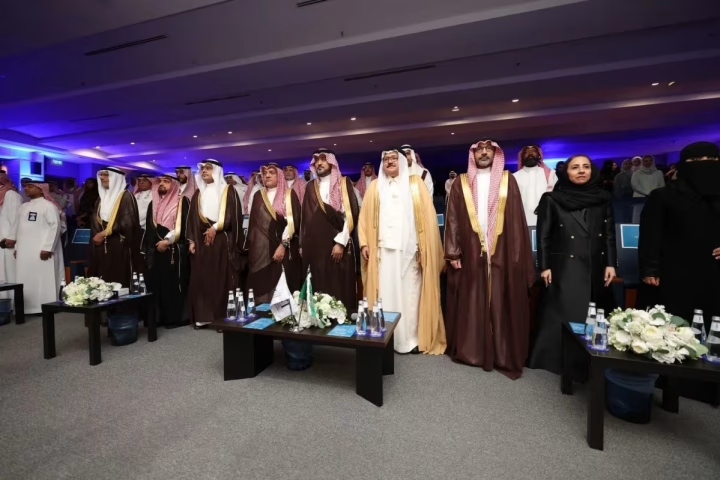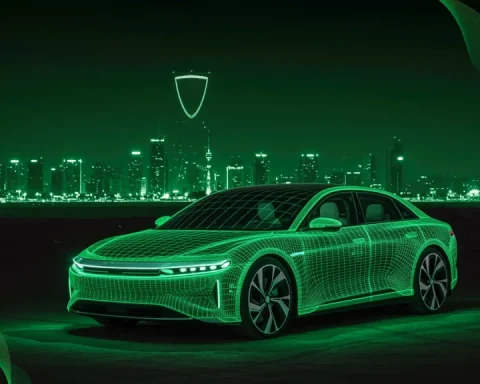


Saudi Arabia is accelerating toward a historic milestone in its industrial journey. CEER, the Kingdom’s first homegrown electric vehicle brand, signed 16 commercial agreements worth over SAR 3.7 billion at the fourth PIF Private Sector Forum in February 2026, building a domestic supply chain that will form the backbone of its planned Q4 2026 commercial launch.
The agreements represent the latest installment in a localization strategy that has already accumulated SAR 5.5 billion in partnerships from the previous year’s forum. Together, they put CEER firmly on course to source 45 percent of its vehicle materials and components from Saudi companies by 2034 — a target that company CEO James DeLuca described as central to building a “comprehensive automotive ecosystem” within the Kingdom.
A Supply Chain Built at Home
The contracts signed at the forum span a wide range of automotive functions. Abdul Latif Jameel will supply windshield washer fluid, EV coolants, and forklift equipment. Zamil Trade and Services will provide brake fluids and aerodynamic access covers. FPI will deliver front-end modules, while NSSPC will supply PP resin and polymer compounds. MK Tron is contracted to manufacture small stampings, and Sika will provide chemical components including cavity baffles and structural adhesives.
Additional agreements cover automotive glazing with XYG, steel body shop infrastructure through Mino, and specialized engineering services via FEV and AVL. New memoranda of understanding were also signed for Expanded Polypropylene components and HVAC localization, as well as window regulators and door hinges produced within Saudi Arabia.
The breadth of these partnerships — ranging from chemical compounds to heavy press shop equipment — reflects a deliberate strategy to reduce import dependency and ensure that value creation stays within the Kingdom’s borders. DeLuca emphasized that the company is not merely assembling vehicles from imported parts, but actively building local suppliers into globally competitive manufacturers.
A Vision 2030 Industrial Anchor
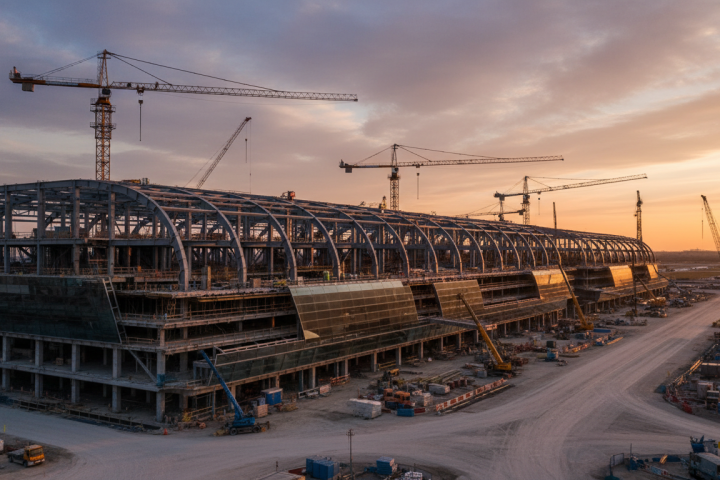
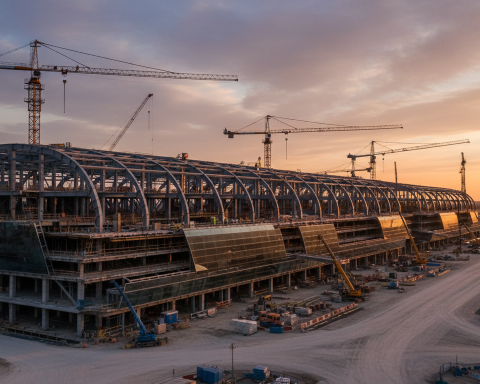
CEER’s manufacturing complex sits in King Abdullah Economic City on the Red Sea coast, a location chosen to serve as an industrial catalyst for the surrounding region. The facility — developed in partnership with BMW Group and Foxconn — has the capacity to produce 38 vehicles per hour and is equipped with one of the most advanced paint shops in the global automotive industry, installed in collaboration with Dürr, a German engineering firm renowned for its automotive plant expertise.
By 2034, CEER is projected to contribute over SAR 30 billion to Saudi Arabia’s GDP, improve the trade balance by SAR 79 billion, and create approximately 30,000 direct and indirect jobs. These figures underline why the company has been positioned not simply as an automaker, but as a structural pillar of Saudi Arabia’s broader economic diversification strategy.
Commercial Debut on the Horizon
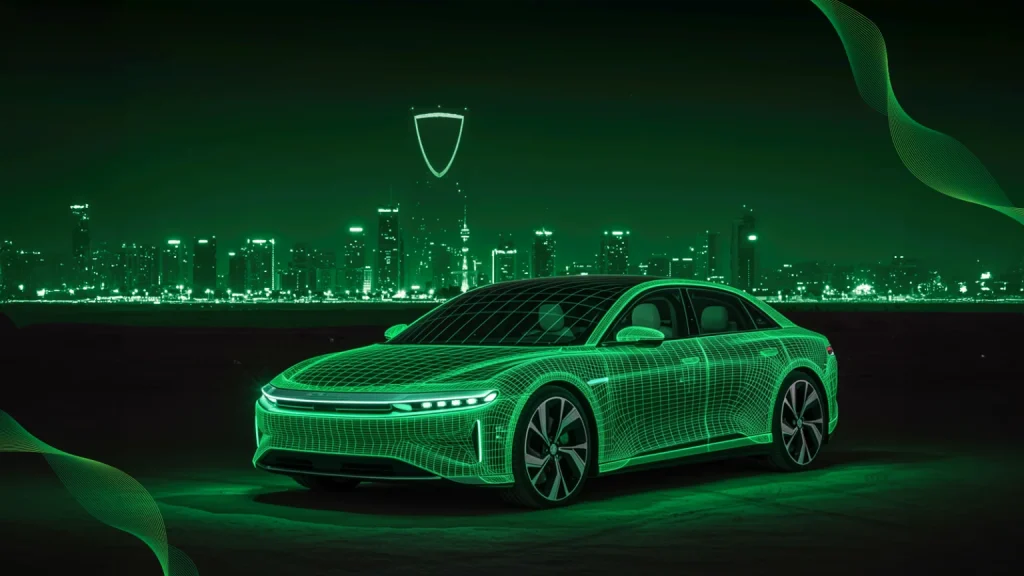
Trial production at the King Abdullah Economic City factory is scheduled to begin in mid-2026, with the first customer deliveries expected before the year’s end. CEER’s initial lineup includes two aspirational models — a sedan and an SUV — positioned in the premium and upper-mid segments. Pre-orders have been open since early 2026 and have drawn significant interest from Saudi consumers who are increasingly receptive to electric mobility as the Kingdom’s charging infrastructure continues to expand.
The company plans to bring seven models to market over the next five years, with production capacity set to scale accordingly. International expansion into other Gulf markets is planned for subsequent phases, once the domestic launch has been consolidated.
For Saudi Arabia, CEER’s emergence represents more than a new car brand. It is a statement of industrial ambition — proof that a country long associated with oil exports is now capable of designing, manufacturing, and selling advanced technology products that the world will want to buy.