


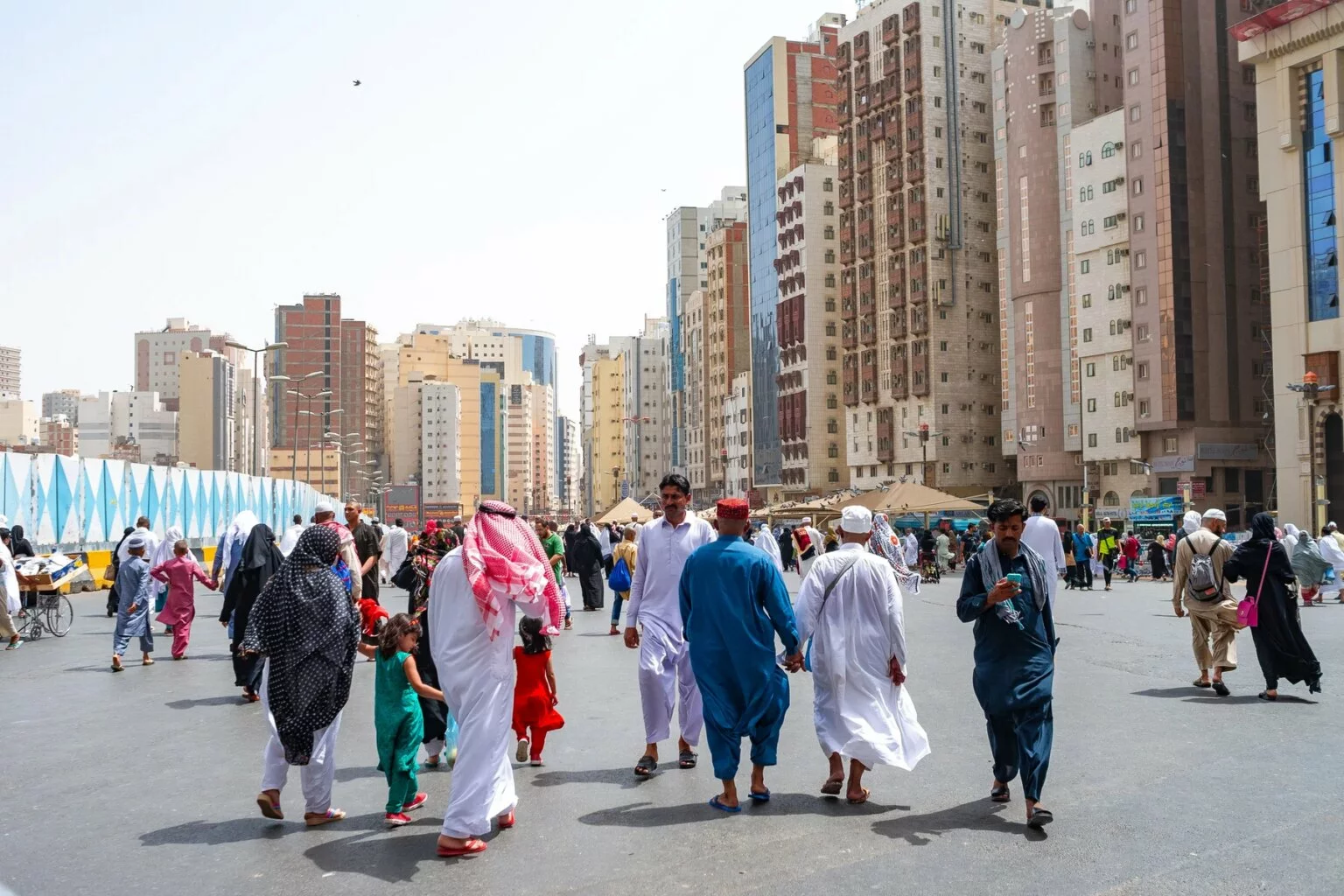
Saudi Arabia is undergoing notable demographic changes in 2026, with continued population growth, a highly urbanized population and a relatively young age structure. Together, these trends are reshaping demand for education, employment, housing, healthcare, transportation and public services across the Kingdom.
According to estimates cited by Worldometer, Saudi Arabia’s population is expected to reach approximately 35.17 million people in 2026, placing the Kingdom 47th globally by population and accounting for around 0.42% of the world’s total population.
Beyond the headline population figure, the data highlights broader changes in how people are distributed across the Kingdom and the characteristics of its demographic structure, particularly the high concentration of residents in urban areas.
Saudi Arabia’s Population Exceeds 35 Million
Worldometer estimates Saudi Arabia’s population at approximately 35,165,787 people in 2026.
The figure places the Kingdom among countries with a relatively moderate population density compared with its vast geographical area. At the same time, population distribution remains uneven, with a significant proportion of residents concentrated in major cities and urban centers.
Population growth is occurring alongside major economic and social transformation, contributing to the expansion of existing cities and the development of new urban, economic and residential areas.
| Indicator | Value | Source |
|---|---|---|
| Total Population | 35,165,787 | Worldometer |
| Population Density | 16 per Km² | Worldometer |
| Urban Population | 32,323,623 | Worldometer |
| Median Age | 29.7 years | Worldometer |
| Fertility Rate | 2.27 children per woman | Worldometer |
| Net Migration | 108,660 | Worldometer |
| Population Growth Rate | 1.73% | Worldometer |
Population Growth Remains Positive
Worldometer estimates Saudi Arabia’s annual population growth rate at approximately 1.73% in 2026, compared with 1.78% in 2025.
Although the growth rate has eased slightly from the previous year, it remains positive, meaning the Kingdom’s total population continues to expand.
Population growth has direct implications for demand for essential services and infrastructure, including housing, education, healthcare, transportation and employment.
It is also influenced by several demographic factors, including births, deaths, migration and population movements between different regions.
| Indicator | Value | Source |
|---|---|---|
| Expatriate Population | 14 million | Vision 2030 |
| Saudi Nationals | 22 million | Vision 2030 |
| Under 35 Years | 63% | Vision 2030 |
More Than Nine in Every Ten Residents Live in Urban Areas
One of the most prominent characteristics of Saudi Arabia’s demographic profile is its high level of urbanization.
According to PopulationPyramid.net, approximately 91.9% of the Kingdom’s population lives in urban areas.
The figure highlights the predominantly urban nature of Saudi society and reflects decades of urban expansion and economic development.
High urbanization also means that urban planning, housing, transportation networks and public services are becoming increasingly important components of long-term demographic planning.
The concentration of people in cities is closely connected to the availability of employment, education, healthcare, business activity and other essential services.
| Indicator | Value | Source |
|---|---|---|
| Riyadh Population | 9.06 million | Global Media Insight |
| Urbanization Rate | 84% | Global Media Insight |
A Relatively Young Population
Saudi Arabia’s median age is estimated at approximately 29.7 years, according to the cited Worldometer data.
A relatively young population represents both an opportunity and a long-term planning responsibility.
A large working-age population can contribute significantly to economic productivity, particularly when supported by education, professional training, digital skills and employment opportunities.
At the same time, the demographic structure places greater pressure on education and workforce-development systems to ensure that young people can participate effectively in a changing economy.
| Indicator | Value | Source |
|---|---|---|
| Male Population | 22.67 million | Global Media Insight |
| Female Population | 14.92 million | Global Media Insight |
| Median Age | 29.7 years | Global Media Insight |
Fertility Rate Estimated at 2.27
Worldometer estimates Saudi Arabia’s fertility rate at approximately 2.27 births per woman.
Fertility is one of the key indicators used to understand long-term demographic trends because it influences the size of future generations and the pace of natural population growth.
However, fertility cannot be considered in isolation. Migration, mortality, life expectancy and the existing age structure all contribute to determining how the Kingdom’s population will evolve over the coming decades.
Low Population Density Reflects the Kingdom’s Vast Geography
Saudi Arabia has an estimated population density of approximately 16 people per square kilometer, according to the cited Worldometer data.
The relatively low national density is largely a result of the Kingdom’s enormous geographical area compared with its total population.
Population distribution, however, varies considerably. While major cities and urban centers can have much higher population concentrations, large parts of the Kingdom remain sparsely populated.
This creates a distinctive challenge for urban and infrastructure planning, requiring effective transportation networks and service systems capable of connecting widely distributed communities.
What Do These Demographic Figures Mean for Saudi Arabia?
The 2026 population figures provide more than a snapshot of how many people live in the Kingdom. They offer insight into the changing needs and opportunities shaping Saudi society.
A population exceeding 35 million, combined with an urbanization rate above 90% and a relatively young median age, creates growing demand across education, employment, housing, transportation, healthcare and digital services.
At the same time, the Kingdom’s young demographic profile can become a significant economic advantage if supported by appropriate education and training systems and by opportunities in emerging industries.
This is particularly relevant as Saudi Arabia continues to diversify its economy and develop sectors such as technology, tourism, entertainment, advanced manufacturing and professional services.
Population Growth and Economic Transformation
Saudi Arabia’s demographic changes are taking place alongside the implementation of major economic and social programs under Saudi Vision 2030.
Population growth and urbanization are therefore closely linked to the Kingdom’s broader development agenda.
Growing cities require new approaches to urban planning, transportation, housing and digital infrastructure, while expanding populations create additional demand for efficient public services and improved quality of life.
The country’s relatively young population adds another dimension to this transformation, increasing the importance of developing education and employment pathways that match the needs of a rapidly changing economy.
| Indicator | Value | Source |
|---|---|---|
| Projected Population 2026 | 37.8 million | U.S. Census Bureau |
Sources: Worldometer, Vision 2030, Global Media Insight, U.S. Census Bureau.
Image source: img.freepik.com