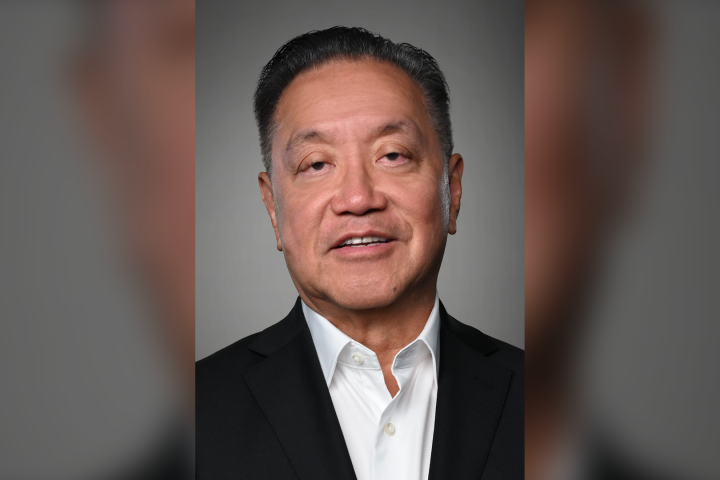


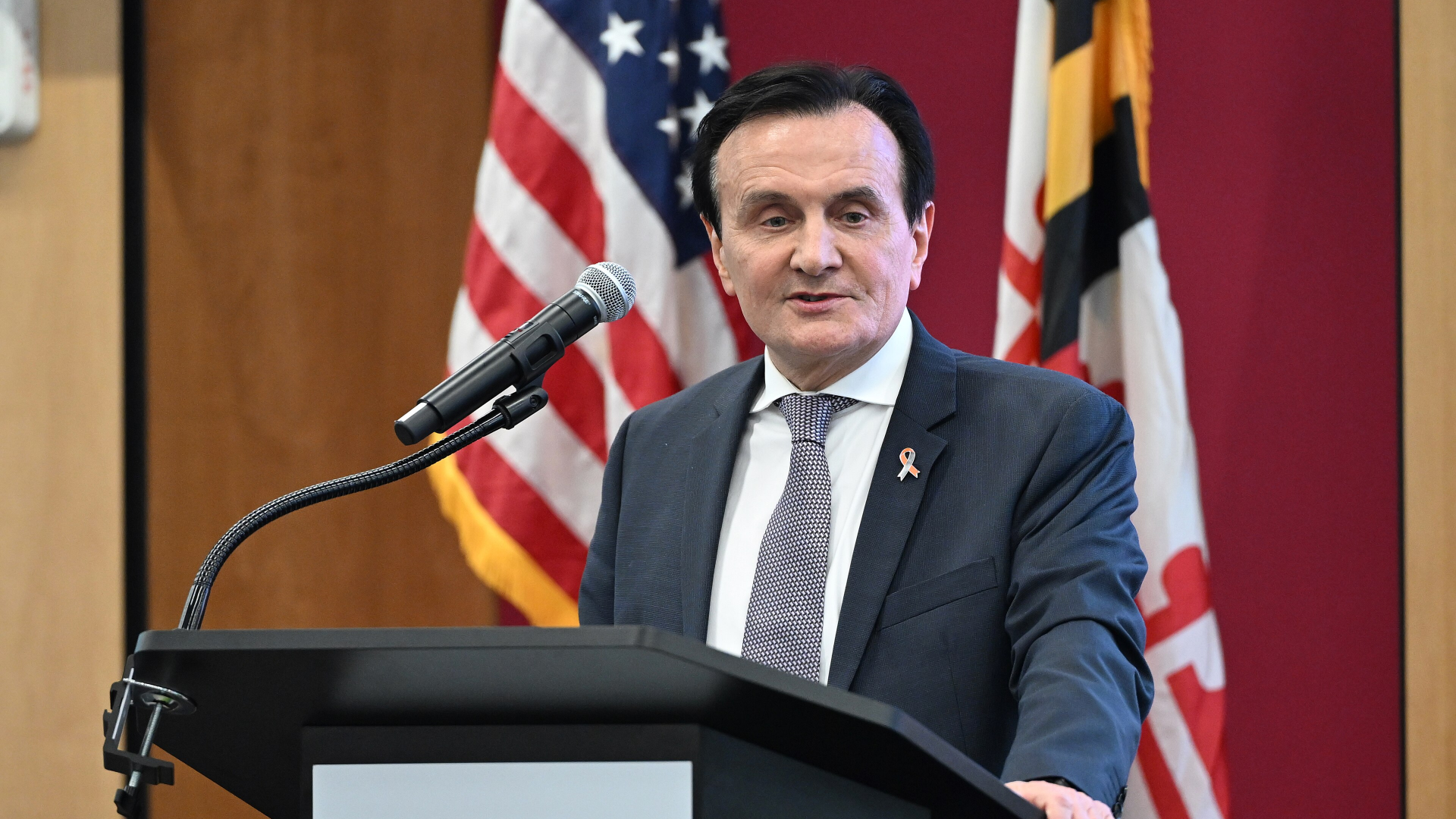
Pascal Soriot is the chief executive officer of AstraZeneca, the UK-headquartered biopharmaceutical group, and has also sat on its board as an executive director since October 2012. He leads the company’s Senior Executive Team and is responsible for the performance and development of the business.
Soriot trained as a veterinarian before he moved to the commercial side of the drug industry. His years in charge have included a rejected takeover approach from Pfizer, a COVID-19 vaccine developed with the University of Oxford, the purchase of Alexion and a target of $80 billion in yearly revenue by 2030.
Education
Soriot qualified as a veterinary surgeon at Maisons-Alfort in France, according to his former executive profile at Roche. AstraZeneca’s announcement of his appointment notes that he practised as a veterinarian before starting his business career.
He also holds an MBA with a major in finance from HEC Paris, the French business school.
Career
Soriot joined Roussel Uclaf in 1986 as financial controller for its Asia Pacific region. It was the first step in a career that later took him through Australia, New Zealand, Japan, the United States and Switzerland.
In 1987 he became a district sales manager at Roussel New Zealand. Two years later he moved to Roussel Australia as sales and marketing manager, and he was later named general manager of that business.
He returned to the pharmaceutical division of Roussel Uclaf in 1994 as its global marketing director. In 1996 he went back to Australia as general manager of Hoechst Marion Roussel.
A year later he moved to Tokyo as regional vice president for Asia Pacific at Hoechst Marion Roussel. In 2000 he joined Aventis in Bridgewater, in the United States, as senior vice president and head of global marketing and medical affairs.
From 2002 he served as chief operating officer of Aventis USA, the business that became Sanofi Aventis USA in 2004. He left for Roche in 2006, where he started as head of strategic marketing.
In 2007 Roche made him head of commercial operations and a member of its enlarged corporate executive committee. In 2009 he was appointed chief executive of Genentech, the San Francisco biologics company, and joined the Roche corporate executive committee.
AstraZeneca later credited him with leading the merger between Genentech and Roche. From 2010 he was chief operating officer of the Roche pharmaceuticals division, with global responsibility for development, manufacturing, commercial operations and administration.
On 28 August 2012 AstraZeneca named him as its next chief executive. He took up the post and joined the board on 1 October 2012, when Simon Lowth, who had been interim chief executive, returned to his role as chief financial officer.
Current Roles
- Chief Executive Officer and Executive Director, AstraZeneca PLC (since October 2012)
- Head of the AstraZeneca Senior Executive Team
- Member of the board, Agilent Technologies Inc.
- Member of the board, Sustainable Markets Initiative Limited
Key Achievements
Keeping AstraZeneca independent
In May 2014 Pfizer raised its proposal to 55 pounds a share, valuing AstraZeneca at about $119 billion. The AstraZeneca board rejected it on 19 May, saying the offer still fell short of its view of the company’s value.
In turning the bid down, the board pointed to its pipeline and to an expectation of about $45 billion in revenue by 2023. The company later reported $45.8 billion for that year.
- Final Pfizer proposal: 55 pounds per share (May 2014)
- Approximate value of the proposal: $119 billion
- Revenue expected for 2023 at the time: about $45 billion
- Revenue reported for 2023: $45.8 billion
A COVID-19 vaccine with Oxford
On 30 April 2020 AstraZeneca and the University of Oxford announced an agreement on the university’s vaccine candidate, ChAdOx1 nCoV-19. AstraZeneca took responsibility for its development, manufacturing and worldwide distribution.
By June 2022 about 3 billion doses had been delivered to more than 180 countries, with roughly two-thirds going to low and lower-middle income countries, the company said. The vaccine was first supplied at no profit, and most later doses were sold at cost.
Entering rare disease medicines
AstraZeneca completed its acquisition of Alexion Pharmaceuticals on 21 July 2021, paying about $13.3 billion in cash plus 236,321,411 new shares. The company described the closing as its entry into medicines for rare diseases.
Access to such medicines is also a goal for regulators, and in Saudi Arabia the Saudi Food and Drug Authority has started a program to speed up rare disease treatments.
A target of $80 billion
At an investor day in May 2024, AstraZeneca set an ambition of $80 billion in total revenue by 2030, up from $45.8 billion in 2023. It said it expected about 20 new medicines to launch before the end of the decade.
Oncology was named as one of the drivers of AstraZeneca’s revenue growth in 2025. The need is growing too, as the World Health Organization has warned that global cancer cases could reach 35 million a year by 2050.
A listing in New York
AstraZeneca ordinary shares began trading on the New York Stock Exchange on 2 February 2026 under the ticker AZN. The move replaced the earlier Nasdaq listing of its depositary shares, while London and Stockholm stayed as primary listings and the head office stayed in the UK.
The Company in Numbers
- Total revenue: $58.7 billion (2025)
- Product sales: $55.6 billion (2025)
- Core earnings per share: $9.16 (2025)
- Investment in science: $14.2 billion (2025)
- Employees: 96,100 (Annual Report 2025)
- Regulatory approvals in major regions: 43 in the twelve months to February 2026
- Countries where its medicines are sold: more than 125 (2026)
Awards and Honours
- Knight Bachelor, Queen’s Birthday Honours, June 2022, for services to UK life sciences and leadership in the global response to the COVID-19 pandemic
At the time of the honour in 2022, AstraZeneca said he co-chaired the UK Life Sciences Council and championed the Health Systems Taskforce of the Sustainable Markets Initiative.
In Their Own Words
When his appointment was announced on 28 August 2012, Soriot said: “I am excited and honoured to have been asked to lead AstraZeneca.”
Presenting the 2025 results in February 2026, he said: “In 2025 we saw strong commercial performance across our therapy areas and excellent pipeline delivery.”
Read also: Saudi Arabia Strengthens Pharmaceutical Security Through Localization, AI and Waste Reduction
References
Internal
- AstraZeneca: the British-Swedish drugmaker behind cancer and rare disease medicines
- Saudi FDA launches “Nader” program to accelerate development and access to rare disease medicines
- WHO Warns Global Cancer Cases Could Reach 35 Million a Year by 2050
- Saudi Arabia Strengthens Pharmaceutical Security Through Localization, AI and Waste Reduction
External
- AstraZeneca: Pascal Soriot, Executive Director and Chief Executive Officer — 2026
- AstraZeneca: Pascal Soriot appointed Chief Executive Officer of AstraZeneca — 2012
- Roche: Pascal Soriot, former Corporate Executive Committee member — 2012
- AstraZeneca: AstraZeneca sets ambition to deliver $80 billion Total Revenue by 2030 — 2024
- AstraZeneca: Pascal Soriot awarded British knighthood — 2022
- BioSpace: AstraZeneca results FY and Q4 2025 — 2026