

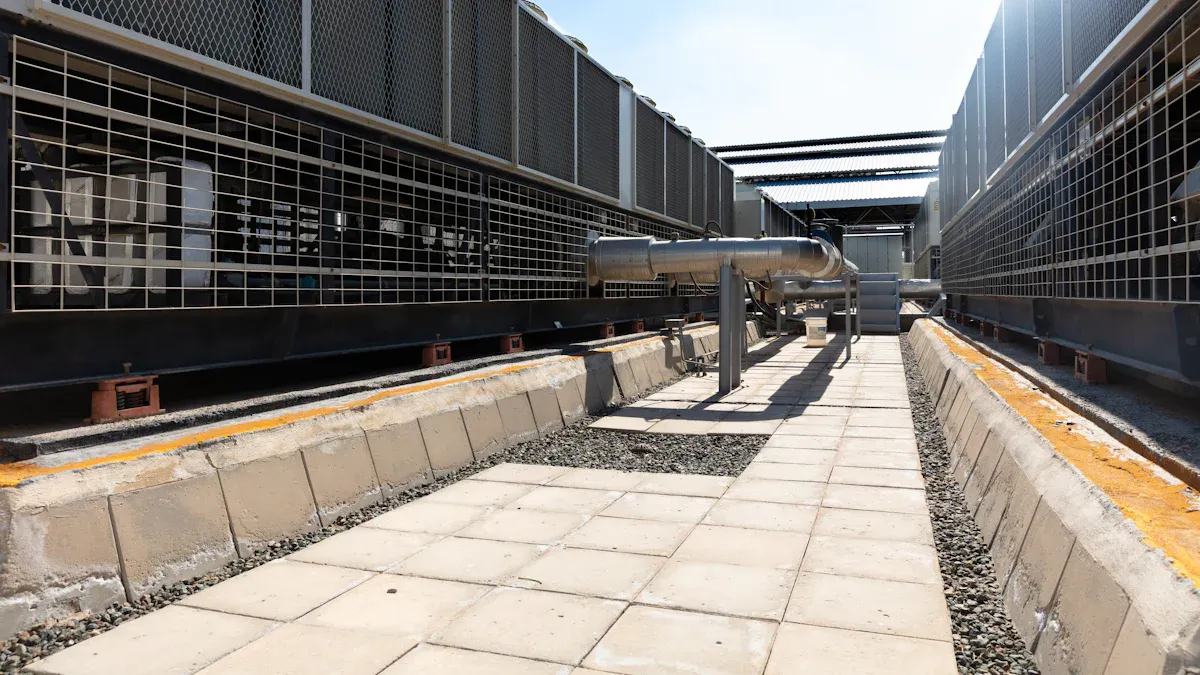
Jazan City for Primary and Downstream Industries is nearing the launch of the first phase of its major seawater cooling project, with an initial operating capacity of approximately 96,000 cubic meters of seawater per hour.
According to sources cited by Al Arabiya, the first phase has reached 98.33 percent completion, with final testing currently underway ahead of operations.
Capacity to Reach 160,000 Cubic Meters Per Hour
Once the second phase is completed, the project’s total capacity is expected to rise to around 160,000 cubic meters per hour, enabling the infrastructure to serve existing factories as well as future industrial developments.
The project is expected to strengthen the readiness of industrial land and support efforts to attract billions of Saudi riyals in investment across sectors including downstream metals, petrochemicals and manufacturing.
Centralized Cooling Infrastructure
Instead of requiring individual factories to construct and operate their own seawater pumping and cooling facilities, the project provides a centralized cooling network serving multiple industrial users.
The model is designed to reduce construction, operating and maintenance costs for investors while lowering energy consumption and improving the reliability and sustainability of industrial operations.
It could also shorten project development timelines by allowing new factories to connect to existing cooling infrastructure rather than building standalone systems.
Major Engineering Infrastructure
The project’s first phase includes four large turbine pumps, with infrastructure designed to accommodate future expansion.
It also features marine pipelines stretching approximately 3.25 kilometers each, with pipes reaching 3.5 meters in diameter, as well as a transmission network extending approximately 10 kilometers.
High-density polyethylene, or HDPE, pipes are being used due to their resistance to corrosion and harsh marine conditions. Treatment and disinfection systems are also incorporated to limit deposits and marine growth inside the network.
24-Hour Digital Monitoring
Seawater is drawn through specially engineered marine intakes and transported through an integrated network equipped with digital control and monitoring systems operating around the clock.
The infrastructure allows operators to continuously monitor both technical performance and environmental indicators.
Environmental Protection at the Core
Marine environmental protection is a key component of the project.
Monitoring covers seawater quality, discharge temperatures, intake and discharge rates and velocities, as well as the project’s potential impact on marine ecosystems.
These measures are intended to ensure industrial development proceeds in accordance with approved environmental requirements.
Strengthening Jazan’s Industrial Competitiveness
Providing centralized seawater cooling gives Jazan an additional competitive advantage when attracting large industrial projects by reducing the infrastructure individual investors need to develop themselves.
The project also complements other strategic assets in the city, including the special economic zone, Jazan City port, utilities, transportation networks and logistics infrastructure.
Together, these elements are expected to strengthen Jazan’s integrated industrial ecosystem, improve investment efficiency and support the attraction of new high-value industrial projects to the region.