

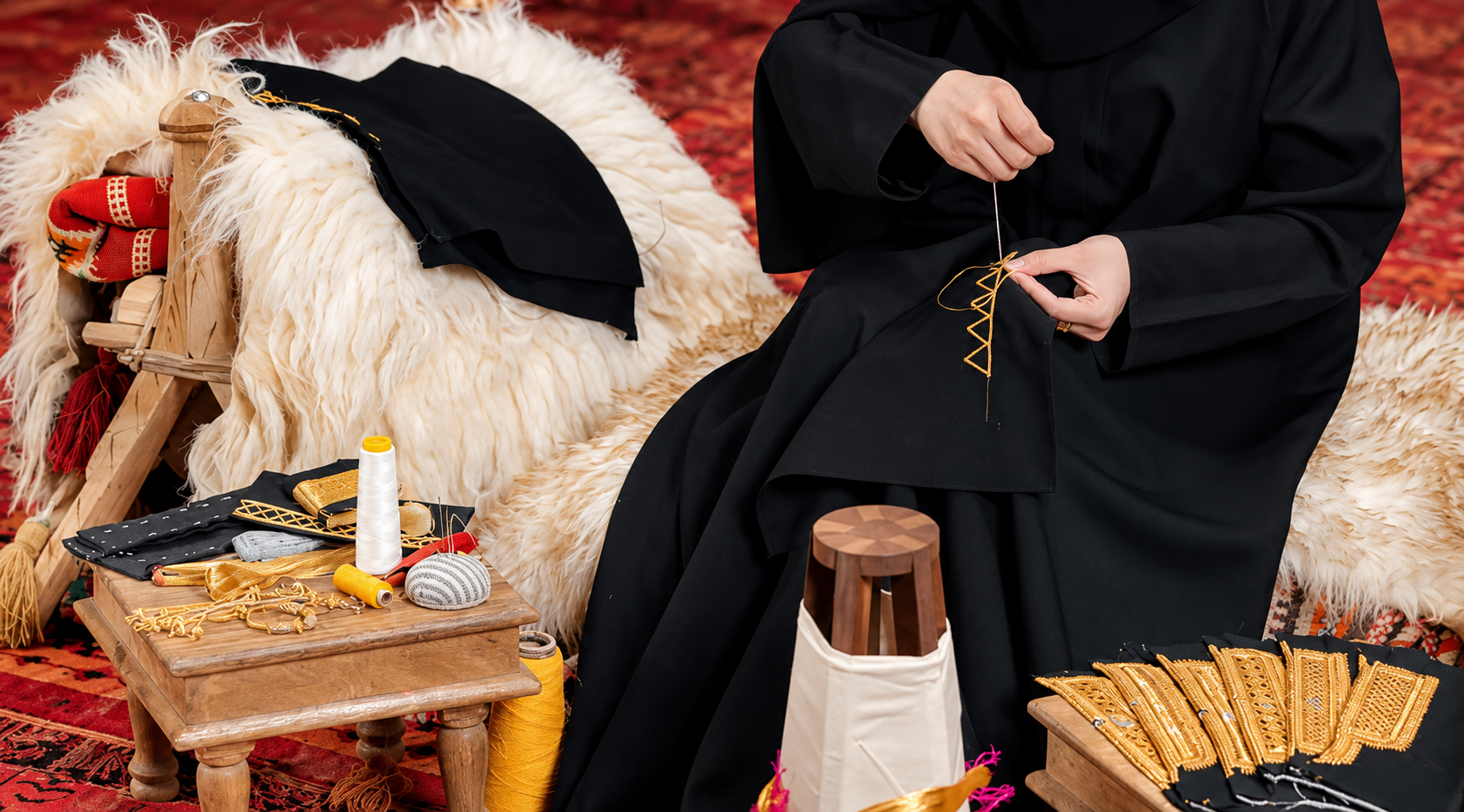
The Royal Institute of Traditional Arts, “Wirth,” is expanding access to Saudi traditional arts through a flexible learning experience that allows enthusiasts to explore a range of skills connected to the Kingdom’s cultural heritage.
The initiative offers eight self-paced courses covering diverse traditional fields, from motifs found in Historic Jeddah and gypsum carving to bisht embroidery, jewelry techniques and beadwork.
The program forms part of broader efforts to preserve traditional arts as an important element of Saudi Arabia’s cultural memory while using modern learning methods to make traditional knowledge accessible to a wider audience and help connect younger generations with artistic practices passed down through communities over generations.
Eight traditional arts in one learning experience
The courses cover eight areas of Saudi traditional arts and crafts: Historic Jeddah decoration, leatherwork, prayer-bead making, Naqadah embroidery, bells in jewelry, wood tattooing and marking, gypsum carving, and Bakhia embroidery used in bisht craftsmanship.
The learning experience goes beyond the practical aspects of craftsmanship. It also introduces learners to the knowledge, techniques and artistic characteristics that distinguish each field, helping them understand the cultural contexts in which these practices developed.
Together, the eight fields reflect the diversity of Saudi traditional arts, including crafts connected to architecture and local decorative styles as well as those associated with clothing, jewelry and objects used in everyday life and social occasions.
Self-paced learning for greater flexibility
The courses follow a self-learning model, allowing participants to access and explore the content according to their own schedules and interests rather than following a conventional fixed timetable.
This approach provides a practical way to expand access to specialized knowledge about traditional arts, particularly for people who want to explore a specific craft or discover a new area of interest without being tied to scheduled classes.
Digital learning also makes it possible to reach audiences beyond geographical boundaries, offering a more accessible way to explore aspects of Saudi heritage.
From craftsmanship to cultural knowledge
The significance of the initiative lies not only in teaching traditional skills, but also in presenting them as part of a broader cultural system shaped by history, knowledge and generations of practice.
Gypsum carving, for example, is closely associated with traditional architectural aesthetics and decorative techniques, while the motifs of Historic Jeddah reflect the visual identity of the city’s historic built environment. Bisht embroidery, jewelry and beadwork, meanwhile, represent crafts that have long been connected to clothing, adornment and social occasions.
Learning about these practices therefore provides an entry point into a broader understanding of Saudi culture, encouraging appreciation of the details that give each craft its distinctive identity.
Wirth’s role in sustaining traditional arts
The Royal Institute of Traditional Arts, “Wirth,” began its journey in 2021 as a specialized institution focused on traditional arts, with an emphasis on developing national talent passionate about learning, practicing and advancing these fields.
The institute’s broader mission includes empowering and developing the traditional arts and crafts sector while contributing to the sustainability of national cultural heritage and transferring its knowledge and skills to future generations.
Within this framework, making courses available through self-paced learning represents more than the delivery of educational content. It provides another channel for bringing traditional knowledge into contemporary life and giving people an accessible opportunity to discover Saudi crafts and develop their interest in them.
Preserving heritage through modern tools
Traditional arts around the world face the challenge of preserving not only their final products but also the knowledge and techniques behind them. A craft survives from one generation to another through an understanding of its methods, materials and details as much as through the objects it produces.
Digital education can play an important role in this process by documenting knowledge, organizing it and making it more accessible, while encouraging younger generations to engage with traditional arts and recognize their cultural and artistic value.
Through its self-learning initiative, Wirth brings together Saudi heritage and modern educational tools, creating new opportunities for traditional arts to remain relevant and accessible while preserving an important part of the Kingdom’s cultural identity.