

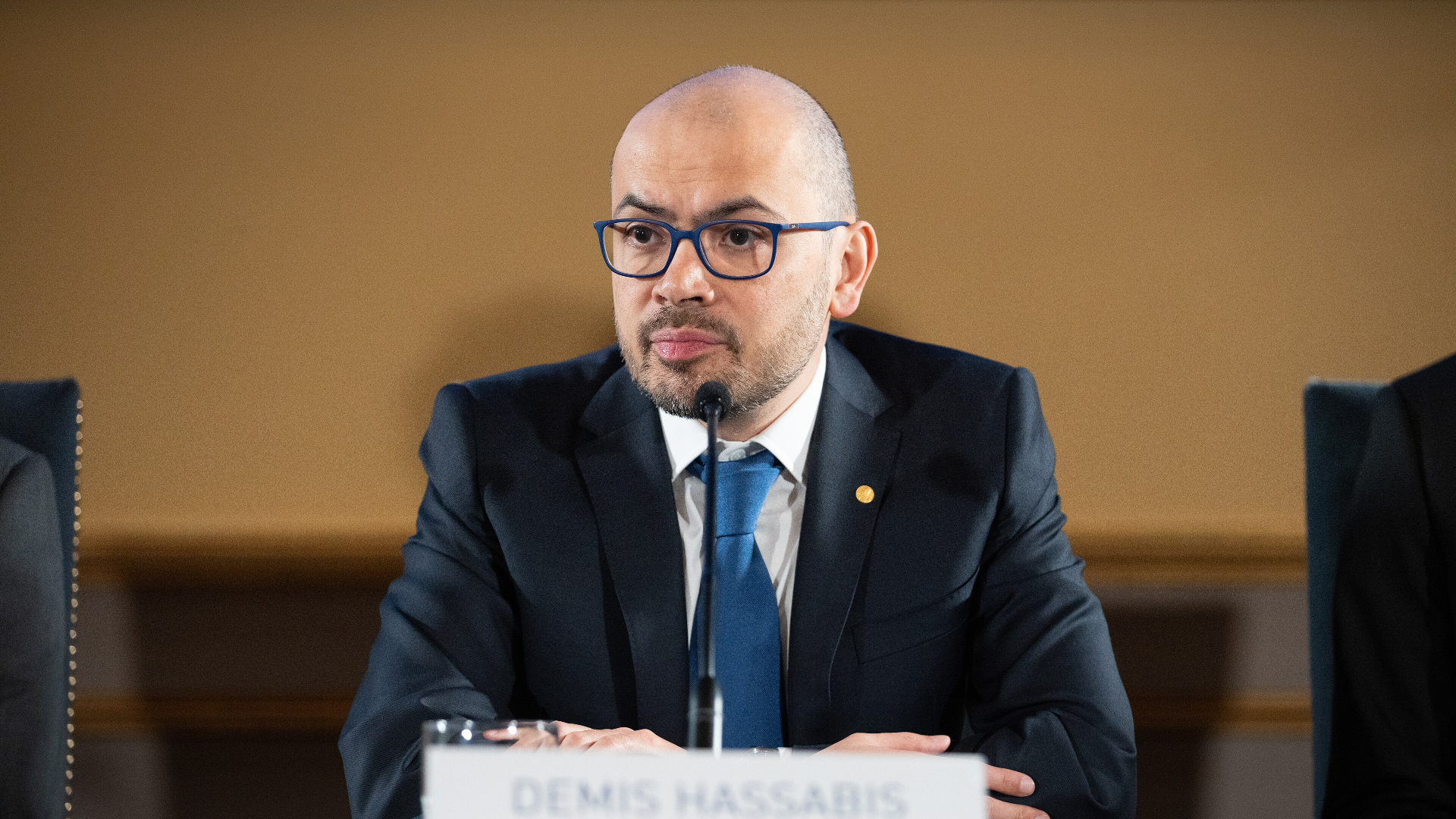
Demis Hassabis is the co-founder and chief executive of Google DeepMind, the artificial intelligence unit of Google. He started DeepMind in London in 2010 and has led the combined Google DeepMind since it was formed in April 2023.
He shared the 2024 Nobel Prize in Chemistry with his colleague John Jumper for AlphaFold, an AI system that predicts the structure of proteins. He also runs Isomorphic Labs, an Alphabet company that applies the same kind of AI to drug discovery, and his unit builds Google’s Gemini models.
Education
Hassabis is a graduate of the University of Cambridge, according to his Isomorphic Labs profile.
He later returned to academic research and earned a PhD in cognitive neuroscience from University College London in 2009, the Nobel Prize announcement records.
Career
Hassabis began his career in video games. His Isomorphic Labs profile credits him with designing and programming the award-winning game Theme Park, and in a 2023 Google blog post he wrote that he had been programming AI for computer games since his teens.
After his doctorate he turned to building general-purpose AI. DeepMind began in 2010 with what the company describes as an interdisciplinary approach to general AI.
One of its first well-known results was DQN, a program that learned to play 49 Atari games working only from the raw pixels on the screen. Google DeepMind says this work made it a pioneer of deep reinforcement learning.
In January 2014 Google agreed to buy DeepMind. Reports at the time named Hassabis, Shane Legg and Mustafa Suleyman as the people running the company, which kept its base in London.
In October 2015 the lab’s AlphaGo program beat the three-time European Go champion 5-0, the first time an AI system won a match against a Go professional. In March 2016 it beat Lee Sedol 4-1 in Seoul, in a match the company says was watched by more than 200 million people.
Games stayed a testing ground for a while. In 2019 the lab’s AlphaStar system beat a top professional player at the strategy game StarCraft II.
DeepMind turned to science next. In 2020 Hassabis and Jumper presented AlphaFold2, which the Nobel committee says has been used to predict the structure of virtually all of the 200 million proteins researchers have identified.
In November 2021 Alphabet set up Isomorphic Labs as a separate company to use AI in drug discovery, with Hassabis as founder and chief executive, CNBC reported. He kept his post at DeepMind.
In April 2023 Sundar Pichai merged the Brain team from Google Research with DeepMind to form Google DeepMind and named Hassabis its chief executive. The new unit was given the task of building Google’s most capable AI systems.
The Brain team it absorbed had started in 2011 at X, Alphabet’s research lab, and had invented the Transformer architecture in 2017, according to Google DeepMind. In the same reshuffle Jeff Dean became Google’s chief scientist.
That December, Hassabis introduced Gemini 1.0, the first of the Gemini family, in three sizes: Ultra, Pro and Nano. In May 2024 Google DeepMind and Isomorphic Labs released AlphaFold 3, which extends predictions from proteins to DNA, RNA and small drug-like molecules. A free AlphaFold Server lets scientists use the model for non-commercial research.
His unit’s latest model, Gemini 4 Argon, was opened to developers worldwide in October 2026, as covered in our report Google opens Gemini 4 Argon to developers worldwide at $2 per million input tokens.
Current Roles
- Co-founder and Chief Executive Officer, Google DeepMind.
- Founder and Chief Executive Officer, Isomorphic Labs.
- Fellow of the Royal Society.
- Fellow of the Royal Academy of Engineering.
Key Achievements
AlphaFold and the protein-folding problem
Scientists had tried since the 1970s to predict a protein’s 3D shape from its sequence of amino acids. AlphaFold2 gave researchers a fast way to do this, and the Nobel committee says it has been used by more than two million people in 190 countries.
- 200 million: protein structures in the AlphaFold Database.
- 190: countries where AlphaFold2 has users.
- 2024: Nobel Prize in Chemistry for protein structure prediction.
AlphaGo
AlphaGo’s wins over a European champion in 2015 and over Lee Sedol in 2016 made it the first AI system to beat a Go professional and then a top player in a full match. A later system, AlphaZero, built on that work.
Leading Google’s AI effort
Since 2023 Hassabis has run the unit that builds Gemini, Google’s main family of AI models. Alphabet reported that the Gemini app had more than 750 million monthly active users at the end of 2025.
AI for medicine
Through Isomorphic Labs, Hassabis is trying to take AlphaFold-style methods into drug design. The company lists among its advisers Nobel laureates Jennifer Doudna, Sir David MacMillan, Sir Paul Nurse and Venki Ramakrishnan.
The Company in Numbers
- Alphabet revenue: $402.8 billion in 2025.
- Alphabet employees: 190,820 at the end of 2025.
- Gemini app: more than 750 million monthly active users, fourth quarter of 2025.
- Gemini models: more than 10 billion tokens a minute through direct customer API use, fourth quarter of 2025.
- AlphaGo against Lee Sedol: more than 200 million viewers, 2016.
Awards and Honours
- 2017: named in TIME’s list of the 100 most influential people.
- 2018: CBE for services to science and technology.
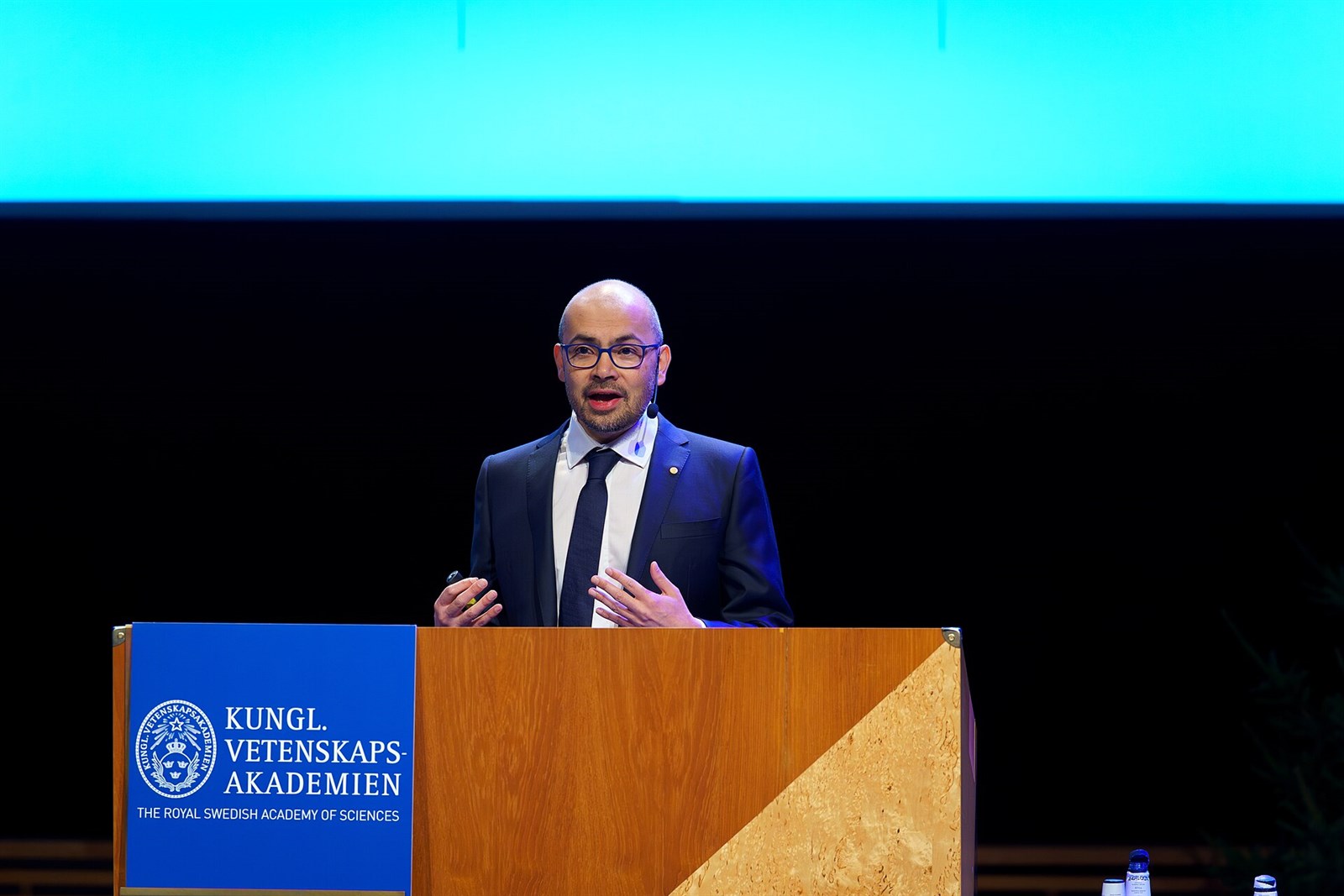
- 2024: Nobel Prize in Chemistry, one half shared with John Jumper “for protein structure prediction”.
- 2024: knighted for services to artificial intelligence.
- Fellow of the Royal Society and of the Royal Academy of Engineering.
His Isomorphic Labs profile adds that his research has appeared four times in Science magazine’s top ten breakthroughs of the year.
In Their Own Words
Introducing Gemini on Google’s blog on 6 December 2023, Hassabis wrote: “AI has been the focus of my life’s work, as for many of my research colleagues.”
In the same post he added: “This promise of a world responsibly empowered by AI continues to drive our work at Google DeepMind.”
Google co-founder Sergey Brin has also returned to work alongside the researchers building Gemini.
Read also: Google I/O 2026 Kicks Off Today as AI Takes Center Stage at Google’s Biggest Tech Event
References
Internal
- Google DeepMind: the AI lab behind Gemini and AlphaFold
- Google and Alphabet: the search and AI group behind Android and YouTube
- Google opens Gemini 4 Argon to developers worldwide at $2 per million input tokens
- Sergey Brin, Google Co-Founder Who Returned to Work on Gemini
- Google I/O 2026 Kicks Off Today as AI Takes Center Stage at Google’s Biggest Tech Event
External
- Google DeepMind: About — 2026
- Isomorphic Labs: Sir Demis Hassabis, PhD — 2026
- NobelPrize.org: The Nobel Prize in Chemistry 2024, press release — 2024
- Google: Google DeepMind, bringing together two world-class AI teams — 2023
- Google: Introducing Gemini, our largest and most capable AI model — 2023
- Google DeepMind: AlphaGo — 2026